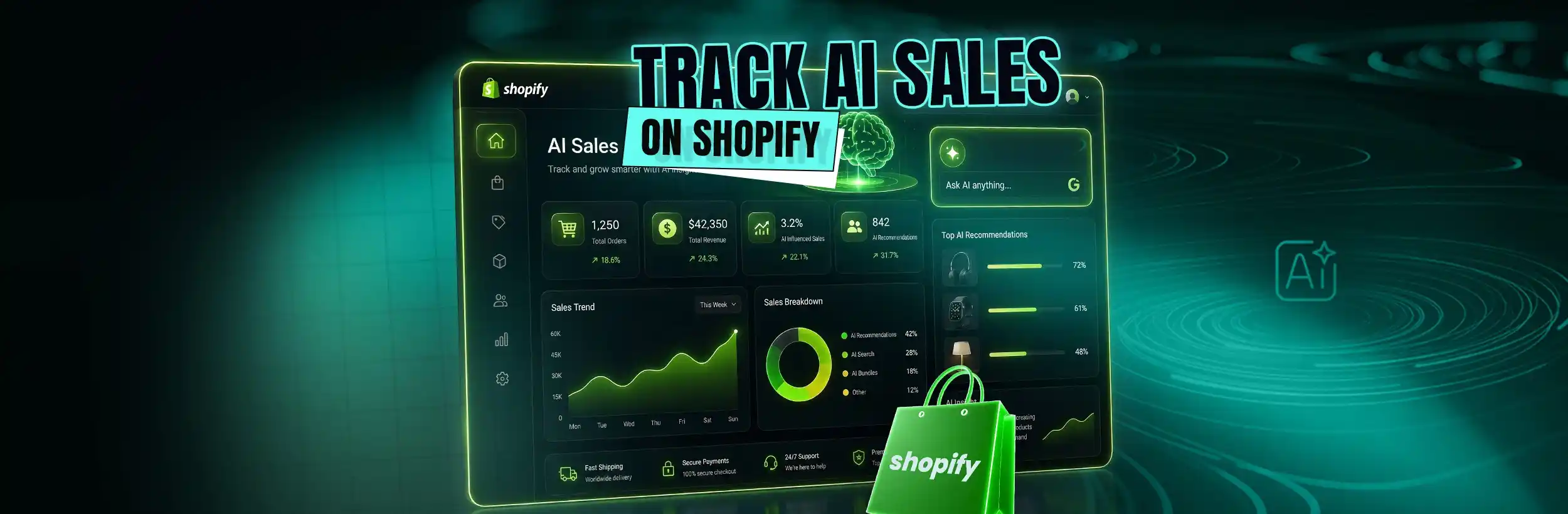
This blog post explains how AI platforms like ChatGPT are changing e-commerce by allowing customers to discover and buy products through AI recommendations rather than traditional store browsing. It clarifies that selling on ChatGPT doesn't involve listing products on the platform, but rather having AI systems recommend your Shopify products when they match customer queries.
📌 Key Takeaways
- What does selling on ChatGPT actually mean for a Shopify store?
It’s not about listing your products anywhere. AI reads a customer’s request, filters available options, and recommends the few that clearly fit. Your product has to earn that recommendation before the customer even sees it — and most stores aren’t set up for that yet. - So does Shopify handle the technical side automatically?
Your store data is already part of Shopify’s indexing system. What determines whether your products get picked isn’t an integration or a plugin. It comes down to how clearly your listings communicate what you sell, who it’s for, and when it should be used. - How is this different from ranking on Google?
Google ranks pages. AI picks products. It breaks a request into intent, context, and constraints — then looks for products that obviously satisfy all three. If your listing makes AI guess, it gets passed over. - Do similar products get treated the same way?
Even when products seem to match the same need, they don’t get treated equally. Some are easier for AI to connect to the request in that moment, while others get skipped without a clear signal. That difference isn’t obvious from inside your store—which is why it often goes unnoticed. - Does adding more content to listings actually help?
Products that consistently get recommended aren’t the most detailed ones. They’re the most specific ones. The shift from vague to clear sounds simple, but applying it across an entire catalog is where most merchants realize how much work is actually involved
Something shifted in how buyers shop.
More people now start their purchase journey with a question typed into ChatGPT. By the time they reach a store, the decision is largely made. The AI already picked the shortlist. A few products made it. Most didn’t.
According to Adobe Analytics, in a survey of 5,000 U.S. consumers, 39% have already used generative AI for online shopping, with 53% planning to do so this year. That’s a majority of shoppers moving through a channel most stores aren’t prepared for.
If you’ve been trying to figure out what this means for your store — whether your products can show up, who qualifies, and what you actually need to do — this guide answers those questions directly, without the fluff.
Can You Actually Sell Products on ChatGPT? (Let’s Clear the Confusion First)
Let’s clear something up first, because a lot of merchants approach this the wrong way.
You can get your Shopify products recommended on ChatGPT — but there’s no platform to list on, no merchant dashboard, and no ad placement to buy. ChatGPT reads a user’s request, evaluates available products, and surfaces a small number that clearly fit. Think of it less like a marketplace and more like a personal shopper who’s made a shortlist before the customer visits any store.
Your Shopify checkout still handles everything — payments, order processing, and fulfilment. What changes is how the customer arrives. Instead of coming through a search result or an ad, they arrive through an AI recommendation. And because the AI already filtered options for them, they’re much closer to buying when they get to you.
That’s the upside. The catch is that if your product isn’t clear enough for the AI to confidently recommend, it never makes it into that conversation.
What Is Agentic Commerce on Shopify (And Why Everyone Is Talking About It)
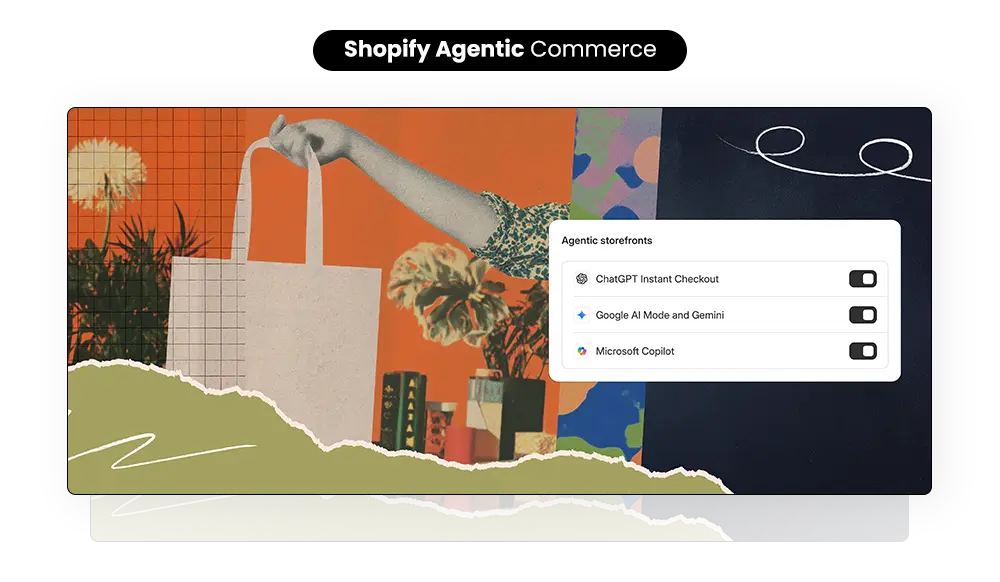
This is where Shopify changes the game.
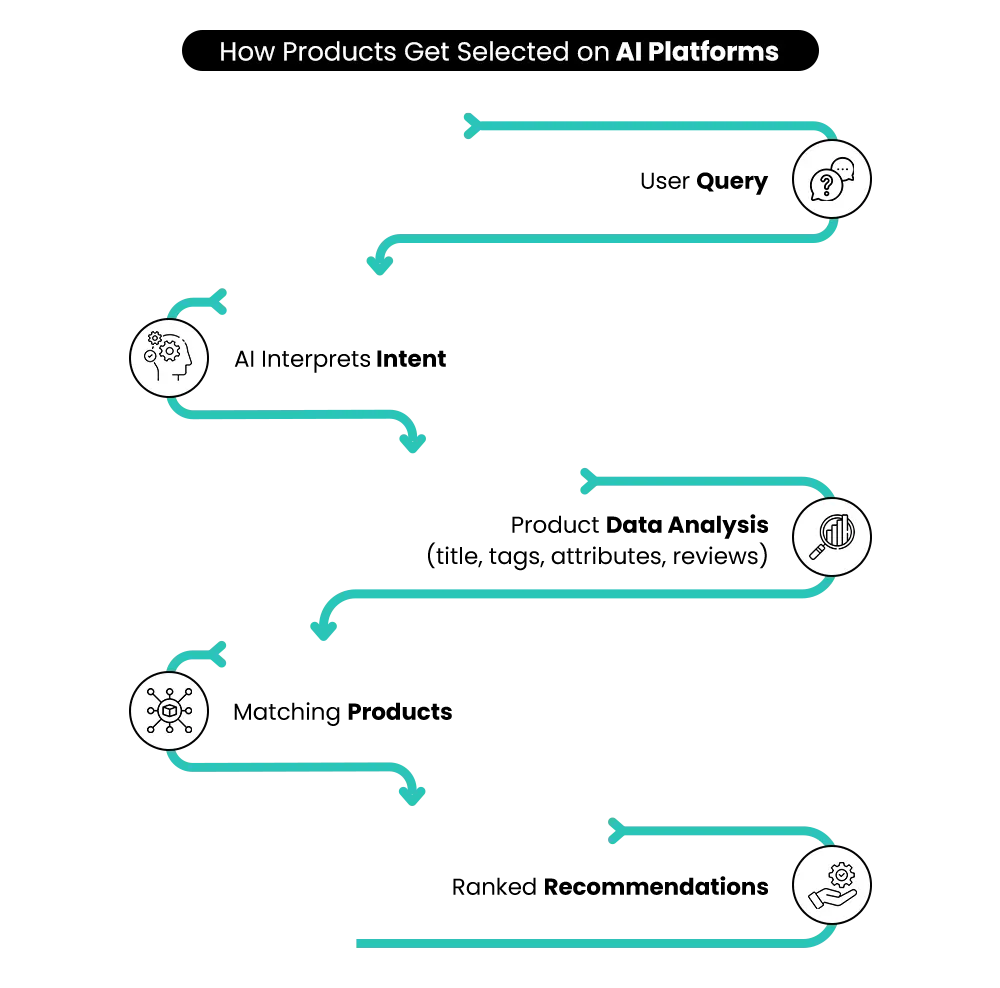
When a shopper asks ChatGPT for a product recommendation, they’re not browsing your store — they’re getting a shortlist. Shopify connects your catalog to these AI platforms automatically. There’s no manual setup, no third-party app, no separate integration to configure. And it’s not just ChatGPT — Shopify’s AI selling is already live across Google Gemini and Copilot too. For merchants still relying on ads and search traffic alone, it’s a channel worth understanding now — not later.
Think of it as a salesperson who knows your entire catalog, listens to what the shopper wants, and points them to exactly the right product — every single time. What this creates for merchants is a new kind of demand channel. One where your product doesn’t compete for a click — it competes for a recommendation. And that’s a fundamentally different game.
How Shopify Connects Your Store to ChatGPT (Behind the Scenes)
What Actually Happens In The Backend
You don’t need a custom integration or a third-party app.
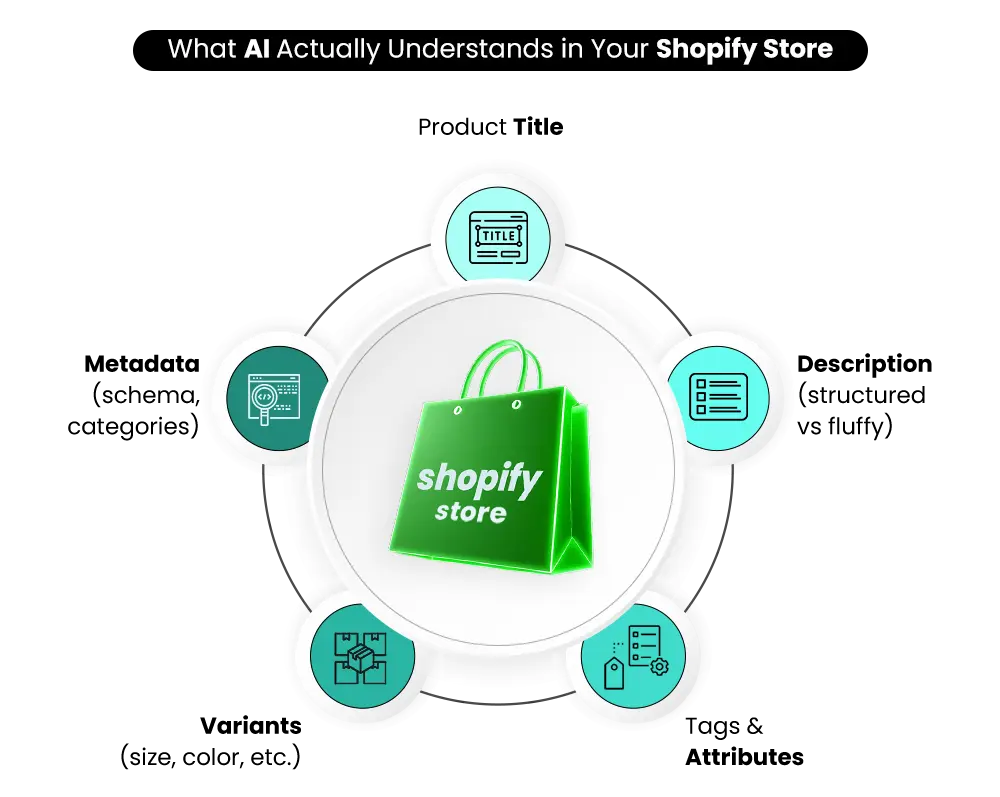
Every product in your Shopify store is stored as structured product data — including titles, descriptions, pricing, availability, variants, and metadata — making it easier for search engines, shopping platforms, and AI systems to understand your catalog. When someone asks ChatGPT for a product recommendation, the AI pulls from this catalog. It doesn’t visit your website — it reads your product data.
To check whether Agentic Storefronts is active for your store, go to Settings → Sales Channels → Agentic Storefronts in your Shopify admin. From there, you can see which AI platforms your products appear on and control where direct purchasing is enabled.
To learn more about how Shopify’s AI commerce infrastructure works at the platform level, the Shopify AI Commerce announcement covers the full picture.
What Makes Your Store Eligible
Not every store gets included automatically. Shopify looks for a few baseline conditions:
- Your product catalog is active and complete.
- Product information follows Shopify’s required data structure.
- Pricing and inventory are accurate and up to date.
- Your store is using Shopify’s standard checkout.
If any of these are missing, your products may be skipped — even if Agentic Storefronts is technically enabled on your account.
One important note: Shopify’s Agentic Storefronts feature is still rolling out across merchants, plans, AI channels, and regions. If you don’t see it in your admin yet, it may not be available for your store at this time. Shopify’s official updates and documentation will have the latest availability details.
The Cost Side Of Things — What To Factor In
Orders that come through AI shopping experiences like ChatGPT may include additional platform fees on top of Shopify’s standard payment processing charges. In some cases, the combined transaction cost can land around the 6–7% range per order.
Since pricing and rollout terms are still evolving, always verify the latest rates in your Shopify admin before building your pricing strategy around AI commerce.
And if you’re weighing whether this channel makes sense for your store at all, understanding what you’d actually lose by opting out of Agentic Storefronts is worth knowing before you touch any settings.
Why Being Eligible Doesn’t Mean Getting Recommended
This is where most merchants get stuck — and it’s worth being honest about. Your store is probably already eligible. Agentic Storefronts is on. Your products are in the catalog. And still, nothing’s coming through. The problem isn’t access. It’s clarity.
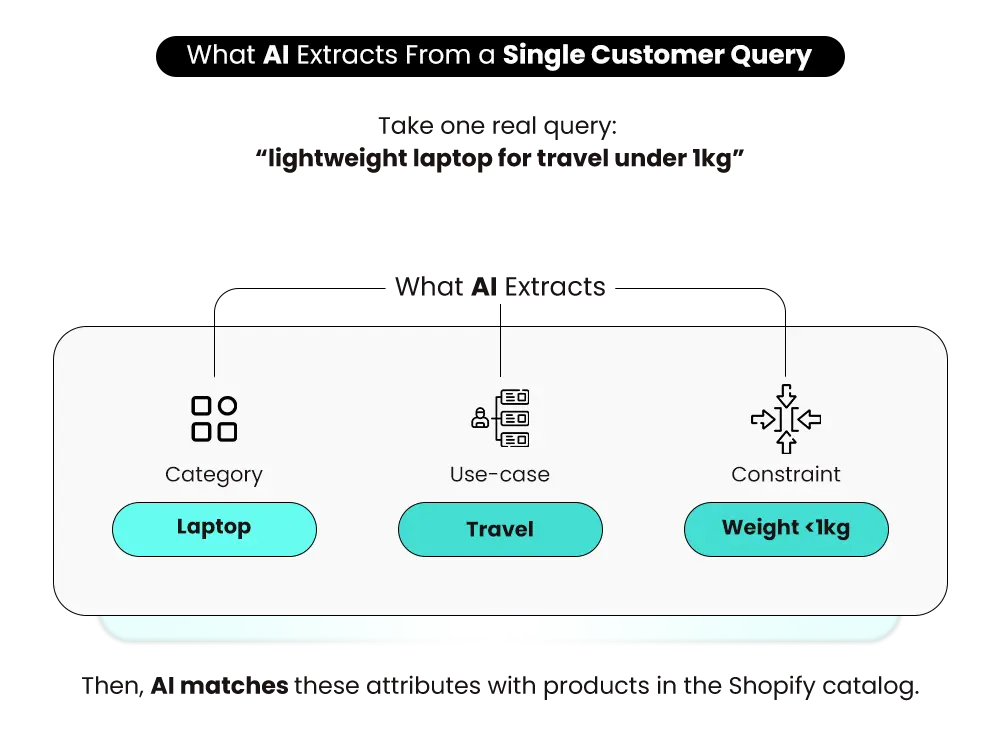
When a buyer asks ChatGPT for a product recommendation, the AI evaluates available options and picks a small number it can confidently match to the request. It’s not ranking your product against others. It’s deciding whether your product clearly fits. If it has to guess — even a little — it moves on.
Here’s how that plays out in practice. Say a buyer types: “Best protein powder under $50 for muscle recovery.”
Product A gets recommended because:
- The title says “Protein Powder for Muscle Recovery — 2lb | Suitable for Beginners and Regular Gym-Goers”.
- The description explains who it’s for, what situation it solves, and when to use it.
- The price is clearly within range.
- The most important details appear in the first two lines.
Product B gets skipped because:
- The title says “Premium Performance Supplement — Limited Edition”.
- The description focuses on brand lifestyle, not use case or outcome.
- No clear mention of who it’s designed for or what situation it addresses.
- Important details are buried four paragraphs down.
Both products might be equally effective. But the AI can only work with what it can clearly interpret. Product B gives it too many gaps to fill — so it gets passed over. Not because the product is bad. Because the presentation is too easy to skip.
The Four Signals AI Actually Evaluates:
- Clarity — Can someone read your product title and immediately understand what it is and does?
- Relevance — Does the listing connect to a specific need or problem, not just a broad category?
- Structure — Is the most important information near the top, easy to find in seconds?
- Consistency — Are your title, description, and meta description all telling the same story?
Mastroke with Shopify GEO service organizes your product titles, tags, and descriptions so AI search tools can actually understand what you sell — and recommend it to buyers already looking for it.AI Is Picking Products Right Now. Is Yours One of Them?
How to Make Your Shopify Store Appear on ChatGPT (Action Layer)
Now that you understand how selection works, the focus shifts to what you can actually change inside your store. To sell on ChatGPT, your product needs to be easy to interpret, not just attractive to browse. Here’s where most similar guides go vague. Let’s be specific.
Step 1: Rewrite product titles for intent, not identity
Most titles are written for SEO keywords or brand style. AI reads them differently — it’s looking for a match to a specific user request.
- Before: GlowSerume Pro 2.0 — 30ml
- After: Vitamin C Brightening Serum — 30ml | Reduces Dark Spots, Gentle on Sensitive Skin
The second version tells the AI what the product does, who it’s for, and what result to expect. The first could describe almost anything.
Go through your top 20 products and test this: can a stranger read the title alone and know exactly what it is and whether it’s right for them? If not, rewrite it.
Step 2: Write descriptions the way customers actually speak
Shoppers don’t ask ChatGPT the way they type into Google. They ask in full sentences: “What’s a good moisturiser for dry skin that won’t feel greasy?” or “I need a bag that fits a 15-inch laptop and works as carry-on luggage.”
Your descriptions should reflect that natural phrasing. Instead of a list of specs, explain the situation the product solves, who it’s right for, and why it would work better for them than a generic option. One well-written paragraph that answers the real question behind the query will outperform five bullet points of features.
- Before: “Premium leather bifold wallet with RFID blocking technology and multiple card slots.”
- After: “A slim leather wallet that blocks card skimming — holds up to eight cards and fits easily in your front pocket without bulking out your jeans.”
Step 3: Front-load what matters
AI reads product data fast and linearly. If the key details are buried three paragraphs in, they may not carry enough weight when the AI evaluates the match. Lead with what matters most: what the product is, who it’s for, and what problem it solves. Put the detailed specs below.
This also applies to your product’s structure on the page — clear sections, a logical order of information, and direct answers to the questions a buyer would ask before purchasing.
Step 4: Keep catalog data clean and current
Stale data breaks the process. If your inventory shows items as in stock when they’re not, or your pricing at checkout doesn’t match what’s in the catalog, AI systems flag that as unreliable and move on. Set up real-time inventory sync and make sure your product pricing is consistent across the catalog.
For a broader playbook on getting your store visible across AI search platforms, this guide on AI SEO strategies for Shopify covers the technical side in depth.
AI Search vs Traditional SEO — What’s Actually Different?
The way you sell on ChatGPT is different from how SEO works. In SEO, your goal is to bring users to your website. On the other hand, in AI platforms, your product is selected before the user visits your store.
This creates a shift in how visibility works.
| SEO (Search Engines) | AI Platforms |
| Shows a ranked list of results | Selects a small number of recommendations |
| Optimized around keywords | Evaluated on intent match |
| Users compare options themselves | AI filters before the user sees anything |
| Traffic is the primary goal | Selection is the primary goal |
| More content can improve ranking | Clearer content improves recommendation chances |
Adding more keywords, longer descriptions, or more pages doesn’t help here. A store that ranks well on Google can still be completely invisible on AI platforms — because the evaluation criteria are different.
According to Shopify’s guide to generative engine optimisation, some estimates suggest a third of consumers now use generative AI for shopping decisions. That’s a meaningful share of buying intent that’s quietly shifted to a different channel.
📌Related Video
Conclusion: You’re Not Selling on ChatGPT. You’re Getting Selected — or You’re Not.
Shopify has already built the distribution layer. Your store is already in the system. The gap isn’t technical — it’s structural. When product data is vague, inconsistent, or written around what you want to say rather than what a buyer needs to know, AI skips it. Not because the product is wrong. Because the presentation makes it too easy to pass over.
That’s the real problem — and it’s fixable.
The first step is knowing where you stand. An AI visibility audit shows exactly which products are getting passed over and why — so fixes are targeted, not guesswork. Once the visibility is there, the next question is whether your store is built to close. That’s where Shopify CRO comes in — turning the traffic AI sends your way into revenue that actually shows up in your numbers.
The stores getting recommended consistently aren’t the biggest or the most established. They’re the clearest. Everything else waits to be passed over.
Launch faster with Mastroke, an official Shopify Partner. We build structured stores with conversion-first design, clean setup, and features built to scale!!Build Your Shopify Store From Scratch With Mastroke
FAQs: Questions Merchants Often Ask About Selling on ChatGPT
Still have questions about how this works? Here are clear answers to what most merchants want to understand before getting started.
1. How do I sell on ChatGPT from my Shopify store?
You don’t upload your products directly to ChatGPT like you would on a marketplace. Instead, your Shopify store data is what AI systems read and use. When someone asks for a product, AI looks for options it can clearly understand and confidently recommend. That’s why your role shifts a bit—you’re not managing listings, you’re making sure your product information is structured, clear, and tied to real use cases. The easier it is for AI to interpret your product, the higher the chances it gets picked.
2. Why are my products not showing on ChatGPT?
In most cases, it’s not that your products aren’t available—it’s that they’re not clear enough for AI to use. If your product title, description, or details don’t clearly explain what the product does, who it’s for, or when it should be used, the system struggles to match it with user queries. Unlike platforms where users browse and discover, AI only recommends what it understands with confidence. So even a good product can get ignored if the information around it feels vague or incomplete.
3. Does Shopify automatically connect to ChatGPT?
Yes, but it doesn’t work like a typical integration where you install an app or connect accounts manually. Shopify handles this through its agentic systems in the background. Once your store meets certain requirements, your product data becomes accessible to AI platforms without extra setup. From there, Shopify manages how that data is shared and used. So instead of focusing on integration steps, your focus should be on making your product data strong enough to be picked.
4. What is agentic commerce in Shopify?
Agentic commerce is a shift in how buying decisions happen. Instead of users browsing through multiple stores and comparing options themselves, AI steps in as a decision assistant. It understands the user’s need, filters out irrelevant options, and recommends products that fit best. For merchants, this means your product isn’t competing for attention in a list—it’s being evaluated for relevance. If your product data clearly communicates its purpose and use case, AI can confidently recommend it at the right moment.
5. Can I control which products appear on AI platforms?
Not in a direct way. You can’t manually choose where or when your products will show up, like boosting a listing or running an ad. What you can control is how your product is presented through its data. If your titles, descriptions, and details clearly match real user queries, your chances of being selected improve. So control doesn’t come from pushing products—it comes from making them easier for AI to understand and trust.
6. Is SEO enough to sell on AI platforms?
SEO still matters, but it’s not enough on its own. SEO helps bring users to your store through search engines, but AI platforms work differently—they decide what to recommend before the user even clicks anything. That means your product needs to be clear and structured at a deeper level, not just optimized for keywords. Even if your store ranks well on search, your product may not be picked by AI if it doesn’t clearly match a specific need or query.
7. How long does it take for products to appear on ChatGPT?
There isn’t a fixed timeline for this. Once your store meets the necessary requirements, your products become eligible to be considered by AI systems. But eligibility doesn’t guarantee visibility. Whether your product shows up depends on how well it matches what users are asking at that moment. So instead of thinking in terms of time, it’s better to focus on how clearly your product is defined and how well it aligns with real user intent.
8. Can I sell on Gemini the same way as ChatGPT?
Yes, the overall approach remains the same across platforms. Whether it’s ChatGPT or other AI systems, the core idea doesn’t change—products are selected based on how well they match a user’s query. There’s no traditional listing system where visibility comes from placement. Instead, clarity, structure, and relevance of your product data determine whether it gets recommended. So once your product is optimized for one AI platform, the same principles apply to others as well.