Every year, someone online claims that Shopify Plus is the ultimate business upgrade, enterprise power, and billion-dollar infrastructure. The platform that “serious brands” use. But here’s the question beginners rarely ask: Is Shopify Plus actually a growth tool — or expensive hype packaged as an opportunity?
As of 2026, more than 4.8 million businesses operate on Shopify worldwide, yet only a small percentage upgrade to Shopify Plus. This isn’t a warning sign—it simply shows that Plus is designed for a specific stage of business growth. A reliable Shopify Plus agency will confirm that the platform doesn’t create success on its own; it strengthens systems that are already working.
This article explains what Shopify Plus really offers, what it costs, and when upgrading makes sense for beginners and scaling brands.
Shopify Plus Breakdown: What Makes It Different From Regular Shopify
At its core, Shopify Plus is the enterprise version of Shopify, built for brands that have outgrown basic ecommerce tools. It runs on the same familiar Shopify ecosystem beginners love, but removes many scaling limits.
While regular Shopify is perfect for small stores, Shopify Plus is designed for high-growth businesses that need stronger infrastructure, automation, and global flexibility. This is why fast-scaling brands often consult a Shopify Plus agency when standard plans start to create friction rather than support growth.
In simple terms, Shopify Plus isn’t about flashy features — it’s about operational freedom. Businesses upgrading are usually focused on Shopify Plus ROI, long-term scalability, and Shopify Plus value vs cost, not just surface-level tools.
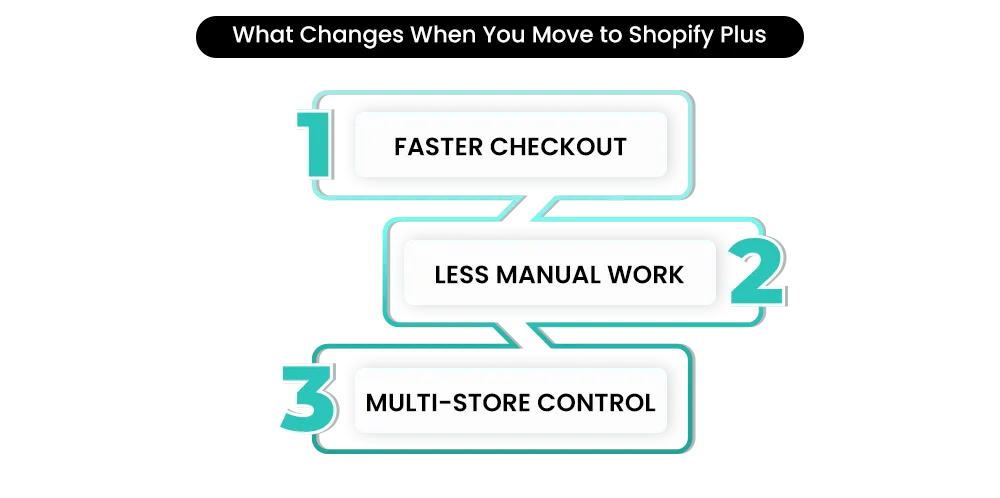
Here’s what changes when a brand moves to Shopify Plus:
- Advanced checkout customization and performance upgrades
- Automation tools that reduce manual workload
- Multi-store management for global expansion
These upgrades explain why conversations around Shopify Plus pros and cons often focus on growth readiness. A Shopify Plus agency helps brands decide if the platform fits their stage — because while it’s not for everyone, at the right time, it becomes a powerful scaling engine.
Shopify Plus vs Regular Shopify
Regular Shopify is built for small and growing businesses that want a simple and cost-effective ecommerce solution. It covers all essential selling needs but keeps advanced features limited.
Regular Shopify features:
- Ready-made themes with basic customization
- Standard Shopify checkout (limited control)
- Basic reports and analytics
- App-based functionality for marketing and sales
- Single-store management
- Lower monthly cost, suitable for early growth
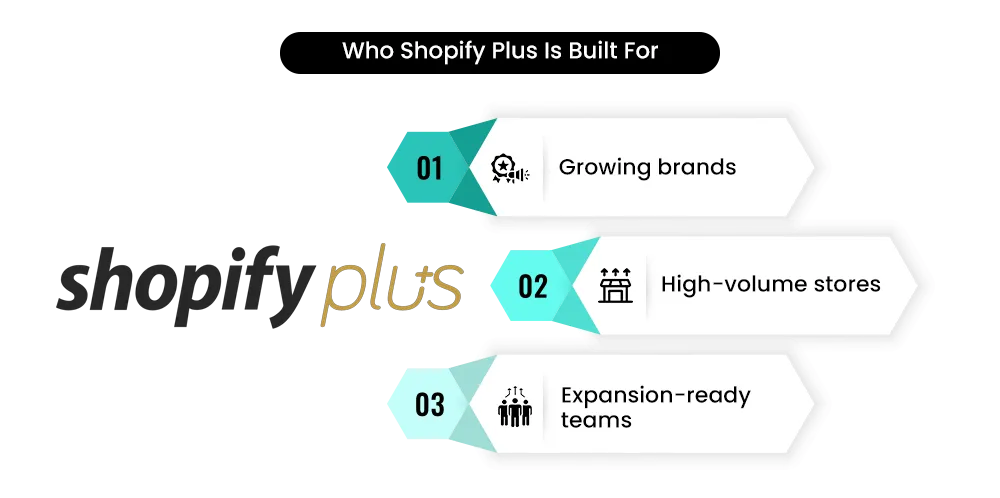
Shopify Plus is designed for fast-scaling and enterprise brands that need more control, automation, and flexibility.
Build Your Shopify Store From Scratch With Mastroke
Launch faster with Mastroke, an official Shopify Partner. We build structured stores with conversion-first design, clean setup, and features built to scale!!
Shopify Plus features:
- Fully customizable checkout for higher conversions
- Automation tools like Shopify Flow and Launchpad
- Higher API limits for complex integrations
- Multi-store and multi-region management
- Built-in tools for international expansion
- Priority support and dedicated account management
- Headless commerce support with Hydrogen and Oxygen
In summary, Regular Shopify is ideal for brands still building traffic, refining products, and testing marketing strategies. Shopify Plus is best for businesses that already have consistent sales and want to scale efficiently. Plus doesn’t replace growth strategy—it strengthens infrastructure once growth is already happening.
Why Some People Think Shopify Plus Is Overhyped
The criticism around Shopify Plus usually comes from businesses that upgraded too early. When a small or mid-sized store jumps to an enterprise platform, the gap between cost and benefit becomes obvious. That’s why debates around Shopify Plus value vs cost are so loud online.
Without the right scale, the platform feels expensive instead of empowering. A good Shopify Plus agency often warns beginners about this mistake: Plus doesn’t fix weak marketing, poor products, low traffic, or poor conversion rates. It only strengthens the infrastructure that is already working.
Another reason people call Shopify Plus overhyped is expectation mismatch. Some merchants assume that upgrading will automatically increase sales. In reality, Shopify Plus ROI comes from efficiency, automation, and scale — not instant growth. When brands expect magic instead of operational improvements, disappointment follows.
Common Real-World Complaints from Merchants
You’ll often hear comments like:
“Shopify Plus didn’t fix our conversion problems — the traffic and UX issues were still there.”
“We upgraded too early and ended up paying for features we weren’t ready to use.”
“We didn’t need multi-store or international expansion yet.”
“The pricing jump felt huge compared to what we were actually using.”
“Most Plus features only matter after high-volume growth, not before it.”
“We expected faster revenue growth, but what we really got was backend efficiency.”
These concerns fuel the ongoing discussion about Shopify Plus pros and cons. The platform itself isn’t overhyped — it’s often misunderstood and mistimed. For the right business stage, Plus is powerful. For the wrong one, it simply feels unnecessary.
The Real Benefits of Shopify Plus
When businesses reach a scaling stage, Shopify Plus stops being a luxury and starts acting like infrastructure. Instead of patching problems with apps and workarounds, the platform removes growth bottlenecks. A skilled Shopify Plus agency doesn’t sell features — it builds systems that convert complexity into efficiency. That’s where real Shopify Plus ROI appears.
Core Advantages at a Glance
| Benefit | What It Means for Businesses | Why It Matters |
| Performance at Scale | Handles extreme traffic without crashes | Prevents revenue loss during peak sales |
| Advanced Automation | Automates workflows, inventory, and operations | Reduces manual workload and staffing costs |
| Checkout Customization | Full control over checkout behavior | Improves conversion rates and AOV |
| Multi-Store Management | Run regional or brand stores centrally | Supports global expansion |
| Enterprise Stability | Built-in hosting, security, uptime | Lower infrastructure risk |
These advantages directly influence Shopify Plus value vs cost. For scaling brands, performance reliability alone can justify the investment.
Where These Benefits Create Real ROI
Shopify Plus shines in situations where growth creates operational strain:
- Flash sales and high-traffic campaigns
- International expansion with multiple storefronts
- B2B and wholesale operations
- Complex backend integrations
This is why debates around Shopify Plus pros and cons often depend on scale. For small stores, these tools feel excessive. For large operations, they become essential.
Shopify Plus Pricing 2026: What It Actually Costs
Pricing is the biggest reason beginners hesitate to explore Shopify Plus. The headline number sounds intimidating, but understanding what’s included changes the conversation. The platform isn’t priced like a typical subscription — it’s positioned as enterprise infrastructure. A transparent Shopify Plus agency will always break pricing into layers so businesses can evaluate the real value of Shopify Plus vs. cost, rather than reacting to a single number.
Base Shopify Plus Pricing 2026
In 2026, Shopify Plus pricing begins at around $2,000 per month and scales based on revenue. For high-volume brands, higher fees are frequently balanced by transaction savings and operational efficiencies. A Shopify Plus agency helps brands assess pricing in the context of overall ROI, not just monthly cost.
Shopify Plus Pricing: Cost Breakdown
Shopify Plus Pricing: Cost Breakdown
| Cost Element | Estimated Pricing |
| Platform License Fee | $2,000 – $25,000 per month (based on revenue) |
| Transaction Fees | 2.15% + $0.30 (Visa & MasterCard)
3.15% + $0.30 (American Express & international cards) |
| Customization & Development | $2,000 – $15,000 (one-time or phased) |
| Apps & Add-ons | $10 – $100 per app/month |
| Data Migration & Launch Support | Starts from $500 |
| Ongoing Maintenance & Support | Varies by service provider and scope |
This structure explains why conversations about the pros and cons of Shopify Plus always include long-term financial planning.
Hidden Costs Businesses Should Expect
The platform fee is only part of the picture. Scaling businesses should also budget for:
- Advanced app ecosystems
- Custom development projects
- Ongoing optimization and automation
- Support from a Shopify Plus agency
These aren’t flaws — they’re growth investments. When evaluated correctly, they connect directly to Shopify Plus ROI and operational efficiency.
Enterprise Comparison: Why Brands Still Choose Shopify Plus
Compared to enterprise platforms like Magento or Salesforce Commerce Cloud, Shopify Plus often delivers lower total ownership costs. Hosting, security, and infrastructure are built in.
Businesses spend less time maintaining systems and more time scaling revenue. This is where Shopify Plus value vs cost becomes clearer: the platform replaces multiple technical expenses with one predictable ecosystem.
Shopify Plus ROI: When It Pays for Itself
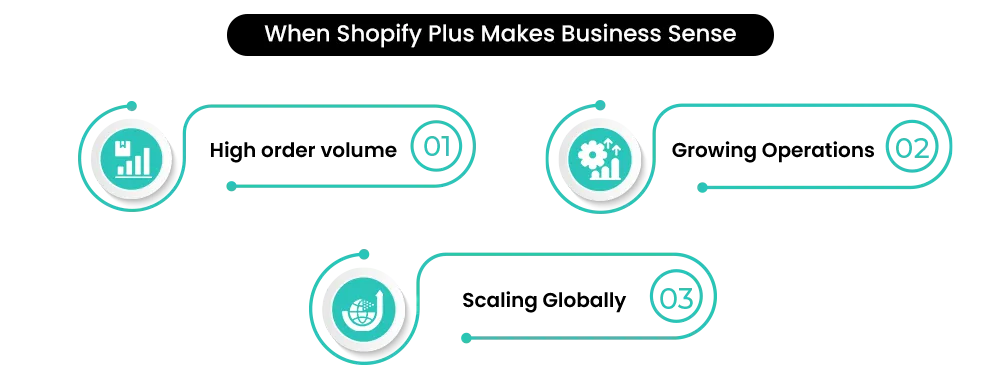
The real Shopify Plus ROI comes when your business reaches a scale where operational inefficiencies start costing more than the platform itself. High transaction volumes, complex product catalogs, multiple storefronts, and global operations are where Plus shines. A Shopify Plus agency can help identify exactly where the investment pays off — whether through lower transaction fees, reduced developer hours, or faster checkout that boosts conversions.
For example, stores processing thousands of orders daily often recover the monthly platform cost within weeks. Unlike standard Shopify plans, Shopify Plus isn’t about features alone — it’s about efficiency, stability, and scaling without friction. At the right stage, the ROI can be substantial and measurable.
How to Get Started with Shopify Plus
Upgrading to Shopify Plus is easier when you follow a clear roadmap. Here’s a quick step-by-step guide:
1. Define Your Goals
Decide why you’re moving to Shopify Plus — more products, better conversions, global expansion? Identify the features you need, your budget, and payment setup. Clear goals ensure the platform delivers real Shopify Plus ROI.
2. Join the Jumpstart Webinar
Attend Shopify’s welcome webinar to understand all features, meet your Merchant Success Manager, and learn where to find help.
3. Explore Shopify Plus Academy
Access free courses and workshops on marketing, operations, and customer experience. Learn to optimize your store and increase efficiency.
4. Customize checkout with Shopify Functions
Use Shopify Scripts to personalize discounts, promotions, and checkout flows — a key way to boost conversions.
5. Automate with Shopify Flow & Launchpad
Automate tasks like customer service, fraud prevention, marketing, and schedule flash sales to save time.
6. Install a Help Desk
Apps like Gorgias integrate with Shopify Plus for ticket management, omnichannel support, and faster response times, improving customer satisfaction and long-term ROI.
Following these steps ensures your Shopify Plus store runs smoothly, scales effectively, and maximizes the platform’s value.
When Shopify Plus Isn’t the Right Fit?
Shopify Plus is powerful—but it’s not for everyone. Upgrading too early can lead to wasted resources and frustration. Consider these factors:
-
Low Revenue or Small Stores
If your monthly revenue is modest, the high Plus fees may outweigh the benefits.
-
Simple Product Catalogs
Stores with only a few products don’t need advanced checkout customization or multi-store management.
-
Minimal Traffic
If your website traffic is low, Plus’s performance upgrades and automation tools won’t provide a noticeable ROI.
-
Budget Constraints
Beyond the base platform fee, custom development, apps, and agency support can add up. Ensure your budget aligns with the upgrade costs.
-
Unoptimized Operations
Plus doesn’t fix weak marketing, slow shipping, or poor product-market fit. Upgrade only once your systems are ready to scale.
Who Should Consider Upgrading to Shopify Plus
Not every merchant benefits from Shopify Plus—but the platform can be a game-changer for businesses at the right stage. Here’s a clear breakdown:
| Audience Type | Key Needs | How Shopify Plus Helps |
| Small Stores / Beginners | Low-cost, simple setup | Stick with regular Shopify until growth demands enterprise tools |
| Scaling SMBs | Automation, checkout optimization, multi-store support | Reduces manual workload, increases conversions, and enables expansion |
| High-Volume / Enterprise | Global operations, complex product catalogs, B2B/Wholesale | Handles traffic spikes, multi-currency transactions, and advanced integrations with ease |
Bottom Line: Shopify Plus is most valuable for businesses that have outgrown basic plans, face operational bottlenecks, or need tools to scale efficiently and globally.
Final Verdict
Shopify Plus isn’t about chasing hype — it’s about building systems that scale without friction. If your store is hitting operational limits, facing performance bottlenecks, or preparing for serious growth, the right Shopify Plus strategy matters more than the platform itself.
Mastroke works as a Shopify Plus agency focused on execution, not assumptions. From migration and custom development to CRO, automation, and performance optimization, we help brands turn Shopify Plus into a growth-ready infrastructure — not an expensive upgrade.
If you’re evaluating Shopify Plus or already on Plus and want better results, let’s talk. We’ll assess your goals, challenges, and readiness — and map out a clear, ROI-driven path forward.
With the right strategy and execution, Shopify Plus becomes a foundation for sustainable, long-term growth.
Build your dream Shopify store today
Bring your vision to life with Mastroke, an official Shopify Partner. We design and develop high-converting, scalable Shopify stores with clean structure and future-ready features—built to grow with your business.
FAQs
1. When does Shopify Plus genuinely become worth the cost?
Shopify Plus pays off when your business faces high traffic, complex catalogs, or global operations. Its automation and scalability save time and boost conversions, making the investment worthwhile.
2. What are the real downsides of upgrading to Shopify Plus?
High costs, unused features for small stores, and migration complexity are key downsides. Plus doesn’t fix weak marketing or low traffic, so your systems must be ready to scale.
3. Which types of businesses should avoid Shopify Plus?
Small, low-revenue stores, simple catalogs, or businesses with low traffic should wait. Plus is designed for scaling operations, not for basic setups.