Shopify email marketing plays a powerful role in ecommerce growth because the customers who already trust your brand often generate the most consistent and profitable revenue.
Many Shopify merchants invest heavily in ads and traffic acquisition, but overlook the leaky bucket problem, where most first-time buyers never return for another purchase.
Customer acquisition costs continue rising across ecommerce platforms, pushing brands to search for dependable ways to generate repeat revenue without constantly increasing advertising budgets.
Email remains the highest ROI owned marketing channel, with research from Litmus showing brands earn roughly $36 for every dollar spent. Retention-focused emails differ from acquisition campaigns because they nurture existing customers, encourage second purchases, and gradually build stronger relationships with people already familiar with your brand.
Instead of chasing endless new visitors, successful Shopify stores create structured email systems designed to guide subscribers from first purchase to loyal repeat customer.
This guide explains a complete Shopify email marketing framework that helps merchants increase repeat purchases, improve customer lifetime value, and build sustainable revenue through smarter retention strategies.
What Is Shopify Email Marketing for Retention?
Shopify email marketing for retention uses automated lifecycle messages and targeted email campaigns to nurture customers, recover missed purchases, and encourage repeat buying throughout the ecommerce journey.
Many merchants searching for how to do email marketing on Shopify assume sending promotional blasts works, yet retention requires structured lifecycle marketing that responds to customer behavior.
Lifecycle marketing organizes communication according to customer journey stages, ensuring every subscriber receives relevant information based on their engagement history, purchase patterns, and relationship with your brand.
Email automation plays a central role because automated flows send timely messages without manual effort, while broadcast email campaigns support product launches, announcements, and limited promotions.
Customer Lifecycle Stages
Understanding the ecommerce customer lifecycle helps merchants deliver the best email marketing for Shopify stores that balances acquisition, retention, and long-term customer value.
Typical lifecycle stages include:
- Subscriber — someone who joined your email list but has not yet purchased.
- First-time buyer — a new customer experiencing your brand for the first time.
- Repeat customer — a shopper who returns because your product solved their need.
- Loyal customer — a frequent buyer who trusts your brand and recommends it.
- Lapsed customer — a past buyer who stopped purchasing and needs re-engagement.
Lifecycle messaging ensures Shopify email marketing remains relevant by aligning email automation and email campaigns with real customer behavior instead of sending generic promotions.
– Also Read- 7 Shopify Plus Limitations That Premium Brands Must Be Aware Of
Why Email Marketing Drives Retention in Ecommerce?
Shopify email marketing plays a crucial role in ecommerce retention because returning customers generate consistent revenue without forcing merchants to constantly increase advertising budgets.
Many store owners chase new traffic while ignoring existing buyers, even though improving customer retention slightly can dramatically increase profitability for growing ecommerce brands.
The Math of Retention
Research from Bain and Company shows that increasing customer retention by just five percent can boost profits anywhere between twenty-five and ninety-five percent.
That insight explains why the best email marketing for Shopify focuses on strengthening relationships with existing customers rather than relying entirely on continuous acquisition campaigns.
Email works exceptionally well for retention because it is an owned marketing channel where merchants communicate directly with customers without algorithm restrictions from social platforms.
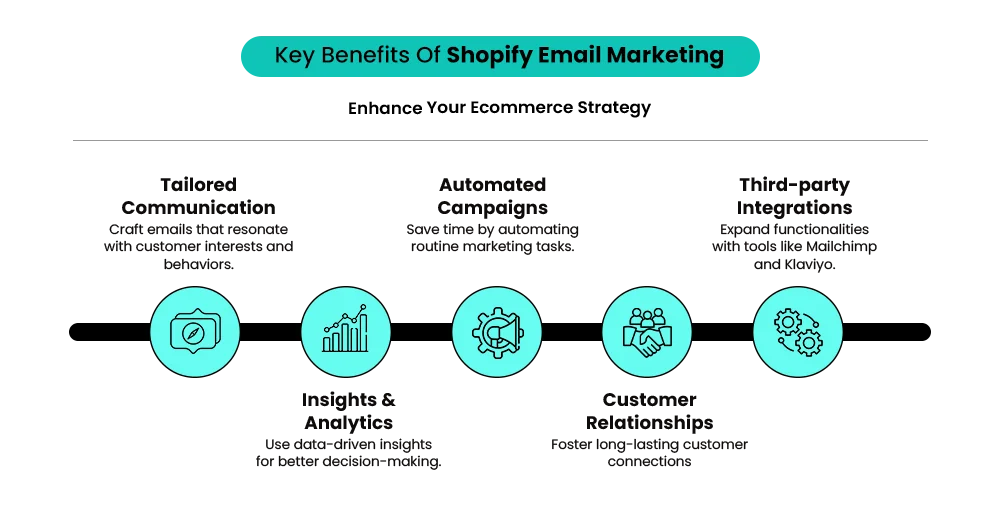
Another advantage is personalization because Shopify email marketing automation allows brands to tailor messages according to purchase history, browsing behavior, and customer interests.
Why Email Works So Well?
Email marketing automations also generate revenue continuously through scheduled flows that trigger automatically when customers take specific actions on a Shopify store.
For example, abandoned cart emails remind shoppers about products left behind and often recover five to ten percent of otherwise lost purchases.
Merchants learning how to automate emails in Shopify quickly realize that strategic email flows nurture customers, encourage repeat purchases, and strengthen long term brand loyalty. 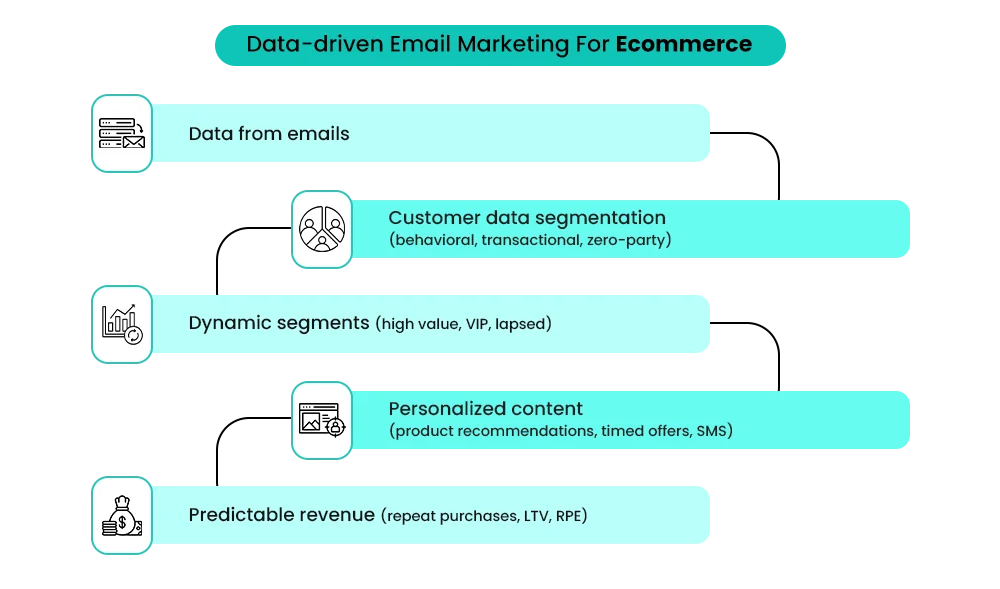
The Shopify Email Marketing Retention Framework
A successful Shopify email marketing strategy relies on a structured lifecycle system because random promotional messages rarely build long term relationships or consistent revenue for ecommerce brands.
Many merchants send occasional email blasts hoping for quick sales, but effective ecommerce retention strategies depend on predictable communication aligned with customer behavior.
The Shopify Retention Framework organizes email communication into clear lifecycle stages so each message matches where a customer currently stands within the buying journey.
Instead of guessing how to create Shopify email campaigns, brands use structured marketing automation flows that guide subscribers naturally from curiosity to loyalty.
Each stage focuses on solving a specific retention challenge while strengthening customer trust and repeat purchasing behavior. The five stages within the Shopify Retention Framework include:
- Subscriber Capture — collecting email addresses through pop-up signup forms and checkout opt-ins so potential customers enter your Shopify email marketing ecosystem.
- First Purchase Conversion — nurturing new subscribers using welcome flows, product education, and incentives designed to encourage their first order from your Shopify store.
- Post Purchase Engagement — building trust immediately after a sale through confirmation emails, product education tips, and helpful follow-ups that strengthen customer satisfaction.
- Repeat Purchase Acceleration — using personalized recommendations, replenishment reminders, and exclusive offers to encourage customers to return instead of exploring competitor stores.
- Customer Reactivation — reconnecting with inactive buyers through win-back sequences, reminding them about your products, and reintroducing reasons to purchase again.
When supported by the best email marketing app for Shopify, these lifecycle flows run automatically through marketing automation while merchants focus on improving products customer experience, and brand growth.
Build Your Shopify Store From Scratch With Mastroke
Launch faster with Mastroke, an official Shopify Partner. We build structured stores with conversion-first design, clean setup, and features built to scale!!
The Three Pillars of the Shopify Retention Framework
Successful Shopify email marketing depends on structure rather than random messaging because retention grows when brands consistently communicate with customers using a clear Shopify email marketing framework.
Many merchants struggle with retention because they send occasional promotions instead of building a system that nurtures subscribers and buyers through every stage of the relationship.
The Shopify email marketing framework relies on three essential pillars that guide how to set up Shopify email marketing for predictable repeat revenue.
Pillar 1 — Automated Lifecycle Email Flows
Automated flows operate continuously, delivering messages triggered by customer behavior so Shopify email marketing campaigns generate revenue without constant manual management.
Lifecycle flows ensure the right message reaches customers exactly when they need guidance, reassurance, or encouragement to complete another purchase.
Common lifecycle automations include:
- Welcome flows introduce new subscribers to your brand through helpful product education and branded emails that build early trust.
- Cart abandonment emails remind shoppers about items left behind and encourage them to complete the purchase they already considered.
- Post-purchase flows thanking customers while recommending complementary products or helpful usage tips after their first order.
- Win back campaigns reconnect with inactive buyers who have not purchased recently but may still respond to personalized incentives.
These automations form the backbone of Shopify email marketing because they respond to real customer behavior rather than sending untargeted promotions.
Pillar 2 — Strategic Campaign Calendar
Automation alone is not enough because brands must also maintain visibility through regular marketing campaigns that keep customers engaged with new updates.
Strategic broadcast campaigns include:
- Product launches announcing new collections or innovative products available inside the Shopify store.
- Holiday promotions are aligned with major ecommerce shopping periods such as Black Friday or seasonal celebrations.
- Seasonal campaigns introduce relevant products during specific times of the year.
- Limited-time offers create urgency that motivates quick purchasing decisions.
These Shopify email marketing campaigns help brands stay memorable even when customers are not actively shopping.
Pillar 3 — Advanced Segmentation
Segmentation replaces generic batch emails with targeted communication that feels relevant to each customer group. Instead of sending identical emails to everyone, brands segment audiences, including:
- New customers exploring products for the first time.
- Repeat buyers who already trust the brand and often purchase again.
- High-value customers generate the largest revenue contribution.
- Cart abandoners who showed purchase intent but paused before completing checkout.
- Inactive subscribers need re-engagement.
When supported by the best email marketing app for Shopify segmentation transforms simple emails into personalized, branded emails that strengthen relationships and improve campaign performance.
– Also Read- How to Plan Your Shopify Store Growth in 2026?
Essential Retention Flows Every Shopify Store Needs
Strong Shopify email marketing for ecommerce depends on structured retention flows that guide customers from curiosity to loyalty rather than relying only on occasional promotional messages.
Many merchants underestimate how much revenue automated retention emails generate, especially when supported by the best email marketing app for Shopify or advanced Shopify email marketing apps.
The following flows form the foundation of an effective retention system designed to encourage repeat purchases and long-term customer relationships.
Watch this quick example to understand how powerful retention email flows can be for Shopify stores:
Welcome Flow (Subscriber → First Purchase)
Welcome emails introduce new subscribers to your brand and guide them toward completing their first purchase while curiosity and interest remain strongest. A well-structured welcome flow usually includes these emails:
- Brand introduction explaining the story behind your company and what makes your products different from competitors.
- Incentive offer encouraging first purchases through limited discounts or exclusive subscriber benefits.
- Product education showing how products solve real problems and why customers trust them.
- Social proof, highlighting customer reviews, testimonials, and real product experiences that strengthen confidence.
Welcome emails often generate the highest open rates because subscribers recently joined your list and expect to hear from your brand.
Abandoned Cart Recovery Flow
The Abandoned Cart Recovery Flow helps merchants recover revenue from shoppers who added products to the cart but left without completing checkout. This flow typically includes:
- A reminder email is sent shortly after abandonment, reminding customers about products waiting in their cart.
- Urgency message explaining limited inventory or time-sensitive offers, encouraging faster decision-making.
- Incentive email offering small discounts or free shipping to remove hesitation.
Nearly seventy percent of online shopping carts are abandoned, making this one of the highest-performing flows in Shopify email marketing for ecommerce.
Browse Abandonment Flow
Browse abandonment emails target visitors who viewed specific products but never added items to their cart. These emails help merchants reconnect with potential buyers who showed interest but needed more reassurance.
Typical browse abandonment emails include:
- Personalized product reminders featuring items customers previously explored.
- Customer reviews demonstrating satisfaction from previous buyers.
- Recommended products suggest similar items based on browsing behavior.
This approach gently brings customers back without appearing overly aggressive or sales-driven.
Post Purchase Relationship Flow
Post-purchase communication plays a critical role in turning first-time buyers into loyal customers who trust your brand.
Essential post-purchase emails include:
- Order confirmation reassures customers that their purchase was successfully completed.
- Shipping updates informing buyers about delivery progress.
- Product education explaining how to use or care for purchased products.
- Cross-sell recommendations suggesting related products that customers may enjoy.
- Review requests encouraging customers to share feedback and contribute social proof for future buyers.
These messages strengthen trust and increase customer lifetime value across your Shopify store.
Cross-Sell and Upsell Flow
Cross-sell and upsell flows recommend complementary products based on previous purchases. Examples include:
- Accessories designed for products that customers have already purchased.
- Bundled product offers encouraging higher order value.
- Upgrade suggestions presenting premium versions of existing products.
These emails feel helpful rather than promotional because recommendations relate directly to customer interests.
Replenishment Reminder Flow
Replenishment reminders work especially well for products that customers purchase repeatedly. Common examples include:
- Skincare products
- Supplements
- Coffee subscriptions
- Pet products
Emails are scheduled according to expected product usage cycles, so customers receive reminders when supplies may be running low.
Win Back Campaigns
Win-back campaigns reconnect with customers who have not purchased for a longer period of time. Typical timelines include:
- Thirty-day reminder to check whether customers still need the product.
- Sixty-day incentive offering small discounts or special promotions.
- Ninety-day final offer encouraging customers to return before the brand stops sending promotional messages.
When implemented correctly, these retention flows transform Shopify email marketing into a consistent revenue engine instead of a simple promotional channel.
Advanced Personalization Using Shopify Data
Modern Shopify email marketing relies heavily on personalization because customers expect brands to understand their preferences instead of sending generic promotions to every subscriber.
Many Shopify growth experts emphasize personalization because it increases engagement, improves Customer Lifetime Value LTV and reduces reliance on expensive traffic growth strategies.
When brands personalize communication effectively, they also control rising cost per acquisition by encouraging repeat purchases from existing customers within their Shopify store.
Advanced personalization depends on customer data collected across browsing, purchases, and direct customer input through multiple touchpoints inside the ecommerce journey.
Zero-Party Data
One important source of personalization comes from zero-party data, which refers to information customers willingly provide to brands.
Examples of zero-party data include:
- Quizzes that help customers identify the best product based on their preferences or needs.
- Surveys where customers share opinions about products, experiences, or interests.
- Preference centers allow subscribers to select product categories, frequency of emails, and communication topics.
Zero-party data helps Shopify email marketing apps deliver more relevant messages because customers voluntarily reveal what they want.
Behavioral Personalization
Another powerful personalization method uses behavioral triggers that respond to real actions customers take inside a Shopify store.
Behavioral personalization activates emails when specific behaviors occur, including:
- Browsing history shows which products a customer explored recently.
- Purchase behavior reveals what customers bought previously and what complementary items they might consider next.
- Cart activity identifying when shoppers add products but hesitate before completing checkout.
These triggers allow the best email marketing app for Shopify to deliver timely messages that feel helpful instead of intrusive.
Dynamic Email Content
Dynamic email content represents another major advancement in Shopify email marketing because each subscriber receives customized product suggestions inside the same campaign. The content blocks often display:
- Recommended products based on purchase patterns.
- Recently viewed items remind customers about products they explored earlier.
- Personalized offers tailored to specific customer segments.
Many Shopify Plus Partner agencies use these strategies to build sophisticated retention systems that increase engagement, strengthen loyalty, and grow long-term ecommerce revenue.
– Also Read- Launching a New Store with Shopify Plus — What’s Different?
Shopify Email Segmentation Strategy
Shopify email marketing performs significantly better when messages are tailored to specific customer behaviors instead of sending identical emails to every subscriber on your mailing list.
Many merchants struggle with poor engagement because their campaigns ignore Shopify email segmentation and treat all contacts as one large audience group.
A strong retention strategy divides the audience into smaller segments of customers so each group receives emails matching their interests, purchase history, and relationship stage.
Shopify email marketing experts recommend segmentation because relevant messages improve open rates, increase clicks, and encourage customers to return for additional purchases.
Modern platforms, including the best email marketing app for Shopify, allow merchants to automatically categorize subscribers using behavior, purchase patterns, and engagement signals.
Common segments of customers used in Shopify email segmentation include:
- First-time buyers who recently purchased and need reassurance, education, and helpful follow-up emails to strengthen their confidence in the brand.
- Repeat customers who already trust the brand and respond well to product recommendations, exclusive offers, and loyalty rewards.
- VIP customers who generate significant revenue and deserve early access to launches, special promotions, and personalized appreciation messages.
- Cart abandoners who added products to their cart but left before completing checkout may respond well to reminders or limited incentives.
- Inactive subscribers who stopped opening emails or purchasing products require re-engagement campaigns to bring them back.
When segmentation aligns with behavior, Shopify email marketing becomes more relevant, encouraging stronger relationships, repeat purchases, and long-term retention growth.
Shopify Email Marketing Benchmarks
Shopify email marketing performance becomes easier to evaluate when merchants compare their results against common email marketing benchmarks used across successful ecommerce brands.
Understanding realistic benchmarks helps store owners identify whether their campaigns perform well or require improvements in segmentation, messaging timing, or overall email strategy.
Typical ecommerce benchmarks include the following performance ranges:
- The welcome email open rate often falls between fifty percent and eighty percent because new subscribers are highly interested immediately after joining your mailing list.
- Abandoned cart email open rate typically ranges between forty percent and fifty percent when reminder messages reach shoppers shortly after leaving checkout.
- Cart recovery rate usually lands between five percent and ten percent when reminder emails encourage shoppers to complete their purchase.
- Email revenue contribution often reaches twenty to thirty percent of total ecommerce revenue when brands consistently send emails using effective segmentation and email templates.
Using these Shopify email marketing tips, merchants can evaluate campaign performance, optimize email templates, and confidently send emails that support stronger retention and revenue growth.
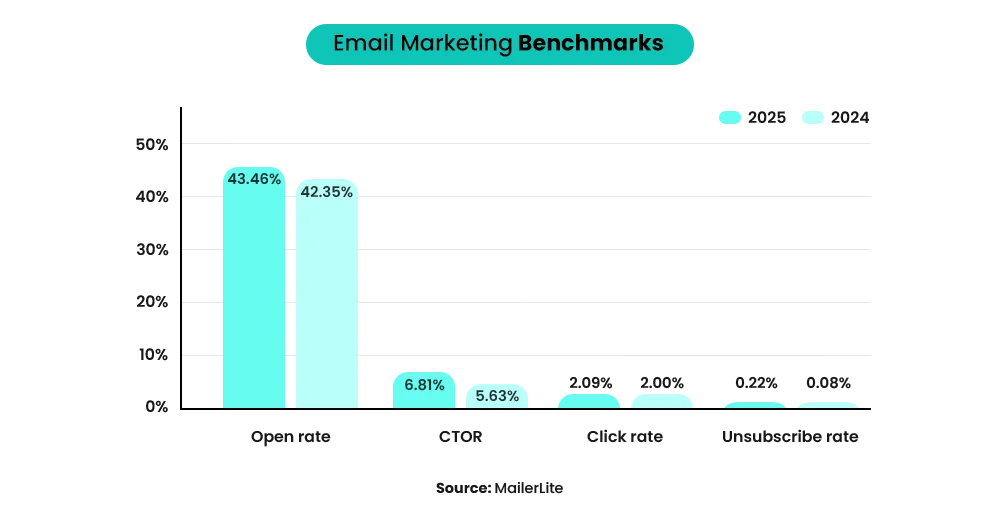
Measuring What Matters in Shopify Email Marketing
Effective Shopify email marketing requires focusing on meaningful performance indicators because many brands still measure success using vanity metrics that fail to reflect actual revenue impact.
High open rates may look impressive, yet they do not guarantee customers click links, explore products, or complete purchases after reading your email campaigns.
Key Metrics to Monitor
Shopify email marketing best practices emphasize monitoring metrics directly connected to engagement, purchasing behavior, and long-term retention performance within your Shopify store.
Key performance indicators include:
- Click-through rate CTR which measures how many recipients clicked links within the email, and indicates whether the message successfully encouraged readers to explore products.
- Placed order rate, which reveals the percentage of recipients who completed a purchase after opening or clicking the email message.
- Revenue per recipient, which calculates how much revenue each subscriber generates, helps merchants evaluate whether campaigns actually contribute to overall profitability.
These metrics provide a clearer understanding of whether Shopify email marketing strengthens retention rather than simply generating superficial engagement statistics.
The Role of A/B Testing
The role of A B testing becomes essential because continuous experimentation reveals which messages, design elements, and timing strategies perform best with customers.
Testing helps merchants refine campaigns gradually instead of relying on assumptions about what audiences prefer. Common testing areas include:
- Subject lines that influence whether recipients open the email.
- Email design layouts that affect readability and visual engagement.
- Call to action buttons guiding readers toward product pages or special offers.
- Send times determine when subscribers are most likely to read messages.
Using the best email marketing app for Shopify makes experimentation easier because it is built with analytics that track results and reveal which adjustments improve campaign performance.
– Also Read- Shopify Plus Automation: Practical Ways to Automate Store Operations
Best Shopify Email Marketing Tools
Shopify email marketing becomes significantly easier when merchants choose the right platform because powerful Shopify email marketing tools simplify automation, segmentation, analytics, and personalized communication.
Many merchants struggle with retention because they rely on limited functionality instead of selecting the best email marketing app for Shopify that supports advanced lifecycle messaging.
Several reliable Shopify email marketing apps help stores manage campaigns, automate retention flows, and improve long-term customer engagement.
Popular Shopify email marketing tools include:
- Klaviyo — a powerful platform known for advanced segmentation, detailed analytics, and sophisticated automation that helps merchants build highly personalized retention-focused email journeys.
- Shopify Email — the built-in Shopify messaging tool designed for basic campaigns, allowing merchants to create simple newsletters, promotions, and product announcements directly inside their store dashboard.
- Omnisend — an omnichannel platform supporting Shopify messaging through email, SMS, and push notifications, helping brands communicate with customers across multiple channels simultaneously.
- Mailchimp — a beginner-friendly automation platform suitable for smaller stores that want simple campaign creation, easy templates, and straightforward subscriber management.
- ActiveCampaign — a robust platform offering strong CRM integration, advanced automation workflows, and behavioral targeting, useful for brands building complex lifecycle communication systems.
Selecting the best email marketing app for Shopify depends on business size, marketing complexity, and how deeply a brand wants to integrate automation, segmentation, and CRM integration.
Common Shopify Email Marketing Mistakes
Shopify email marketing can generate strong retention revenue, yet many stores struggle because they repeat common Shopify email marketing mistakes that weaken engagement and reduce overall campaign performance.
Merchants often rely heavily on promotional emails without building a balanced communication strategy that nurtures customers throughout the entire lifecycle of their relationship with the brand.
When Shopify email marketing lacks structure, valuable opportunities to strengthen loyalty, encourage repeat purchases, and recover lost revenue quietly disappear.
Common Shopify email marketing mistakes include:
- Sending too many promotional emails, which overwhelm subscribers and eventually lead to lower engagement, higher unsubscribe rates, and declining trust in your brand messaging.
- Weak segmentation where merchants send identical emails to every subscriber instead of tailoring messages to different audience groups based on purchase history, interests, and behavior.
- Poor subject lines that fail to capture attention and reduce open rates even when the email contains valuable offers or helpful product information.
- Ignoring post purchase engagement, which means customers receive no follow-up education recommendations or appreciation messages after completing an order.
No Shopify email marketing flows, which prevents stores from automatically sending welcome sequences, abandoned cart reminders, and win-back messages.
Using the best email marketing app for Shopify helps automate Shopify email marketing flows so brands avoid these mistakes and capture more revenue through smarter retention communication.
When to Hire Shopify Email Marketing Experts?
Shopify email marketing can drive meaningful retention revenue, yet many stores struggle because campaigns lack structure, automation, and the strategic planning needed for consistent performance.
Merchants often try multiple tools, hoping the best email marketing app for Shopify alone will solve retention problems, but technology without strategy rarely improves long term results.
Businesses should consider the decision to hire Shopify Email Marketing Experts when certain warning signs appear in their email performance.
Common indicators include:
- Email contributes less than 15% of total store revenue, even though retention marketing should generate a significant portion of ecommerce income.
- Deliverability challenges where emails frequently land in spam folders, reducing open rates and preventing customers from seeing important brand messages.
- Automation flows remain incomplete, which means subscribers miss welcome sequences, abandoned cart reminders, and other critical lifecycle messages.
- Weak segmentation where every subscriber receives identical emails rather than personalized communication based on behavior or purchase history.
Shopify growth experts at Mastroke help brands design structured retention systems, including segmentation, lifecycle automation, and performance optimization, to unlock stronger customer lifetime value through email marketing.
– Also Read- 5 Clear Signs It’s Time to Hire a Shopify Agency
Conclusion
Shopify email marketing succeeds when merchants treat retention as a long term growth strategy rather than sending occasional promotions, hoping customers return without consistent communication.
Acquisition introduces customers to your brand, yet retention builds sustainable profit by nurturing relationships and encouraging repeat purchases through meaningful messages and helpful product guidance.
Using the best email marketing app for Shopify allows merchants to automate lifecycle communication, personalize offers, and maintain engagement without manually managing every email campaign.
Brands that combine steady traffic growth with structured retention systems turn one-time buyers into loyal advocates who return frequently and recommend products to others.
When Shopify email marketing focuses on customer relationships instead of short-term promotions, stores build predictable revenue and long-lasting loyalty that strengthens overall ecommerce growth.
Build your dream Shopify store today
Bring your vision to life with Mastroke, an official Shopify Partner. We design and develop high-converting, scalable Shopify stores with clean structure and future-ready features—built to grow with your business.
FAQs
What is Shopify email marketing?
Shopify email marketing uses automated and campaign emails to nurture subscribers, recover abandoned carts, and increase repeat purchases for ecommerce stores.
How many emails should Shopify brands send per week?
Most Shopify brands send 1–3 emails per week, balancing promotional campaigns with value-driven content to maintain engagement without overwhelming subscribers.
What is a good conversion rate for ecommerce emails?
A typical ecommerce email conversion rate ranges between 1% and 5%, depending on segmentation quality, offer relevance, and customer intent.
Which Shopify email flows generate the most revenue?
Welcome flows, abandoned cart recovery, post-purchase cross-sell emails, and win-back campaigns usually generate the highest revenue for Shopify stores.
Is Klaviyo better than Shopify Email for automation?
Klaviyo generally offers stronger automation, segmentation, and analytics, while Shopify Email works well for basic campaigns and simple store communication.