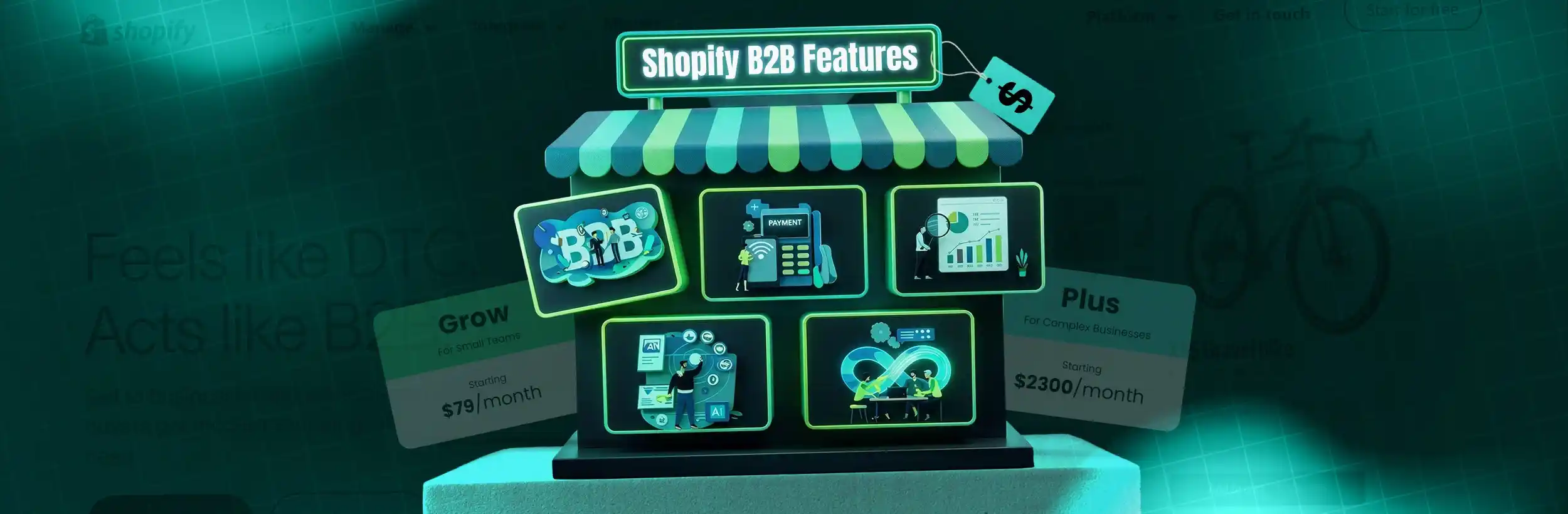
This blog post examines Shopify's recent expansion of B2B features to Basic, Grow, and Advanced plans, which were previously only available on Shopify Plus. It analyzes whether these newly accessible B2B capabilities provide sufficient functionality for real wholesale operations or just limited access under a new structure.
Are you actually getting full B2B functionality on Shopify now—or just partial access under a new label?
For years, Shopify B2B was locked behind Shopify Plus. Businesses that wanted wholesale features had to either upgrade to an enterprise plan or rely on multiple third-party apps to replicate basic functionality. That has changed.
Shopify has now introduced Shopify B2B features across Basic, Grow, and Advanced plans. At first glance, this looks like a major step toward accessibility. And it is. But the real question is not just whether you have access—it’s whether that access is enough to support real B2B operations.
This blog breaks down what’s included, what’s limited, and how to decide whether Shopify’s new B2B capabilities truly fit your business needs.
What is Shopify B2B?
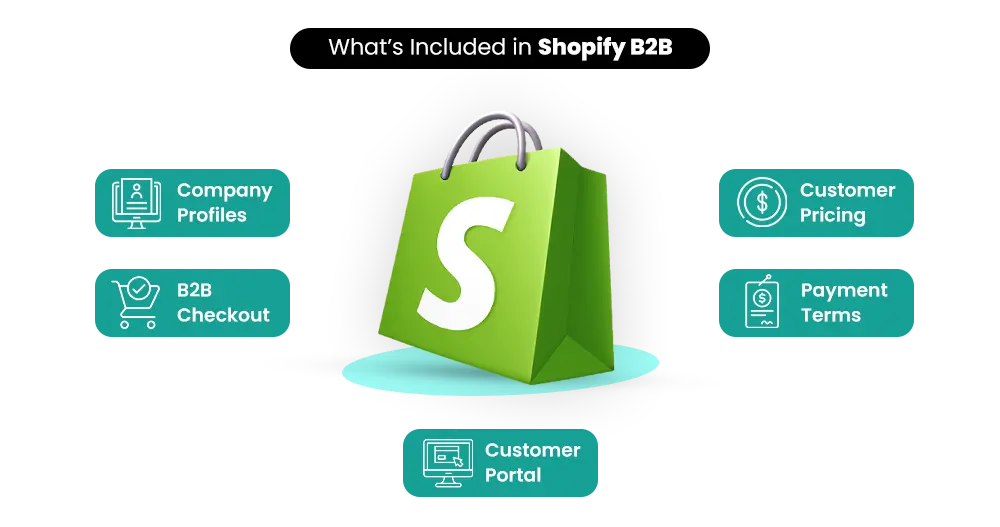
Shopify B2B is a set of built-in features that allows businesses to sell wholesale products through Shopify. It includes tools for managing company accounts, offering custom pricing, enabling bulk orders, and setting flexible payment terms.
Unlike traditional setups that require separate platforms, B2B allows businesses to run wholesale and retail operations in one place, simplifying processes and improving efficiency.
Shopify’s B2B Update Explained (What Actually Changed)
Historically, Shopify positioned B2B as an advanced capability meant for high-volume businesses. Features like company accounts, custom pricing, and payment terms were available only through Shopify Plus, which created a clear barrier for smaller businesses.
Now, Shopify has shifted its approach.
By expanding Shopify B2B features to standard plans, Shopify is making wholesale commerce more accessible. This is not just a feature update—it’s a strategic move to compete with traditional B2B platforms that are often expensive and complex. The goal is simple: allow businesses to manage both B2B and B2C operations within a single system.
However, while access has expanded, the depth of functionality still differs. Standard plans provide the foundation, but they may not support advanced workflows required by larger businesses.
What Shopify B2B Features Are Available Now?
The expansion of Shopify B2B introduces key features that support wholesale operations across all plans.
1. Company Profiles & Multi-User Accounts
With B2B, businesses can create company-based accounts instead of individual customer profiles. Each company can have multiple users, allowing teams to collaborate on purchases. This reflects real-world B2B buying behavior and reduces friction in managing large or recurring orders.
2. Custom Pricing & Catalog Management
Pricing flexibility is essential in wholesale. With Shopify B2B, you can:
- Set customer-specific pricing
- Create exclusive catalogs
- Offer volume discounts
This allows businesses to tailor pricing strategies based on customer relationships and order size.
3. B2B Checkout Experience
The checkout process is optimized for business transactions. Buyers can place bulk orders quickly, reducing friction and improving efficiency. A streamlined checkout is critical for repeat purchases and customer retention.
4. Payment Terms & Flexible Payments
B2B transactions often involve delayed payments. Shopify B2B allows businesses to offer payment terms such as Net 15 or Net 30, enabling customers to pay after receiving goods. This aligns with standard B2B practices and helps build long-term relationships.
5. Self-Serve B2B Customer Portals
Modern B2B buyers expect autonomy. With Shopify B2B, customers can:
- View order history
- Reorder products
- Manage their accounts
This reduces manual communication and improves overall efficiency.
Don't Just Access Shopify B2B — Actually Build It Right
Most stores turn on B2B features and stop there. The ones winning wholesale aren’t just enabled — they’re properly set up with the right pricing, workflows, and customer experience from day one.
Shopify B2B Features by Plan (2026)
To understand how Shopify B2B features differ across plans, here is a comparison:
| Feature | Basic | Grow | Advanced | Plus |
| Company Profiles | ✔ | ✔ | ✔ | ✔ |
| Custom Pricing | ✔ | ✔ | ✔ | ✔ |
| Payment Terms | Limited | Moderate | Advanced | Full |
| Automation | Limited | Moderate | Strong | Advanced |
| Checkout Customization | Basic | Moderate | Advanced | Full |
| Scalability | Low | Medium | High | Enterprise |
As shown above, while Shopify B2B is accessible on all plans, the level of flexibility increases significantly as you move to higher tiers.
What You DON’T Get on Basic, Grow & Advanced
While B2B is now more accessible, standard plans still come with limitations that businesses need to consider.
These include:
- Limited automation capabilities
- Restricted checkout customization
- Fewer integrations
- Reduced scalability for large operations
For small businesses, these limitations may not be a major concern. However, as your operations grow, they can become a constraint.
Understanding these gaps is essential when deciding whether to upgrade.
For deeper insights, read our blog “7 Shopify Plus Limitations That Premium Brands Must Be Aware Of” to understand where even advanced plans may fall short.
Shopify B2B vs Shopify Plus: What’s the Real Difference?
To better understand how standard plans compare with enterprise-level capabilities, the table below highlights the key differences:
| Area | Standard Plans | Shopify Plus |
| Pricing Flexibility | Basic | Advanced |
| Automation | Limited | Full |
| Checkout Customization | Limited | Extensive |
| API Access | Limited | Advanced |
| Scaling Capability | Moderate | Enterprise |
As shown, the main difference is not access—it is depth and scalability.
How to Set Up Shopify B2B (Step-by-Step)
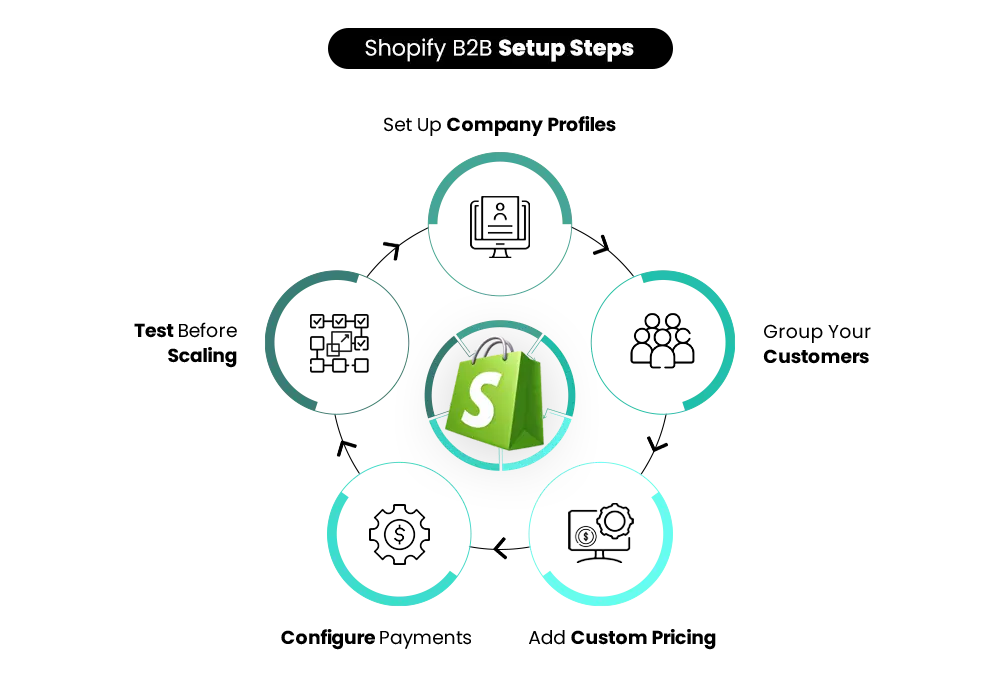
Setting up Shopify B2B requires a structured approach to ensure smooth operations.
- Start by creating company accounts and organizing customers into appropriate groups. Then assign custom pricing and catalogs based on those groups.
- Next, configure payment terms and test the checkout process to ensure everything works correctly.
It is important to keep the setup simple initially and expand gradually as your business grows.
Real Example: How a Shopify B2B Store Works
Consider a wholesale apparel brand using Shopify B2B. A retailer logs in and sees pricing tailored to their account. They place a bulk order, select payment terms, and complete checkout—all within the platform. This streamlined process reduces manual effort and allows businesses to handle larger volumes efficiently.
What Actually Works in Shopify B2B
Successful B2B implementations are built around simplicity, clarity, and a strong focus on user experience. Instead of overcomplicating workflows, they prioritize clear pricing structures, making it easy for customers to understand costs and place orders without confusion. A streamlined checkout process is equally important, as it reduces friction and encourages repeat purchases.
In addition, the most effective setups mirror B2C experiences, offering intuitive navigation, fast ordering, and self-service options. Today’s buyers expect convenience and control, and businesses that deliver this consistently are more likely to build long-term relationships and achieve sustainable growth.
📌 Key Video
What Doesn’t Work (Most Shopify B2B Setups Fail Here)
Many businesses struggle with B2B because they overcomplicate their systems.
Common mistakes include:
- Using too many apps
- Creating complex workflows
- Ignoring user experience
The most effective setups are simple, structured, and easy to use.
B2B Ecommerce Trends (2026 Insights)
B2B ecommerce is rapidly shifting toward digital-first experiences, with buyers expecting speed, flexibility, and control in how they purchase.
Recent insights show that over 70% of B2B buyers now prefer buying online over traditional sales channels, highlighting a clear move toward self-service commerce.
At the same time, personalization and seamless user experience have become key factors, with businesses investing in systems that offer tailored pricing, catalogs, and smooth checkout flows.
These trends show that modern B2B commerce is becoming more user-focused and system-driven—making platforms like Shopify B2B increasingly relevant for scalable growth.
Who Should Use Shopify B2B on Standard Plans?
Shopify B2B on standard plans is best suited for small to mid-sized businesses, hybrid brands, and companies starting their wholesale journey. It provides enough functionality to build structured operations without requiring a large investment.
When Should You Upgrade to Shopify Plus?
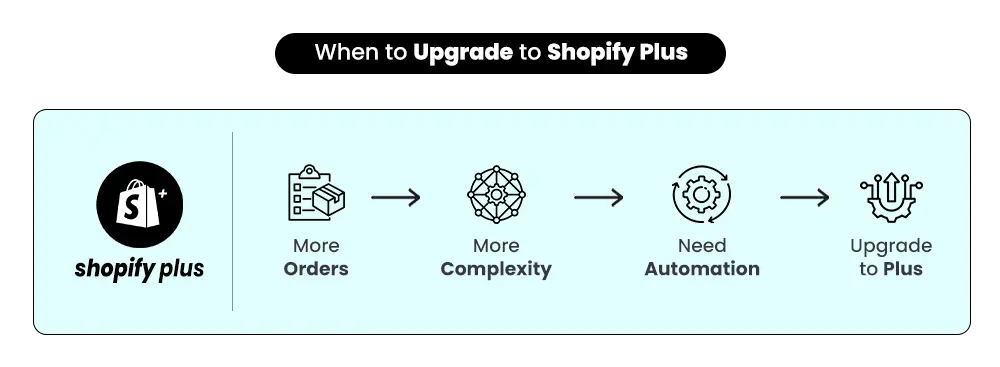
While standard plans provide a solid foundation for getting started with Shopify B2B, there comes a point where growing businesses need more flexibility, control, and scalability. Upgrading to Shopify Plus becomes relevant when your operations begin to outgrow the limitations of standard plans.
This typically happens when your business starts handling higher order volumes, managing multiple customer segments with complex pricing structures, or requiring advanced automation to reduce manual work. As workflows become more detailed, relying on basic features can slow down operations and create inefficiencies.
Another key factor is customization. If your business needs more control over checkout experiences, integrations with external systems, or advanced API access, Shopify Plus offers the level of customization required to support these needs.
In addition, businesses expanding into multiple markets or managing both B2B and B2C at scale often benefit from the enhanced capabilities of Shopify Plus.
At this stage, upgrading is not just about accessing more features—it is about building a system that can support long-term growth without operational limitations.
The Bigger Shift: Shopify Is Becoming a B2B + B2C Platform
This update reflects a broader transformation in ecommerce.
Shopify is moving toward a unified commerce model where businesses can manage both B2B and B2C operations within one system.
This reduces complexity, improves efficiency, and creates a more scalable foundation for growth.
Conclusion — What This Means for Your Business
The expansion of Shopify B2B is a significant step toward making wholesale commerce more accessible. It allows more businesses to enter the B2B space without relying on complex systems. However, access does not equal capability.
Standard plans provide a strong starting point, but as your business grows, you may need more advanced features. The key is to build a system that aligns with your current needs while allowing room for future growth.
Ready to Simplify Your Shopify Store?
At Mastroke, we help you implement B2B systems that are built for real operations—not just features.
From setup to scaling, we ensure your workflows are efficient, structured, and ready for growth.
Let’s build a Shopify system that works for you, not one you have to manage every day.
Frequently Asked Questions
1. What is Shopify B2B?
Shopify B2B is a set of built-in features that allows businesses to sell wholesale products directly through Shopify. It includes company accounts, custom pricing, bulk ordering, and flexible payment terms, enabling both B2B and B2C operations within one platform.
2. Is Shopify B2B available on all plans?
Yes, B2B is now available on Basic, Grow, and Advanced plans. However, while core features are accessible, advanced capabilities like automation, customization, and scalability are more powerful on Shopify Plus.
3. Do you need Shopify Plus for B2B?
No, Shopify Plus is not required anymore to use B2B. Standard plans support essential features, but Shopify Plus is better suited for businesses with complex workflows, high order volumes, or advanced customization needs.
4. Can you run B2B and B2C together on Shopify?
Yes, Shopify allows you to manage both B2B and B2C within the same store. You can create separate pricing, catalogs, and experiences for wholesale customers while continuing to serve direct consumers.
5. What are the limitations of B2B on standard plans?
Shopify B2B on standard plans may include limitations such as restricted automation, limited checkout customization, and fewer integrations, which can affect scalability for larger or more complex operations.
Ready to Build Your Shopify B2B System the Right Way?
From company accounts to custom pricing and payment terms — we set up your entire Shopify B2B system so it’s built for real wholesale operations, not just enabled and left to figure itself out.