
This blog post explains why Shopify Plus brands need strategic app selection focused on infrastructure rather than just adding more tools. It argues that enterprise-level growth comes from building an integrated app stack that supports revenue efficiency and operational scalability rather than tactical feature additions.
Most Shopify Plus brands don’t have an app problem. They have an architecture problem. The Shopify App Store has thousands of tools promising growth. At the enterprise level, growth doesn’t come from adding more of them. It comes from building a disciplined, integrated app stack that supports revenue efficiency, operational precision, and long-term scalability.
At high order volumes, even a 1% conversion improvement compounds into significant incremental revenue — without increasing acquisition spend. A 0.5% reduction in fraud exposure protects margin that would otherwise disappear quietly. Small inefficiencies multiply fast at scale.
This guide covers the must-have apps for Shopify Plus stores — not ranked by popularity, but by infrastructure impact.
Key takeaway: At the Shopify Plus level, app decisions affect infrastructure, automation, reporting, and operational scalability—not just store functionality.
Why Apps for Shopify Require Infrastructure Thinking at the Plus Level
Shopify Plus is not a higher-priced version of Shopify. It represents a different stage of operational maturity. Revenue volumes increase, operational layers expand, and brands begin managing multiple markets, currencies, and customer segments simultaneously.
On standard Shopify, merchants install apps to solve immediate needs — reviews, basic email, simple upsells. These decisions are mostly tactical and rarely affect long-term architecture.
On Shopify Plus, the same decisions carry structural consequences.
Apps influence checkout performance, backend automation, customer data accuracy, subscription workflows, and international pricing logic. What begins as a plugin ecosystem gradually becomes a technology stack supporting enterprise commerce operations.
Scale Introduces Sensitivity at Every Layer
- A slow-loading script affects thousands of sessions daily
- Fragmented apps create reporting inconsistencies across departments
- Manual workflows increase operational overhead and staffing costs
- Poor integrations compromise the reliability of customer data
Shopify Plus also unlocks capabilities that don’t exist on standard plans — checkout extensibility, native B2B pricing, multi-market architecture, and advanced automation workflows.
To use these effectively, apps must integrate deeply with Shopify’s architecture rather than operate as isolated add-ons. Every app added to a Plus store must justify its presence through measurable outcomes: increasing revenue, reducing operational complexity, or improving platform stability.
Shopify vs Shopify Plus: App Infrastructure Comparison
| Factor | Standard Shopify | Shopify Plus |
|---|---|---|
| App Purpose | Solve immediate feature gaps | Build scalable operational systems |
| Decision Approach | Tactical | Strategic |
| Impact of Apps | Limited to store functionality | Affects architecture, automation, and data |
| Checkout Customization | Limited | Advanced through Checkout Extensibility |
| Automation | Mostly manual or app-driven | Native automation via Shopify Flow |
| Risk of Poor App Choices | Low to moderate | High operational and performance impact |
“`
Why Checkout Extensibility Makes App Selection Critical
Checkout is the most sensitive layer of any ecommerce system. Shopify Plus allows brands to customize checkout using approved extensions rather than modifying core checkout code. This creates opportunities for dynamic shipping logic, payment customization, loyalty integrations, B2B workflows, and fraud prevention.
The more checkout flexibility you introduce, the more important app selection becomes.
Poorly designed checkout extensions can introduce latency, compatibility issues, and customer friction at the exact moment revenue is generated. At enterprise scale, even small checkout performance issues can create measurable impacts on conversion rate and revenue.
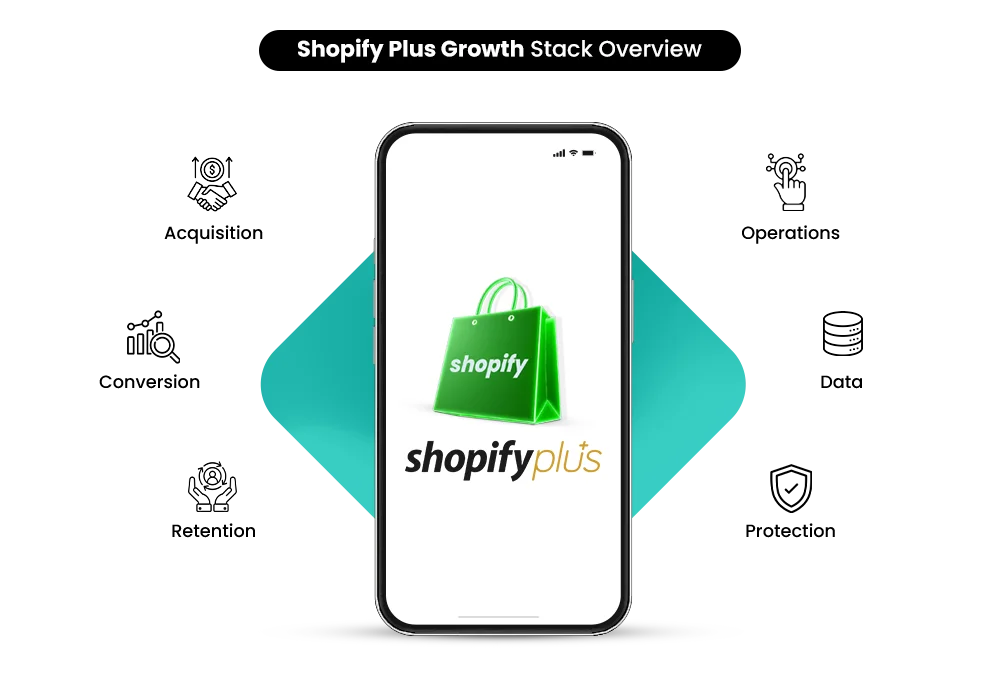
The Shopify Plus Growth Stack Framework
Enterprise growth on Shopify Plus doesn’t happen through individual apps. It happens when systems operate as a connected infrastructure.
The framework below organizes apps into six infrastructure layers. Each layer supports a different business function, but none operate independently.
| Layer | Example Tools | Business Impact |
|---|---|---|
| Acquisition | Northbeam, Elevar | Improves attribution accuracy |
| Conversion | Intelligems, ReConvert | Increases AOV and conversion rate |
| Retention | Klaviyo, Okendo | Improves customer lifetime value |
| Operations | Shopify Flow, ShipHero | Reduces operational overhead |
| Intelligence | Triple Whale, Lifetimely | Provides profit visibility |
| Protection | Signifyd, Avalara | Protects revenue and compliance |
The real value isn’t any individual app. It’s how data flows between systems. Attribution informs analytics, analytics guide experimentation, and operational systems keep inventory and fulfillment aligned as demand grows.
Must-Have Apps for Conversion Infrastructure
Conversion is where strategy turns into revenue. Traffic drives attention, but infrastructure determines whether that attention becomes profit.
“A 1% conversion improvement often generates more profit than a significant increase in traffic.”
Conversion Lift
A small checkout conversion improvement can generate substantial revenue without increasing acquisition spend.
Higher AOV
Well-optimized upsell and cross-sell flows frequently increase average order value.
1. Checkout Optimization Tools
Checkout is the most sensitive revenue environment in your store. Even minor inefficiencies become measurable at enterprise scale.
Modern checkout infrastructure may include custom checkout extensions, payment method optimization, dynamic shipping logic, trust-building elements, and simplified checkout fields.
2. Personalization Engines
Generic storefront experiences reduce engagement, especially among returning customers.
Personalization tools can recommend products dynamically, adapt homepage content by customer segment, tailor messaging based on purchase history, and localize experiences for international audiences.
3. Advanced Upsell and Cross-Sell Tools
Enterprise upsell systems rely on behavior, purchase intent, and cart composition rather than random recommendations.
The most effective solutions operate naturally within the buying journey while measuring true incremental revenue impact.
4. A/B Testing Platforms
Enterprise growth requires evidence. Testing platforms allow brands to validate pricing presentation, layouts, checkout experiences, and call-to-action strategies using performance data instead of assumptions.
5. Subscription Infrastructure
For brands with recurring purchase cycles, subscription infrastructure becomes a core revenue asset.
Capabilities such as flexible billing schedules, customer self-service portals, intelligent retry logic, and churn reduction workflows improve revenue predictability while reducing operational burden.
Must-Have Apps for Retention and Lifecycle Growth
Retention determines long-term profitability. While acquisition generates traffic, lifecycle infrastructure determines whether revenue compounds over time.
“Increasing repeat purchase rate often creates more sustainable growth than increasing traffic volume.”
| Retention Driver | Business Impact |
|---|---|
| Email & SMS Automation | Improves customer engagement and repeat purchases. |
| Loyalty Programs | Encourages repeat buying and advocacy. |
| Subscription Retention | Creates predictable recurring revenue. |
| Post-Purchase Engagement | Increases satisfaction and repeat intent. |
| LTV Automation | Improves long-term profitability. |
1. Email and SMS Automation
Email and SMS remain among the most controllable revenue channels available to ecommerce brands. Behavioral segmentation, predictive analytics, abandoned cart recovery, replenishment reminders, onboarding flows, and VIP campaigns should operate automatically and evolve continuously.
2. Loyalty and Referral Systems
Loyalty infrastructure strengthens customer value while referral programs reduce acquisition costs and improve conversion quality. When connected to customer data and checkout behavior, loyalty systems increase purchase frequency and encourage advocacy.
3. Subscription Retention Optimization
For subscription businesses, retention infrastructure directly affects revenue stability and forecasting accuracy. Flexible billing, payment retries, churn detection, and self-service subscription management all contribute to higher customer retention.
4. Post-Purchase Engagement
The customer experience does not end after checkout. Branded tracking, automated review collection, returns management, and customer support workflows all contribute to stronger long-term customer relationships.
5. LTV-Focused Automation
Advanced lifecycle platforms centralize customer data and automate engagement through win-back campaigns, VIP segmentation, and personalized product recommendations. At enterprise scale, automation improves repeat purchase rates while reducing reliance on constantly increasing acquisition budgets.
Build Your Shopify Store From Scratch With Mastroke
Launch faster with Mastroke, an official Shopify Partner. We build structured stores with conversion-first design, clean setup, and features built to scale!!
Must-Have Apps for Operational Automation
Operational efficiency protects margin. As Shopify Plus stores scale, complexity increases across inventory, fulfillment, finance, and B2B workflows.
For a detailed breakdown of specific automation workflows and how to sequence them, the Shopify Plus automation guide covers practical implementation across each operational layer.
Workflow Automation
Shopify Flow automates high-volume operational tasks like fraud reviews, warehouse routing, order tagging, and customer segmentation.
Native Shopify integration eliminates sync delays and improves reliability compared to external automation systems.
Inventory & ERP Integration
ERP systems synchronize inventory, purchasing data, fulfillment operations, and financial reporting across multiple platforms.
Accurate forecasting and inventory visibility reduce overselling risks as order volume increases.
03. Order Management and B2B Operations
Order management platforms optimize routing, reduce shipping errors, and support multi-warehouse fulfillment infrastructure.
For B2B merchants, operational systems also support company-specific pricing, bulk ordering workflows, and approval-based purchasing.
Well-integrated operational apps reduce delays, prevent costly errors, and protect margins at enterprise scale.
Must-Have Apps for Intelligence and Data Infrastructure
Data determines decision quality. As Shopify Plus stores scale, relying on default dashboards becomes insufficient. The right analytics infrastructure improves attribution accuracy, profitability visibility, and long-term strategic planning.
“Data fragmentation creates blind spots that slow strategic decision-making.”
Unified analytics infrastructure improves reporting clarity and operational visibility.
1. Advanced Analytics and Attribution
Platforms like Triple Whale, Northbeam, Polar Analytics, and Daasity provide performance visibility across channels, campaigns, customer segments, and products. These systems identify which marketing investments actually drive revenue, helping brands allocate budgets more efficiently.
Triple Whale is currently used by approximately 11% of active Shopify Plus stores, leaving significant upside for brands without dedicated attribution infrastructure.
Three Expensive Stack Mistakes Shopify Plus Brands Make
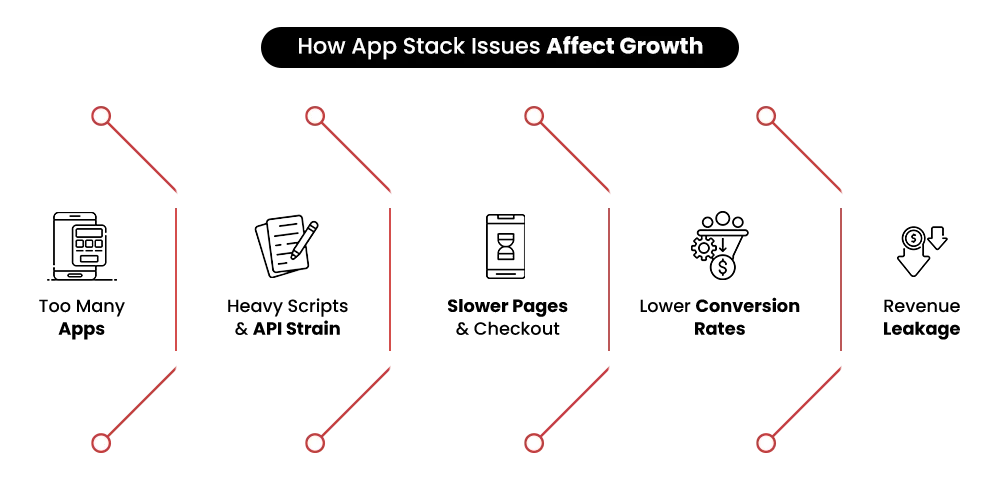
Most Shopify Plus stack problems don’t come from missing tools. They come from poor infrastructure decisions that quietly reduce profitability and create operational inefficiencies over time.
Overlapping App Functionality
Installing multiple apps that perform similar functions creates redundancy, reporting inconsistencies, and unnecessary subscription costs.
Overlapping tools increase script load and backend complexity while quietly slowing operational decision-making across teams.
Over-Automation That Creates Customer Friction
Automation improves efficiency, but excessive pop-ups, aggressive upsells, and constant messaging often damage the customer experience.
The goal is removing friction from the buying journey — not introducing new forms of customer fatigue.
Ignoring Performance and ROI Measurement
Many brands choose tools based on features rather than measurable business return.
Apps that increase checkout latency or reduce site speed directly affect conversion rate, profitability, and customer experience.
How to Audit and Optimize Your Shopify Plus App Stack
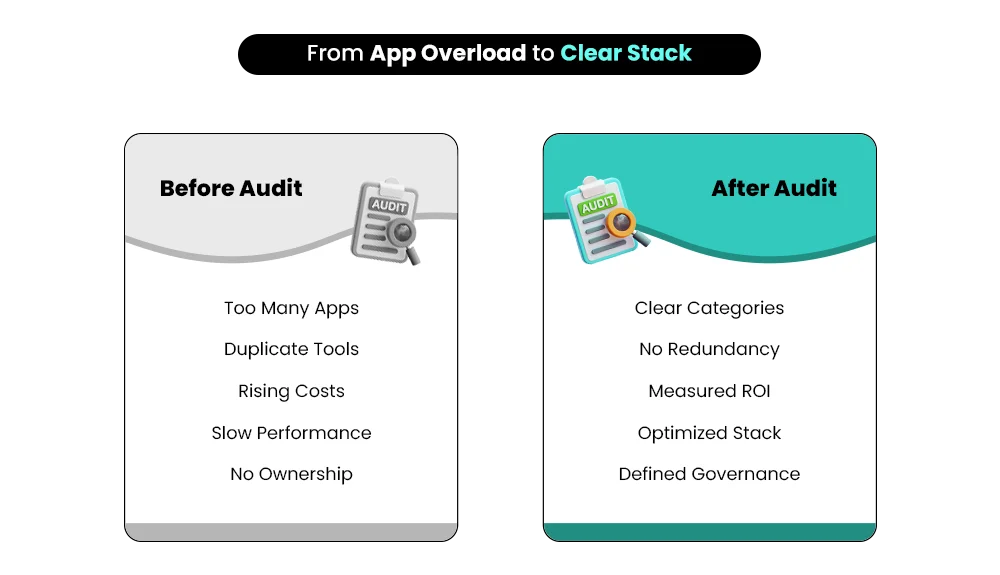
A structured audit helps ensure your stack supports profitability, operational clarity, and long-term scalability instead of hidden inefficiencies.
Step 1: Map Your Current Stack
List every installed app and categorize each by function — acquisition, conversion, retention, operations, data, or protection. Record monthly cost and the primary team using each tool.
Step 2: Identify Redundant Tools
Look for overlapping functionality such as duplicate analytics platforms, multiple upsell systems, or parallel automation workflows.
Step 3: Evaluate ROI Per App
Compare app cost against operational hours saved, revenue influenced, or risk reduction. If ROI cannot be quantified, reconsider whether the tool belongs in the stack.
Step 4: Consolidate and Simplify
Prioritize platforms that combine multiple capabilities within one system and remove scripts that negatively affect performance.
Step 5: Implement Governance Controls
Assign one owner for app approval decisions, require documented ROI justification, and schedule regular quarterly stack reviews.
Shopify Plus stores operating with more than 30–35 active apps often signal architectural inefficiency rather than operational necessity.
The Financial Impact of the Right Stack
The right Shopify Plus app stack directly influences both revenue growth and margin preservation. Checkout optimization, personalization, retention infrastructure, and streamlined automation all contribute to stronger long-term profitability.
Better attribution and lifecycle infrastructure improve customer acquisition efficiency and long-term value.
Consolidated systems reduce technical debt, operational overhead, and unnecessary subscription spending.
Final Thoughts
Shopify Plus is not a shortcut to growth. It’s an amplifier. The difference lies in how the infrastructure beneath it is engineered.
Revenue scales efficiently when acquisition, conversion, retention, operations, data, and protection function as one connected system.
The must-have apps for Shopify Plus stores aren’t about quantity. They’re about disciplined integration across every operational layer. When these systems operate together, revenue compounds efficiently instead of leaking through operational inefficiencies, reporting blind spots, and fragmented workflows.
Build Infrastructure That Scales Profitably
If your Shopify Plus ecosystem feels bloated, misaligned, or underperforming, the issue is usually architectural — not a missing feature. Mastroke builds enterprise-grade Shopify Plus growth stacks designed for brands that need profitable scale, operational clarity, and long-term infrastructure stability.
FAQs
1. What apps are essential for Shopify Plus stores?
Essential apps for Shopify Plus span six infrastructure layers: acquisition (attribution and pixel management), conversion (checkout extensions, upsell tools, A/B testing), retention (email and SMS automation, loyalty systems), operations (workflow automation, ERP integrations), intelligence (profitability tracking, cohort analytics), and protection (fraud prevention, tax compliance). Unlike standard Shopify stores, Plus brands need infrastructure-level tools — not just feature add-ons — to support scale, global markets, and B2B complexity.
2. How many apps should a Shopify Plus store have?
There is no ideal number. High-performing Shopify Plus stores prioritize efficiency over quantity. A lean, well-integrated stack of 15–25 strategic apps consistently outperforms a bloated stack of 40+ disconnected tools. If a store relies on more than 30–35 active apps, that typically signals architectural inefficiency rather than genuine operational necessity.
3. Do apps affect Shopify Plus performance?
Yes — significantly. Poorly optimized or overlapping apps slow page speed, increase checkout latency, and create script conflicts. Every app adds to the page’s total script weight and API call volume. Both ROI and technical efficiency should be evaluated before any new app is installed, not after the performance impact becomes visible.
4. What is the best app stack for scaling brands?
The best Shopify Plus app stack aligns acquisition, conversion, retention, operations, data, and protection into a unified system where data flows between layers. Integration quality and profitability visibility matter more than trend-based tool selection. The specific apps that fit depend on your business model, revenue volume, and operational complexity.
5. How often should you audit your Shopify Plus apps?
Enterprise brands should run a structured stack audit every quarter to eliminate redundancies, measure ROI per app, and maintain performance discipline. App sprawl builds faster than most teams realize — a quarterly review prevents it from becoming an architectural problem.