The 4th of July isn’t just about fireworks and backyard BBQs; it’s one of the most underestimated sales opportunities for Shopify stores. Around 875 million shoppers purchased from Shopify stores in 2024—a 25% jump from the previous year.
If you’re not planning, you’re leaving heavy revenue on the table—especially when the right 4th of July Shopify sale strategies can help you stand out before the rush begins.
With Independence Day falling on a Friday in 2025, you’ve got a long weekend of shopping behavior to tap into—online and on mobile. The brands that win won’t just launch a last-minute sale—they’ll plan to optimize their stores, fine-tune their offers, and execute smart, on-brand campaigns.
In this post, we’ll break down 10 proven 4th of July Shopify sale strategies designed to help you boost visibility, drive conversions, and create content that sells.
From conversion-focused product bundles to scroll-stopping social campaigns, this is your roadmap to a high-performing holiday sale.
Importance of the 4th of July Shopify Sale Strategies for U.S. shoppers
The 4th of July isn’t just a patriotic holiday—it’s a golden window for eCommerce brands. With long weekends and mid-year markdowns, U.S. shoppers are ready to spend. And they’re not only hunting for flags and fireworks.
They’re actively shopping for:
- Summer fashion & accessories
- Outdoor gear & picnic essentials
- Home decor & beauty products
- Travel-friendly bundles & weekend kits
For Shopify store owners, this is your chance to tap into intentional, seasonal buying behavior.
Smart Independence Day marketing for Shopify isn’t about slapping red, white, and blue across your homepage. It’s about relevance—positioning your products around how people celebrate.
Think:
- “Firework-Ready” kits
- Backyard BBQ bundles
- Free shipping for the weekend
- Limited-time, themed offers
Start early, show up where it matters, and make your store part of their July 4th plans.
Why Shopify Store Owners Must Capitalize On It?
If you’re a Shopify store owner, the 4th of July isn’t just another holiday; it’s a built-in conversion catalyst. Customers are already in buying mode, searching for deals, stocking up for summer, and browsing with intent.
The best part? You don’t need to discount everything or reinvent your brand. You just need to make your products feel timely and relevant.
With the holiday falling on a Friday in 2025, you’re looking at a full weekend of potential sales.
That’s three days of extended browsing, impulse buys, and holiday-driven shopping behavior—all on mobile. The brands that present smart offers and bold visuals will be the ones reaping the most conversions.
Want to know how to boost Shopify sales on the 4th of July 2025?
It starts with early planning, offering positioning, and a clear customer journey, from ad to checkout. This holiday is less about volume and more about strategic timing. Don’t just watch the fireworks—be one.
10 Proven Shopify Sale Strategies for Your Store
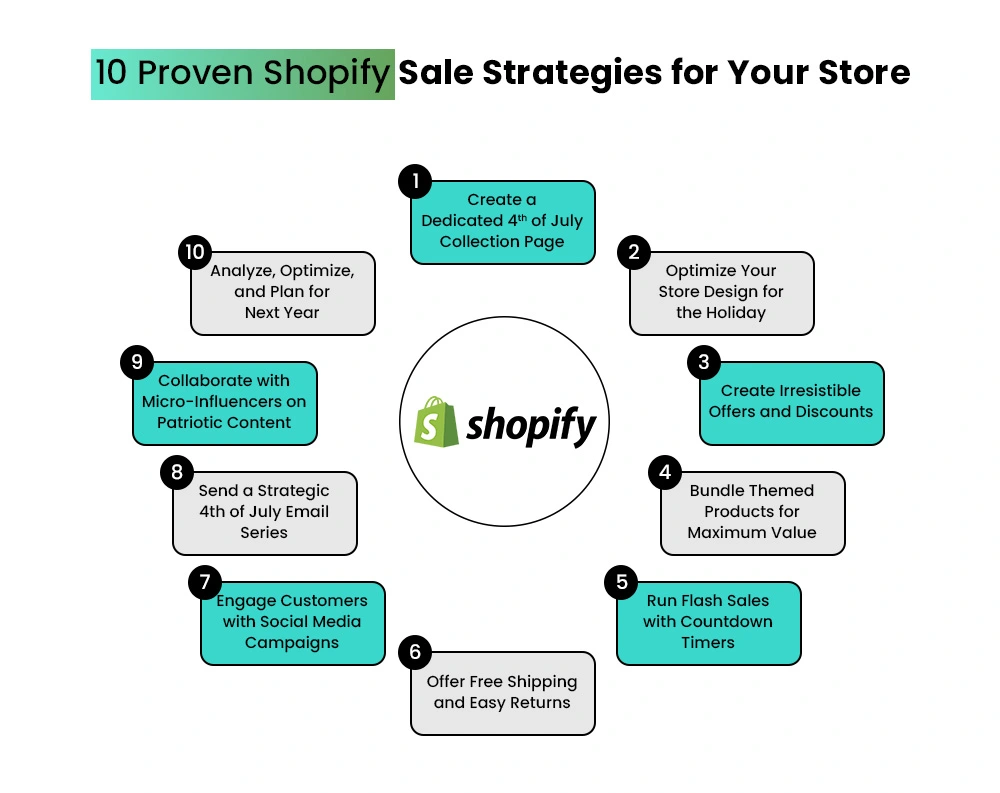
Check out these proven tactics to increase Shopify sales for your store on the 4th of July.
1. Launch a Dedicated 4th of July Collection
One of the best Shopify marketing ideas for July 2025 is creating a dedicated 4th of July collection. Instead of scattering your products across the site, bring them together under a themed, curated experience.
Think red, white, and blue apparel, BBQ-friendly home goods, or party-ready bundles—whatever fits your niche. A seasonal collection helps guide your customers toward what feels relevant right now, making it easier for them to buy.
Pair the collection with eye-catching banners and homepage sliders to instantly set the mood. Bonus points if you include urgency cues like “limited-edition” or “this weekend only.”
You’re not just showcasing products—you’re giving your store a festive, purpose-driven narrative that feels timely and shoppable. Whether you’re selling clothing, candles, or coolers, this simple strategy helps boost engagement and conversions without needing deep discounts.
2. Optimize Your Store Design for the Holiday
A quick design refresh can go a long way in your Shopify sales strategy, especially during high-intent holidays like the 4th of July. Shoppers are expecting a seasonal vibe, and your store should deliver it instantly.
Start by updating your visuals to reflect patriotic energy. It doesn’t have to be over-the-top, but small design tweaks can make your store feel timely and curated.
Here’s how to implement this part of your 4th of July Shopify sale strategies:
- Add red, white, and blue accents to buttons, banners, and backgrounds.
- Use festive homepage sliders or announcement bars with holiday messaging.
- Highlight limited-time deals using bold callouts or countdown timers.
- Make sure your store looks great—and loads fast—on mobile.
Why does this matter? Because July 4th shoppers tend to browse on the go. If your store isn’t visually aligned and mobile-optimized, they’ll bounce before they buy.
Claim your Free Shopify Store Audit and discover easy wins.
3. Create Irresistible Offers and Discounts
When it comes to Shopify holiday sales tactics, nothing moves the needle like a well-timed, limited-run offer. The 4th of July is your moment to go bold with deals that feel exclusive and look urgent.
Some of the best Shopify marketing ideas for July 2025 revolve around using seasonal urgency to boost both conversions and customer engagement.
Use this strategy to both drive conversions and increase order value by combining smart pricing with smart placement.
Here’s how to make it work:
- Offer tiered savings: “Spend $50, get 10% off — Spend $100, get 20% off.”
- Create limited-time bundles with patriotic themes or summer relevance.
- Add urgency with countdown timers, exit popups, or cart nudges.
- Promote your offers with sticky bars and targeted email blasts.
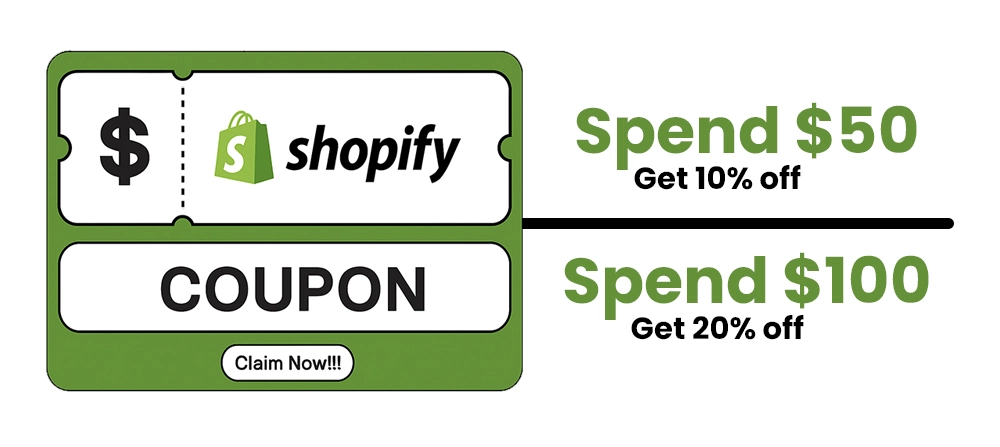
The key is to design offers that guide behavior without slashing prices across the board. Done right, these offers don’t just drive traffic—they increase AOV and build customer excitement around your brand.
4. Bundle Themed Products for Maximum Value
One of the smartest Shopify discount ideas for Independence Day is bundling themed products. Why? Because bundles increase perceived value, simplify decision-making, and boost average order size, all without heavy discounts. It’s a win-win.
Tap into 4th of July Shopify sale strategies by curating weekend-ready kits that make sense for how your customers celebrate.
Here’s how to do it right:
- Bundle related items (e.g., picnic kits, backyard BBQ sets, or red-white-blue outfits).
- Label them as “Limited-Time” or “4th of July Only” to add urgency.
- Highlight the total value vs. bundle price to show instant savings.
- Promote them on your homepage and through email or SMS campaigns.
These themed bundles feel festive, solve a specific need, and nudge shoppers toward larger purchases, without relying on site-wide sales. Just make sure they’re easy to find and hard to pass up.
5. Run Flash Sales with Countdown Timers
Flash sales work—especially when you combine them with countdown timers that trigger urgency and FOMO. As part of your July 4, 2025, Shopify promotions, flash deals can drive quick decisions and repeat visits in the days leading up to the holiday.
Instead of one big sale, try this:
- Run a “4 Days, 4 Deals” campaign starting July 1
- Use countdown timers on product pages and announcement bars
- Rotate daily offers: Day 1 = free shipping, Day 2 = BOGO, Day 3 = 20% off, etc.
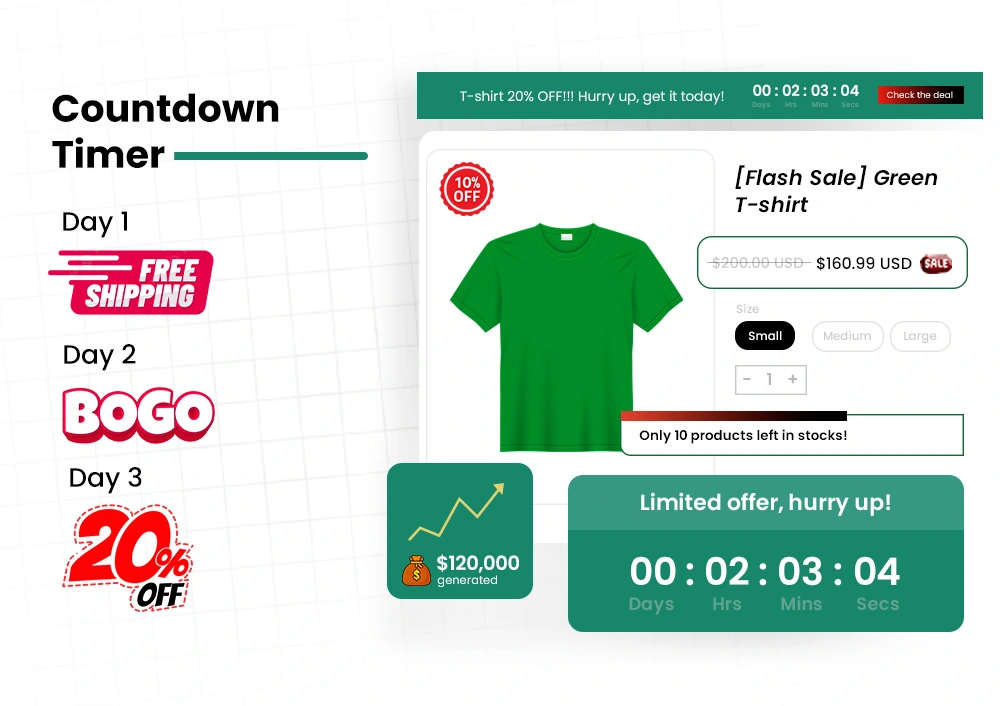
This approach keeps your store dynamic and encourages customers to visit frequently. Just make sure the timer is real—fake urgency kills trust.
Flash sales also help clear seasonal inventory while keeping your brand top of mind in a noisy holiday landscape. It’s not about slashing prices—it’s about building momentum with intention.
6. Offer Free Shipping and Easy Returns
One of the simplest yet most effective 4th of July eCommerce campaign tips? Offer free shipping with no surprises. During holiday weekends, shoppers are already spending, and removing shipping costs helps them convert faster.
Here’s how to make it work without eating into margins:
- Offer free shipping above a certain spend (e.g., “Free shipping on orders over $50”).
- Add a progress bar to carts showing how close they are to free shipping.
- Include easy return info right on product pages to reduce hesitation.
- Communicate cutoff dates clearly: “Order by July 2 for on-time delivery”.
It’s not just about the offer—it’s about trust. When shoppers know shipping is fast, free, and stress-free, they’re far more likely to complete checkout. Especially when they’re planning for a weekend full of BBQs, travel, and fireworks, convenience wins every time.
– Also Read- Top 10 Ecommerce Trends You Should Know in 2025
7. Engage Customers with Social Media Campaigns
Social media is your biggest ally when it comes to 4th of July Shopify sale strategies. But just posting a festive graphic won’t cut it—your campaigns need to spark interaction and drive traffic back to your store.
Start by tailoring your approach per platform:
- On Instagram, host a countdown or “This or That” poll using Stories. Combine it with Reels showcasing your bestsellers in red, white, and blue, or behind-the-scenes content prepping orders. Want more traction? Partner with a micro-influencer for a themed giveaway.
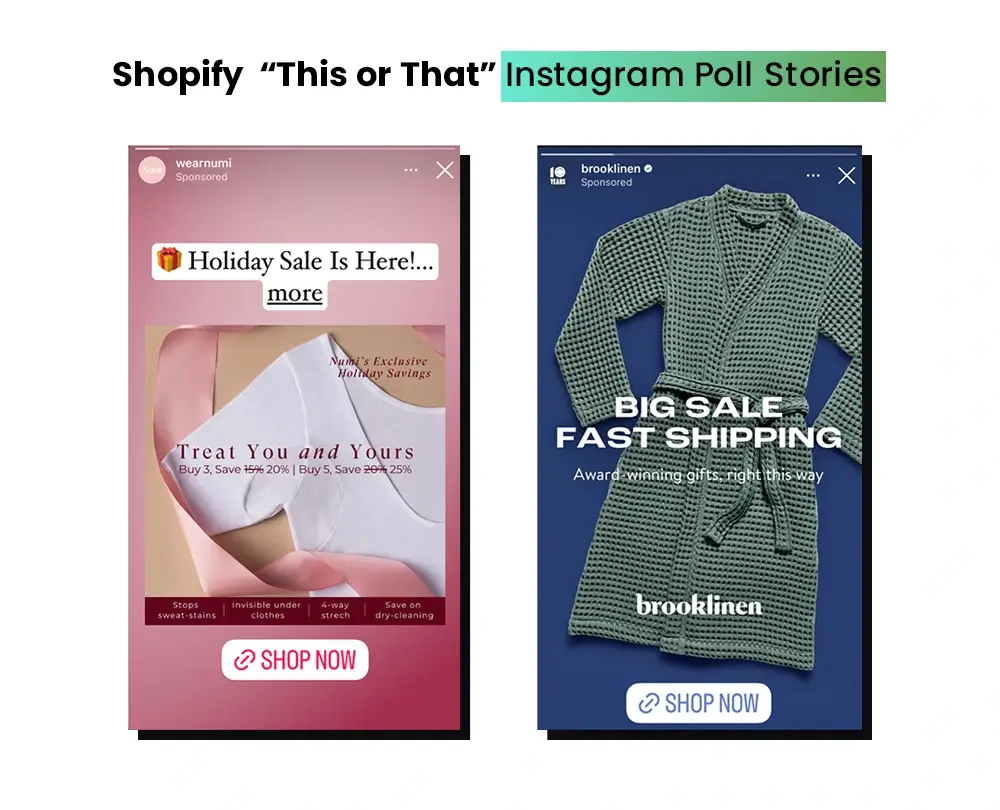
- Facebook is ideal for community-driven promotions. Create an event page for your 4th of July sale and boost it with targeted ads focused on demographics most likely to convert. Don’t forget to post engaging visuals and updates leading up to the big day.
- Over on YouTube, short-form product videos or “How to Style Your 4th of July Look” guides can drive high-intent viewers to your Shopify store. Use end screens and description links to lead them straight to your sales landing page.
- Even X (formerly Twitter) can work in your favor; run flash deal threads or spark conversations using branded hashtags tied to Shopify holiday promotion ideas.
By creating platform-specific content that entertains and converts, you’re not just building hype—you’re building a path directly to your store.
– Also Read- How to Create Your First Paid Social Media Campaign (Step-by-Step)
8. Send a Strategic 4th of July Email Series
A well-timed 4th of July email series can turn casual browsers into loyal customers, and it doesn’t have to be complex. Start with a teaser email a few days before the sale, building anticipation.
Follow up with a “Top Picks” email showcasing bestsellers or limited-time bundles tied to Independence Day themes. On the day itself, send a reminder with urgency-driven copy (think: “Only Hours Left!”).
Here’s where strategy kicks in: segment your audience based on past purchases or browsing behavior. Recommend relevant products instead of blasting the same message to everyone.
Personalization increases open rates and clicks, key metrics in any Shopify guide to conversion-focused marketing.
Use bold visuals, mobile-optimized layouts, and clear CTAs that drive traffic directly to your 4th of July landing page.
With the right cadence and content, your email series can spark a surge in holiday sales without sounding like every other brand in the inbox.
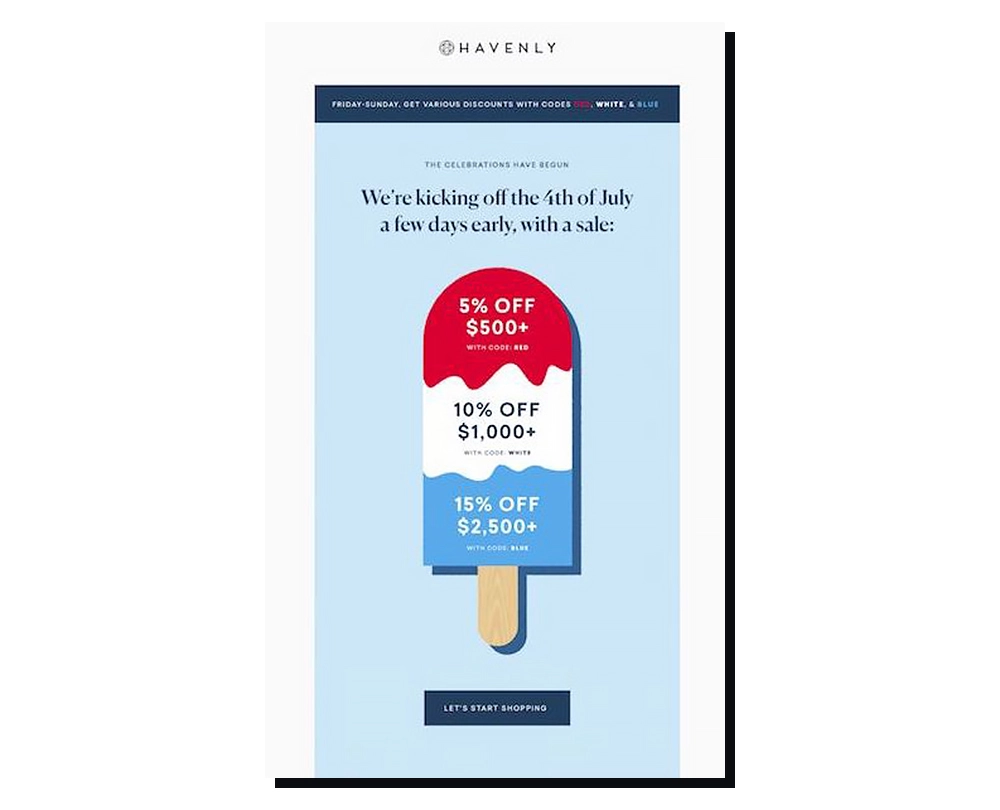
For example, this email from Havenly is a great example of how to communicate a 4th of July sale with clarity and flair. The bold Independence Day imagery immediately sets the tone, while the red, white, and blue ice lolly adds a playful, patriotic element that catches the eye.
The design is clean, the message is clear, and the visual theme ties perfectly into the holiday, making it both festive and conversion-friendly.
– Also Read- Top 7 Email Marketing Trends You Don’t Want to Miss in 2025
9. Collaborate with Micro-Influencers on Patriotic Content
Collaborating with micro-influencers is a smart way to give your 4th of July Shopify store some authentic buzz without blowing your budget. These creators have tight-knit communities and higher engagement rates, which makes their content more trustworthy and persuasive.
Here’s how to make it count:
- Partner with influencers who align with your brand values and aesthetics.
- Have them create unboxing videos, “How I styled my 4th of July” reels, or quick product demos.
- Encourage them to highlight locally made or limited-edition patriotic items; it adds a personal, feel-good angle.
To deepen the impact, guide them to showcase the product benefits in real-life settings or routines while weaving in patriotic storytelling. This helps build emotional resonance and creates a stronger intent to visit your Shopify store.
Don’t forget to reshare and repurpose the content across your marketing channels to maximize reach.
Start Smart Advertising with Mastroke Today!
10. Analyze, Optimize, and Plan for Next Year
Your 4th of July Shopify sale strategies shouldn’t end when the fireworks do. The real growth happens after the campaign, when you sit down to analyze what worked and what flopped.
Search into sales data:
- Which products sold the most?
- What time did traffic spike?
- Which emails or ads drove the highest conversions?
Pair this with direct customer feedback—reviews, comments, and support tickets to understand what excites or frustrates your buyers.
Use these insights to build smarter Shopify holiday promotion ideas for next year. Maybe bundle offers outperformed sitewide discounts, or Instagram Reels drove more traffic than email.
Document everything in a simple dashboard or spreadsheet, so you’re not starting from scratch next season.
Conclusion
From backend prep to eye-catching storefronts, these 4th of July Shopify sale strategies are designed to help you run a campaign that’s both strategic and high-converting.
Whether it’s crafting email flows, teaming up with influencers, or optimizing post-sale analytics, every piece plays a role in turning seasonal shoppers into long-term customers.
The key? Don’t wait until the last minute.
The brands that see the biggest wins are the ones that plan, thinking through the entire customer journey and aligning it with timely, patriotic messaging.
If you’re feeling short on time or ideas, you don’t have to go it alone. Need help setting up your 4th of July Shopify campaign?
Contact Mastroke today for Ecommerce Marketing services to stand out and sell this holiday season strongly.