The ecommerce space is more competitive than ever. Thousands of online stores launch every day, giving customers endless options to choose from.
In this crowded environment, simply having a Shopify store is no longer enough. Your store needs to capture attention and build trust the moment someone lands on it.
A beautiful website alone cannot guarantee success. Your Shopify store must be mobile optimized, high-quality, and designed to increase sales. It should guide visitors smoothly through the buying journey and help improve conversion rates.
Another important reality of online shopping is how quickly people judge a website. Visitors often decide within three to five seconds whether a store feels trustworthy or not.
If the design is confusing, slow, or difficult to navigate, they are likely to leave before exploring your products. That is why modern brands follow clear Shopify design principles. These principles focus on improving usability, building trust, and creating better shopping experiences.
In this guide, we will explore 10 modern Shopify design principles that can help your store attract customers, increase sales, and support long-term growth.
What are Shopify Design Principles?
Shopify design principles are best practices that guide how a Shopify store should be structured, designed, and optimized for users.
They focus on improving usability, mobile experience, and visual clarity so customers can easily browse products and make purchases.
Following these principles helps create better shopping experiences and improve conversion rates.

Principle #1: Design for Clarity Before Creativity
Many brands try to impress visitors with creative layouts, animations, and complex visuals. Creativity can be powerful, but clarity always comes first in effective Shopify design principles.
When someone lands on your Shopify store, they should immediately understand what you sell and why it matters to them.
Research shows that users form visual impressions of a website in about 50 milliseconds. That tiny moment determines whether they continue exploring or leave.
A clear and simple design helps visitors feel confident about the store, which can directly improve conversion rates.
Why Clarity Increases Conversion?
Confusing layouts create friction. When visitors struggle to understand a store, they hesitate to explore products or click the add to cart button. Clear messaging and structure remove that friction and guide customers toward the next step.
Strong Shopify design focuses on helping users quickly answer three basic questions:
- What products does this store sell?
- Who are these products for?
- Why should someone choose this brand?
A store that answers these questions immediately creates a better shopping experience. Clear navigation and a visible call to action also help users move naturally toward product pages and checkout, which can significantly improve conversion rates.
What to Include Above the Fold?
The area visible without scrolling plays a huge role in how visitors perceive your Shopify store. This section should communicate your brand message quickly and clearly.
Important elements include:
- A short and clear value proposition
- High-quality images that represent the product or lifestyle
- A visible call to action, such as “Shop Now” or “Explore Collection.”
- Simple navigation that helps users find products easily
Some brands do this extremely well. For example, Thinx uses direct messaging and inclusive photography to clearly communicate its purpose.
Visitors instantly understand the product category and who it serves. Clear product categories and intuitive navigation also improve usability and make shopping experiences smoother.
Clarity in design builds confidence. When customers quickly understand a store, they are more likely to explore products, trust the brand, and eventually make a purchase.
Watch this short example showing how clear Shopify design instantly communicates value and improves user experience:
Principle #2: Mobile-First, Not Mobile-Later
A large portion of ecommerce traffic now comes from mobile devices. Reports show that more than 60 percent of online shopping happens on phones. This means mobile design should be a priority when building a Shopify store.
Modern Shopify design principles focus on creating a mobile-optimized experience that is fast, simple, and easy to use. If visitors struggle to navigate your store on a phone, they are likely to leave before reaching the add to cart button.
Why Mobile-First Design Improves Conversions?
Mobile shoppers often browse quickly and expect instant results. Slow pages or complicated layouts reduce conversion rates. Studies show that many users leave a website if it takes more than three seconds to load.
A mobile-optimized Shopify theme helps solve this by offering fast-loading pages and smoother navigation. This improves usability and makes it easier for customers to move from browsing to checkout.
Key Mobile UX Elements That Improve Usability
Simple design choices can make mobile shopping much easier.
Important elements include:
- Large add to cart buttons that are easy to tap
- Sticky call-to-action buttons on product pages
- Proper tap target spacing so buttons are not too close together
- Layouts designed for one-thumb zones
- Page speed under three seconds
Many modern Shopify themes are already optimized for mobile devices. The Dawn Shopify theme, for example, is built for speed and performance. Brands like Lyka also use bold mobile CTAs that guide users toward action quickly.
A mobile-first approach improves shopping experiences and supports higher conversion rates, making it a key part of modern Shopify design principles.
Principle #3: Every Design Decision Must Build Trust
Trust plays a major role in online shopping. People rarely buy from a store that feels unfamiliar or unprofessional.
Strong Shopify design principles focus on creating a website that feels reliable and high-quality from the first visit. When a store builds trust, conversion rates naturally improve.
Visitors often look for signals that show a brand is real and dependable. Clear information, authentic content, and transparent policies help customers feel confident about making a purchase.
Why Trust Increases Conversion Rates?
Online shoppers cannot touch or test products. Because of this, they rely on visual signals and customer feedback before clicking the add to cart button. Trust elements reduce hesitation and make the purchase decision easier.
Some of the most effective trust signals include:
- Real product photography instead of generic stock images
- Customer reviews placed above the fold on product pages
- User-generated content showing real customers using the product
- Video testimonials that highlight customer experiences
- Clear shipping and return policies
- Visible security badges near the add to cart button
- Payment options like Shop Pay or Apple Pay to show secure checkout
These elements reassure shoppers that the brand provides reliable products and strong customer service.
Example of Trust in Shopify Design
Many successful ecommerce brands highlight trust signals across their websites. Island Creek Oysters, for example, features press mentions and brand recognition directly on its homepage. This type of credibility immediately builds confidence for new visitors.

Adding strong trust signals to your product pages helps customers feel secure about their purchase. A Shopify store that clearly communicates quality, transparency, and customer satisfaction is far more likely to convert visitors into buyers.
Principle #4: Consistency Creates Brand Power
Strong brands are easy to recognize. Consistency in design helps customers remember your store and connect it with a specific feeling or experience. This is why brand consistency is an important part of modern Shopify design principles.
When every part of your store follows the same visual style, it creates a professional and trustworthy impression.
A consistent brand also supports long-term growth. Customers who recognize your style across different platforms are more likely to trust your products and return for future purchases.
Why Brand Consistency Matters?
Inconsistent design can confuse visitors and weaken your brand identity. When colors, fonts, or visuals change across pages, the store can feel less reliable. Consistency creates familiarity, which helps build trust and improves the overall shopping experience.
A well-designed Shopify store should maintain consistency in key elements such as:
- Fonts used across the website
- Brand color palette
- Button styles and call to action design
- Photography style and image tone
- Voice and messaging in website copy
Maintaining these elements across your Shopify theme helps create a clear and memorable brand identity.
Align Your Store With Other Brand Channels
Your Shopify design should also match the brand experience customers see outside your website. This includes channels such as social media, email marketing campaigns, and even product packaging.
For example, Graza reflects its playful packaging and bright colors directly on its homepage. This makes the brand instantly recognizable. Magnolia Bakery also uses consistent visual storytelling and photography to create a familiar and inviting brand experience.
Build Your Shopify Store From Scratch With Mastroke
Launch faster with Mastroke, an official Shopify Partner. We build structured stores with conversion-first design, clean setup, and features built to scale!!
Principle #5: Prioritize Ecommerce UI/UX Over Visual Trends
Trendy design does not always lead to better results. Many stores focus on flashy layouts or animations, but what truly drives performance is a strong ecommerce UI UX Shopify strategy.
Design should make the store easy to navigate, simple to understand, and comfortable to use. Modern Shopify design principles focus on improving usability and creating smooth shopping experiences.
When customers can find products quickly and move through the checkout process without confusion, they are far more likely to complete a purchase.
Why UI/UX Matters More Than Visual Trends?
Complex designs often slow users down and create friction. Clear structure and intuitive navigation help customers move naturally through the buying journey.
Key elements that improve usability include:
- Clear navigation menus
- Predictive search that delivers fast results
- Logical product categories
- A visible breadcrumb structure for easy navigation
- A simple and fast checkout process
Tools such as heatmaps and session recordings can also help brands understand how visitors interact with their store. These insights reveal where users click, where they hesitate, and where they drop off.
Examples of Effective Ecommerce UI/UX
Several successful brands focus on usability rather than flashy design. Loisa uses a well-organized mega menu that helps visitors explore products quickly. Stakt relies on a simple and structured layout that guides customers smoothly through the store.
A strong ecommerce UI UX Shopify approach removes friction, improves usability, and ultimately helps increase sales by creating better shopping experiences.
Click here to read: How to plan your Shopify store growth in 2026?
Principle #6: Product Pages Should Sell Without You
A strong Shopify store does not rely on customer support to answer every question. Well-designed product pages should give visitors all the information they need to feel confident about buying.
When product pages clearly explain the value of a product, customers are more likely to click the add to cart button.
Modern Shopify design principles focus on turning product pages into powerful sales tools. Clear visuals, helpful details, and trust signals help remove hesitation and improve conversion rates.
Why Strong Product Pages Improve Conversions?
Online shoppers cannot physically examine products. They depend on images, descriptions, and customer feedback to make a decision. A well-structured product page answers common questions before the customer even asks them.
Important elements that support higher conversion rates include:
- Multiple high-quality images showing different angles
- Benefit-focused product descriptions
- Customer reviews placed near the add to cart button
- Clear delivery timelines and shipping information
- A small FAQ section addressing common concerns
Additional elements can make product pages even more helpful:
- Size guides for apparel or accessories
- Short usage videos demonstrating the product
- Cross-sell sections showing related items
Examples of Effective Product Page Design
Some brands use creative ways to guide customers toward the right product. Chāmpo uses a quiz to help visitors choose the best product based on their needs. This approach makes product discovery easier and improves shopping confidence.
Well-designed product pages reduce confusion, answer questions clearly, and help visitors move naturally toward checkout. This makes them one of the most important parts of a successful Shopify store.
This short example shows how a well-designed product page guides visitors toward the add to cart button without needing extra persuasion:
Principle #7: Align Design With Your Core Brand Values
Customers today care about more than just products. They also pay attention to what a brand stands for. Modern Shopify design principles encourage brands to reflect their brand values clearly through their website design.
Design elements, messaging, and visuals should communicate what your brand believes in. When customers see values that match their own, they feel more connected to the brand. This connection helps build trust and encourages long-term loyalty.
Why Brand Values Matter in Ecommerce Design?
Shoppers often choose brands that align with their personal beliefs. Sustainability is one example that has become increasingly important. Many customers actively look for brands that are eco-friendly and transparent about their practices.
A Shopify store can highlight these values in several ways:
- Show information about sustainable materials used in products
- Explain ethical sourcing or responsible manufacturing practices
- Display relevant certifications or sustainability badges
- Add transparency sections that explain how products are made
These details help customers understand the purpose behind the brand, not just the product.
Examples of Brands Showing Their Values
Some ecommerce brands integrate their values directly into their design. Thaely highlights its vegan and sustainable materials across its website. The design and messaging clearly communicate its commitment to responsible fashion.
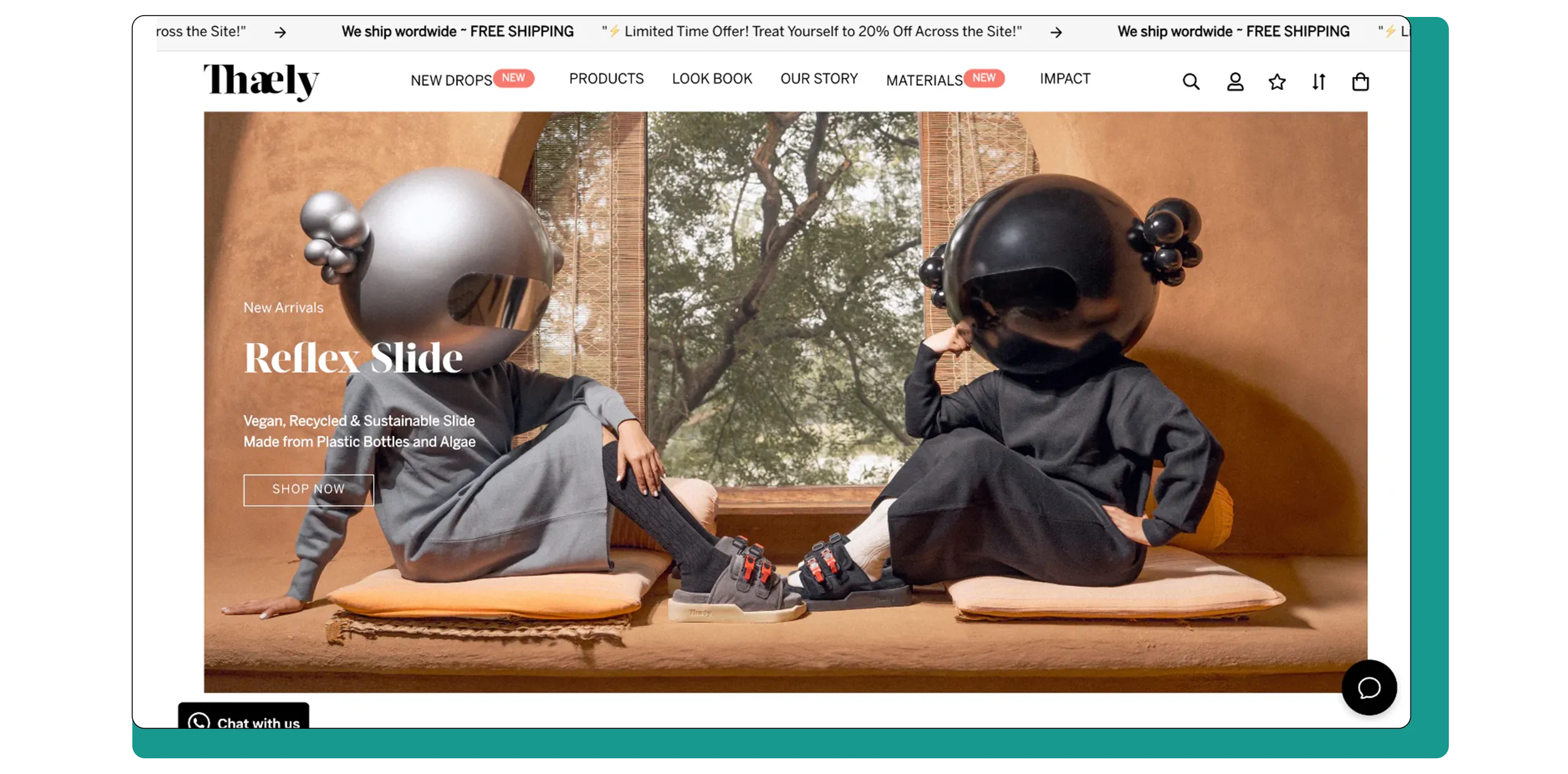
When a Shopify store clearly communicates its brand values, customers feel more confident about supporting the brand. This transparency strengthens trust and creates deeper connections with shoppers.
Principle #8: Speed is a Design Principle
Speed plays a major role in how customers experience a website. A slow store can frustrate visitors and push them to leave before exploring products. Modern Shopify design principles treat performance as an important part of design, not just a technical detail.
Fast websites create smoother shopping experiences and help improve conversion rates. Visitors are more likely to browse products, click the add to cart button, and complete their purchase when pages load quickly.
Why Speed Matters for Ecommerce?
Loading speed directly affects how users interact with a Shopify store. Faster pages improve user experience, support better SEO rankings, and make the buying process feel effortless.
Performance also impacts marketing results. A slow website can reduce the effectiveness of paid campaigns. Many Shopify marketing agency teams highlight site speed because it influences ad performance and return on investment.
Fast stores support several business goals:
- Higher conversion rates
- Better user experience
- Stronger search visibility
- More opportunities for long-term growth
- Simple Ways to Improve Store Performance
A few technical improvements can significantly increase store speed and performance.
Important steps include:
- Compress images before uploading product photos
- Remove unused apps that add unnecessary scripts
- Use a lightweight Shopify theme designed for performance
- Limit heavy animations that slow page loading
Speed improves usability and helps customers navigate the store without delays. A fast, well-optimized Shopify store creates better shopping experiences and supports consistent growth over time.
Principle #9: Clear and Strategic Call-to-Action Placement
A well-designed call to action guides visitors toward the next step. Without clear CTAs, customers may browse your Shopify store but never move forward to purchase. Strong Shopify design focuses on making the next action obvious and easy.
Clear CTAs help direct users toward important actions such as viewing products or clicking the add to cart button. When these buttons are placed strategically, they help increase sales and improve the overall shopping experience.
Why CTA Placement Affects Conversion?
Many stores lose potential customers simply because their CTAs are difficult to find. If visitors have to search for the next step, they may leave before completing a purchase.
Effective CTAs should:
- Stand out visually with a strong contrast
- Use clear, action-oriented copy
- Appear above the fold so visitors notice them immediately
- Be placed near trust elements such as reviews or guarantees
- Appear multiple times across the homepage and product pages
These placements help guide customers naturally through the buying journey.
Examples of Effective CTAs
Good CTAs focus on clear actions rather than vague messaging. Examples include:

Clear CTAs make it easy for customers to understand what to do next. When placed correctly, they guide users toward the add to cart button and help increase sales across the Shopify store.
Principle #10: Design for Long-Term Scalability
A successful ecommerce store should grow along with the business. Modern Shopify design principles focus not only on how a store looks today, but also on how well it can support future growth.
As product catalogs expand and marketing channels grow, the website structure must remain flexible and easy to manage.
A scalable Shopify store makes it easier to add new products, launch campaigns, and expand into new markets without needing a full redesign.
Why Scalability Matters for Ecommerce Growth?
Growth often brings complexity. More products, more traffic, and more marketing channels require a store architecture that can handle change smoothly.
Important scalability considerations include:
- Scalable navigation that works even with 500+ SKUs
- A flexible Shopify theme that supports updates and customization
- App stack flexibility so new tools can be integrated easily
- Support for international selling and multi-currency options
- Subscription functionality for recurring revenue models
- Headless readiness for brands planning advanced customization in the future
These elements help ensure that the store remains stable as the business grows.
Supporting Marketing and Traffic Growth
Your Shopify store design should also support marketing expansion. A scalable design structure allows brands to manage different traffic sources efficiently.
The website should be prepared to handle:
- Traffic from social media campaigns
- Email marketing funnels
- Paid advertising campaigns
- Product launches and seasonal promotions
Building a scalable foundation often requires strategic planning. This is where a Shopify store agency or Shopify marketing agency can provide valuable guidance.
Experts help structure the store architecture so it supports long-term growth while maintaining strong performance and usability.
Don’t Forget to Read: Common Setup Mistakes Shopify Beginners Make
Why Modern Brands Work With Experts?
Building a Shopify store today involves much more than choosing a theme and uploading products. Modern ecommerce success depends on several areas working together.
Strong Shopify design principles require a mix of strategy, technology, and marketing knowledge. Successful stores combine different types of expertise. Design decisions must support user behavior, marketing goals, and technical performance at the same time.
This means modern Shopify development often requires cross-functional expertise across UX, conversion optimization, performance, and backend scalability.
Key areas that influence a high-performing Shopify store include:
- UX strategy that improves usability and shopping experiences
- Conversion psychology that guides users toward the add to cart button
- Performance optimization for faster page loading and better user experience
- Brand positioning that builds trust and recognition
- Technical Shopify theme customization for flexibility and scalability
Balancing all of these elements can be complex for growing brands. This is why many businesses choose to work with a Shopify store agency or a Shopify marketing agency.
Experienced teams understand how design, performance, and marketing work together to create a Shopify store that attracts visitors and turns them into customers.
Build your dream Shopify store today
Bring your vision to life with Mastroke, an official Shopify Partner. We design and develop high-converting, scalable Shopify stores with clean structure and future-ready features—built to grow with your business.
About Mastroke – Your Complete Shopify Growth Partner
Creating a successful Shopify store requires more than attractive visuals. Modern ecommerce growth depends on the right combination of design, strategy, and performance. This is where Mastroke helps brands move beyond basic store design.
Mastroke is a full-service Shopify store agency focused on building high-performing e-commerce experiences.
- The team works with brands to improve Shopify design, optimize ecommerce UI UX Shopify performance, and create product pages that guide customers naturally toward the add to cart button.
- Along with design improvements, Mastroke also focuses on Shopify theme customization, marketing strategy, and performance optimization.
This approach ensures that your store is not only visually appealing but also built to increase conversion rates and support long-term growth. If your Shopify store looks good but is not increasing sales, it may be time to rethink your Shopify design principles.
Conclusion
Strong Shopify design principles help turn a simple online store into a powerful sales engine. A successful Shopify store is not only visually appealing but also clear, mobile-optimized, fast, and easy to navigate.
When elements like trust signals, strong product pages, consistent branding, and clear calls to action work together, they create better shopping experiences for customers. These improvements directly impact conversion rates and long-term growth.
Brands that focus on usability, performance, and customer experience are more likely to stand out in today’s competitive ecommerce space and build lasting relationships with their audience.
Get a Free Shopify Design Audit with Mastroke.
FAQs: Shopify Design Principles
1. What are Shopify’s design principles?
Shopify design principles are best practices used to create a clear, user-friendly, and conversion-focused Shopify store. They focus on usability, mobile optimization, navigation, and trust signals that help customers browse and buy easily.
2. Why is Shopify design important for conversion rates?
A good Shopify design helps visitors quickly find products and take action. Clear layouts, strong call-to-action buttons, and optimized product pages make it easier for customers to add items to their cart and complete purchases.
3. What makes a Shopify store visually appealing and effective?
A strong Shopify store usually includes a mobile-optimized layout, high-quality product images, simple navigation, clear product categories, and visible add-to-cart buttons. These elements improve shopping experiences and build trust.
4. How does ecommerce UI UX improve a Shopify store?
A good ecommerce UI UX Shopify strategy improves usability by simplifying navigation, speeding up page loading, and creating a smoother checkout process. This helps customers shop comfortably and increases sales.
5. How do Shopify themes affect store performance?
A well-built Shopify theme improves loading speed, mobile performance, and usability. Lightweight themes help deliver faster pages and better experiences across both desktop and mobile devices.