Shopify abandoned cart recovery is how you turn almost-lost buyers into paying customers without spending more on ads or chasing new traffic. Nearly 70.22% of online shoppers abandon their carts, according to Baymard Institute research, which means most stores are leaking revenue daily.
That is not wasted traffic; it is recoverable revenue waiting for a smarter follow-up system and a cleaner checkout experience.
Firstly, what is an abandoned cart in Shopify? An abandoned cart in Shopify happens when a shopper adds products but leaves before completing checkout and payment. Abandonment differs from checkout friction, which refers to obstacles such as slow pages, surprise fees, or complicated forms that push buyers away.
Many merchants focus on driving traffic but ignore the silent loss happening inside their own funnel. A proper Shopify store setup does not stop at product pages and ads; it includes built-in recovery systems.
Shopify abandoned cart recovery works best as a structured Shopify cart recovery strategy, combining automation, timing, personalization, and checkout improvements to win back lost sales consistently.
Why Abandoned Carts Are Costing You More Than You Think?
If you ignore Shopify abandoned cart recovery, you are quietly leaving serious money on the table every single day your store operates.
Average Shopify Cart Abandonment Rates
Industry studies show that average Shopify Cart Abandonment Rates typically fall between 60% and 75% across most ecommerce categories. That means out of every 100 shoppers who add to cart, nearly 70 leave without completing the Checkout process.
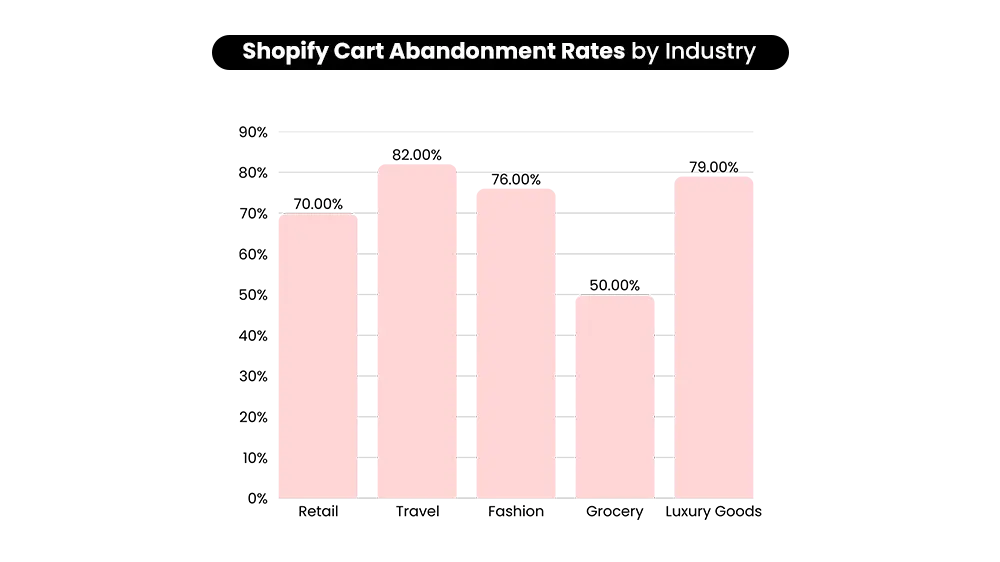
Mobile abandonment is even higher because small screens, slow load times, and clunky forms frustrate buyers quickly. Many shoppers browse casually on mobile, compare prices, and exit before they feel fully ready to purchase.
Revenue Impact of an Unoptimized Checkout
Let’s break the math down simply so you can see the hidden impact clearly. If you generate 10,000 monthly visitors and 500 add products to cart, but 70% abandon, you lose 350 potential sales.
If your average order value is $80, that equals $28,000 in missed revenue monthly from Abandoned Cart activity. Now multiply that over twelve months, and you are staring at $336,000 slipping away annually.
At scale, small leaks in your Checkout compound fast and hurt cash flow, forecasting, and paid campaign performance.
Why Recovery Often Beats Traffic Growth
Most merchants chase traffic growth instead of fixing leaks already inside their funnel. Improving Shopify cart abandonment recovery by even five percent can lift revenue faster than increasing ad spend.
Higher recovery rates also improve conversion, which boosts ROAS instantly without raising your marketing budget.
Abandoned Cart vs Abandoned Checkout
Here is the difference merchants often confuse:
- Abandoned Cart: Product added, but shopper never starts Checkout.
- Abandoned Checkout: Shopper enters details but leaves before completing payment.
Recovery tactics differ because Abandoned Checkout buyers are closer to purchasing and usually need less persuasion. Understanding this gap is critical if you want Shopify abandoned cart recovery to work efficiently and predictably.
– Also Read: Launching a New Store with Shopify Plus — What’s Different?
Why Do Customers Abandon Carts on Shopify
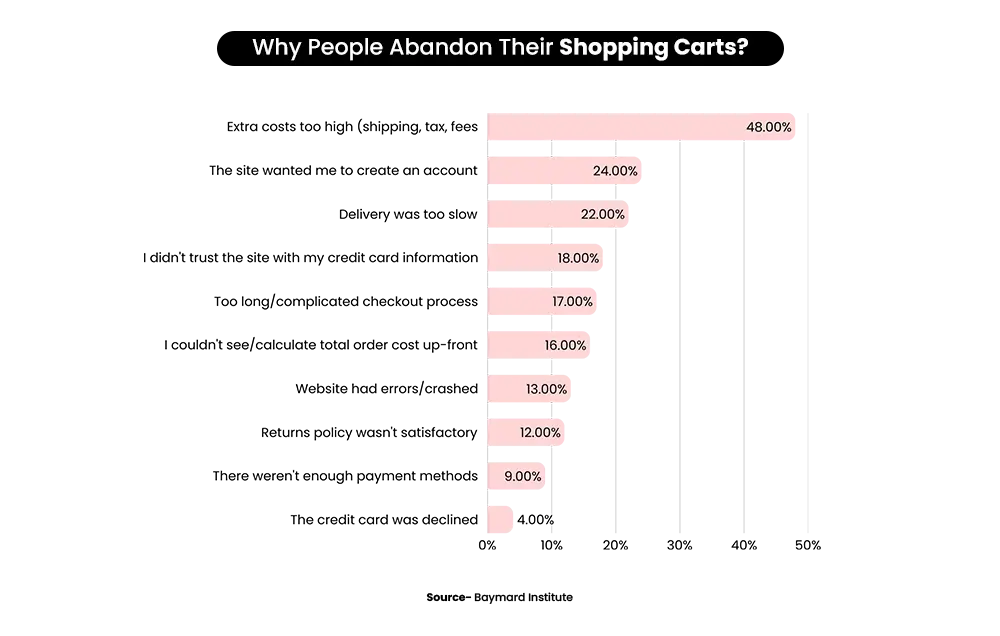
Understanding the Top Reasons Customers Abandon Carts on Shopify helps you fix leaks before focusing only on Shopify abandoned cart recovery campaigns and discount tactics. An Abandoned Cart happens when shoppers add products but leave before paying, while an Abandoned Checkout occurs after they enter details but fail to complete payment.
Both situations hurt revenue, but prevention through Shopify checkout optimization and Shopify speed optimization often delivers faster gains than recovery emails alone. Below are the most common causes behind cart abandonment and how to reduce them using smarter Checkout Flow and performance improvements.
Unexpected Shipping Costs
Shipping Costs are the number one reason customers abandon their carts across ecommerce platforms.
When fees appear only at Checkout, shoppers feel misled and instantly question your pricing transparency. This frustration turns into an Abandoned Checkout even if the product price felt acceptable minutes earlier.
To prevent this, display estimated shipping earlier in the Checkout Flow or on product pages. Use custom Shopify checkout extensibility to surface dynamic shipping rates before the final payment step.
Clear communication reduces shock, improves trust, and strengthens your Shopify abandoned cart recovery performance later.
Complicated Checkout Flow
A confusing Checkout Flow creates friction that pushes buyers away. Too many steps, unnecessary fields, or repeated information requests increase drop-off rates quickly.
Every additional click increases the chance of an Abandoned Cart. Shopify checkout optimization focuses on reducing required fields and simplifying navigation.
Custom Shopify checkout extensibility allows you to remove distractions and prioritize essential actions only. Clear progress indicators and autofill support help customers complete purchases without hesitation.
Streamlining Checkout Flow improves both conversion rates and long-term Shopify abandoned cart recovery success.
Slow Shopify Store Speed
Shopify Store Speed directly affects trust and buying momentum. If product pages lag or checkout freezes, customers assume something is broken.
Even a two-second delay can increase abandonment during critical payment steps. Shopify speed optimization reduces script conflicts, heavy apps, and uncompressed assets that slow performance.
Mobile users are especially sensitive to delays, which leads to higher Abandoned Checkout rates. Fast load times create confidence and reduce friction inside the Checkout Flow. Performance fixes often recover more revenue than aggressive email campaigns.
Forced Account Creation
Forcing customers to create accounts before paying increases abandonment instantly. Many shoppers prefer guest checkout, especially for first-time purchases.
Mandatory registration interrupts buying momentum and adds unnecessary friction. This common mistake converts ready buyers into an Abandoned Cart.
Shopify checkout optimization includes enabling guest checkout by default. Custom Shopify checkout extensibility allows subtle account creation prompts after purchase instead. Reducing barriers encourages faster decisions and improves overall recovery metrics.
Payment Trust & Security Concerns
Customers hesitate when payment pages look unfamiliar or unsecured. Missing trust badges, limited payment options, or unclear refund policies create doubt. This doubt leads directly to an Abandoned Checkout at the final stage.
Clear security messaging, recognizable payment gateways, and SSL indicators build reassurance. Shopify checkout optimization ensures trusted payment methods display prominently.
Custom Shopify checkout extensibility allows additional trust signals tailored to your audience. Trust improvements reduce abandonment and improve Shopify abandoned cart recovery rates significantly.
Distractions & Comparison Shopping
Online shoppers rarely purchase instantly without evaluating alternatives. They open new tabs, compare prices, or get distracted by notifications. This behavior often results in an Abandoned Cart without a clear intent.
Retargeting campaigns and reminder emails help, but prevention still matters. Clean Checkout Flow design minimizes exit points and external distractions. Shopify speed optimization keeps users engaged without frustration.
Understanding these Top Reasons Customers Abandon Carts on Shopify helps you answer, “How do I check abandoned cart recovery on Shopify?” with stronger prevention strategies instead of reactive fixes.
Build Your Shopify Store From Scratch With Mastroke
Launch faster with Mastroke, an official Shopify Partner. We build structured stores with conversion-first design, clean setup, and features built to scale!!
How Shopify Abandoned Cart Recovery Actually Works?
Shopify abandoned cart recovery helps merchants re-engage shoppers who leave without completing purchases and turn lost revenue into measurable recovery opportunities. An Abandoned Cart occurs when customers add products but exit before payment, triggering automated reminders designed to bring them back.
Built-In Shopify Abandoned Checkout Emails
Yes, Shopify automatically sends abandoned cart emails when enabled inside your admin settings. These are called Shopify Abandoned Checkout Emails, and they activate when customers enter contact details but fail to finish payment.
By default, Shopify allows a recovery window where reminders are sent after a set delay you choose. This built-in system is simple and requires no coding, making it accessible for small stores.
Recovery Timing Settings
Timing directly impacts results in Shopify abandoned cart recovery strategies. Most merchants find that sending the first reminder within one hour drives the highest return.
Why does the one-hour email convert best? Because the shopper still remembers the product, price, and buying intent clearly.
Delaying beyond twenty-four hours reduces urgency and increases distraction from competitors. You can adjust recovery timing inside Shopify settings to match your sales cycle and audience behavior.
Automation Triggers
Shopify recovery works through simple triggers that detect shopper behavior. Common triggers include:
- Email triggers when checkout begins, but payment fails.
- SMS triggers through connected marketing apps.
- Behavior-based triggers based on cart value or purchase history.
Advanced Shopify abandoned cart recovery strategies use segmentation and dynamic messaging. Shopify Plus partners often build layered automation flows beyond basic reminders. These flows can adjust incentives depending on cart value or customer lifetime spend.
Limitations of Default Shopify Recovery
While helpful, the native system has limits that merchants must understand. Personalization remains basic and typically includes only product details and store branding. There is no deep segmentation without external email platforms like Klaviyo.
A/B testing capabilities are limited compared to advanced automation tools.
So, how effective is Shopify’s abandoned cart recovery feature? It works well for beginners, but scaling brands often requires more sophisticated automation to maximize revenue recovery.
– Also Read: Shopify Plus Automation: Practical Ways to Automate Store Operations
Step-by-Step Shopify Abandoned Cart Recovery Strategy
Winning Shopify abandoned cart recovery starts before sending emails or offering discounts to shoppers. Prevention and recovery must work together inside your Shopify store for maximum revenue impact.
Step 1: Optimize Checkout First
Checkout optimization reduces the friction that causes an Abandoned Cart in the first place.
- Start with a clean Shopify store build that avoids clutter and unnecessary apps.
- Remove extra checkout fields that slow buyers down or request irrelevant information.
- Enable guest checkout so first-time shoppers can purchase without creating accounts.
- Add visible trust badges and payment icons to strengthen confidence at payment.
- Improve Shopify site speed so pages load quickly on mobile devices.
Checkout optimization plus recovery together create the highest return on investment.
Step 2: Automate High-Converting Email Sequences
Once prevention improves, build structured automation to recover remaining abandoned carts. Use this recommended recovery sequence for consistent results.
- 1 Hour: Friendly reminder, while purchase intent remains strong.
- 12 Hours: Objection handling with reassurance and Social proof.
- 24 Hours: Limited-time incentive with strong CTA placement.
Include dynamic product blocks so shoppers see the exact items they left behind. Add reviews or testimonials as Social proof to rebuild buying confidence. Clear CTA placement ensures customers return directly to their saved checkout page.
These Shopify cart recovery tips increase completion without overusing discounts.
Step 3: Leverage Shopify Functions for Smart Discounts
Advanced brands go beyond simple coupon codes and use automation logic.
- An Advanced Shopify cart recovery strategy uses auto-applied discount logic at checkout.
- Offer tiered incentives based on cart value instead of blanket discounts.
- Use Dynamic free shipping thresholds to encourage higher order value.
Smart automation protects margins while recovering lost revenue efficiently.
– Also Read: How to Plan Your Shopify Store Growth in 2026?
12 Shopify Abandoned Cart Recovery Tips That Actually Work
Shopify abandoned cart recovery becomes powerful when prevention, automation, and psychology work together inside a clear Shopify cart recovery strategy. An Abandoned Cart is not a failure; it is unfinished intent waiting for the right trigger.
Below are practical steps that help recover abandoned carts that Shopify merchants lose daily.
1. Enable Automatic Abandoned Cart Emails
Turn on built-in recovery emails inside your Shopify settings immediately. Automation ensures every Abandoned Cart receives at least one follow-up message without manual effort.
2. Optimize Email Timing Sequence
Timing determines how many shoppers return to complete checkout. Send your first email within one hour while the buying intent remains fresh.
Follow with a second message at twelve hours addressing objections. Send a final message within twenty-four hours with a clear decision prompt.
3. Add Conditional Incentives
Avoid offering discounts to every abandoned visitor automatically. Use conditional incentives based on cart value or customer history.
Reward high-value shoppers differently from first-time buyers. This protects profit while strengthening your Shopify abandoned cart recovery results.
4. Use Dynamic Product Blocks
Include the exact items left inside the cart within recovery emails. Dynamic product blocks remind shoppers what they almost purchased. Visual reminders increase emotional connection and improve return rates.
5. Create Urgency
Urgency helps shoppers move from consideration to action quickly. Show low stock warnings or limited-time reminders within recovery emails.
Use honest messaging to maintain credibility and avoid damaging trust. Urgency improves Recover abandoned carts Shopify campaigns without heavy discounting.
6. Send SMS Recovery Messages
Email alone is not always enough to reach distracted buyers. SMS recovery messages reach customers faster and feel more immediate. Keep SMS short, clear, and linked directly to saved checkout pages.
7. Run Retargeting Ads
Use Meta and Google ads to re-engage visitors who abandoned carts. Dynamic retargeting ads display the same products shoppers viewed earlier. This reinforces awareness and strengthens your overall Shopify cart recovery strategy.
8. Simplify Checkout Experience
Complex checkout steps increase friction and create abandonment. Remove unnecessary fields and reduce page transitions during payment. A smooth process lowers abandonment before recovery even begins.
9. Offer Guest Checkout
Forcing account creation often pushes customers away. Enable guest checkout so shoppers can complete purchases quickly. You can encourage account creation after payment instead.
10. Add Trust Signals
Visible security badges and payment icons build confidence instantly. Clear return policies and customer guarantees reduce hesitation. Trust removes doubt that often causes an Abandoned Cart at checkout.
11. Optimize Mobile Checkout UX
Most abandoned carts happen on mobile devices today. Ensure buttons are large, pages load fast, and forms are simple. Mobile friction quietly destroys Shopify’s abandoned cart recovery potential.
12. Use Exit-Intent Popups
Exit-intent popups appear when shoppers attempt to leave your store. Offer reminders, small incentives, or free shipping before they close the tab. Capturing email addresses early strengthens future Shopify abandoned cart recovery campaigns.
When combined strategically, these twelve tactics create a complete Shopify cart recovery strategy that prevents abandonment and helps Shopify merchants recover abandoned carts that they lose every day.
Advanced Abandoned Cart Strategies for Scaling Brands (2026 Edition)
Shopify abandoned cart recovery looks different when your Shopify store handles serious traffic and high order values. Scaling brands cannot rely on basic reminders alone to recover lost revenue.
Advanced strategies focus on segmentation, automation, and personalization at scale.
Segment High-Value Cart Abandoners
Not every Abandoned Cart carries the same revenue potential. High-value shoppers deserve different messaging than low-ticket browsers.
Segment carts based on order value, customer history, and lifetime spend. This prevents over-discounting and protects profit margins long-term. Shopify growth experts always prioritize segmentation before incentives.
Personalized Recovery Based on Cart Value
Personalization increases return rates without aggressive discounting. Offer free shipping for mid-range carts and tiered discounts for premium baskets.
Tailor messaging tone depending on first-time or repeat buyer behavior. High-value carts may respond better to concierge-style messaging instead of coupons. Smart personalization strengthens Shopify abandoned cart recovery while maintaining brand positioning.
Shopify Flow for Cart Automation (Plus)
Shopify Plus merchants can automate recovery using Shopify Flow. Flow triggers actions when a specific Abandoned Cart meets defined conditions.
You can tag high-value abandoners and send internal alerts automatically. This reduces manual work and improves operational control.
Does Shopify Basic include abandoned cart recovery? Yes, but advanced automation like Flow is available for Shopify Plus merchants.
Region-Based Incentives (Shopify Markets)
International brands must adjust incentives based on geography. Shipping costs, taxes, and currency differences impact abandonment rates.
Use Shopify Markets to offer region-based discounts or Dynamic free shipping. Localized incentives improve global Shopify abandoned cart recovery performance.
A/B Testing Email Sequences
Scaling brands test subject lines, timing, and incentive amounts regularly. Small improvements compound significantly across thousands of abandoned carts monthly.
Test reminder-only emails against incentive-driven campaigns. Measure which sequence generates higher completed checkouts.
Integrating Klaviyo or Advanced Email Tools
Many merchants ask about the best Shopify app for abandoned cart recovery. Advanced email tools like Klaviyo allow deeper segmentation and behavioral targeting.
These platforms support multi-step automation beyond native Shopify capabilities. They also provide better reporting for scaling brands.
When structured correctly, these advanced tactics transform Shopify abandoned cart recovery into a predictable revenue channel for serious growth-focused merchants.
– Also Read: 5 Clear Signs It’s Time to Hire a Shopify Agency
Proven Abandoned Cart Email Template Framework
The best abandoned cart email sequence for Shopify follows a simple three-step structure designed to recover revenue without damaging margins.
A strong Shopify abandoned cart recovery system does not rely on discounts immediately. It builds trust, removes objections, and then introduces urgency strategically. Below is a practical Abandoned Cart Email Template framework that brands actually use.
Email 1: Friendly Reminder (No Discount)
The first email should feel helpful, not desperate. Send this within one hour of the Abandoned Cart event. Keep the tone calm and supportive. Subject line examples:
- “Did something go wrong with your order?”
- “Your cart is waiting for you.”
- “Still thinking it over?”
Preview text example:
“We saved your items so you don’t miss out.”
Use a soft CTA like:
- “Return to your cart.”
- “Complete your order.”
Avoid discounts here and focus on convenience. Many Shopify growth experts see strong returns from this first reminder alone.
Email 2: Objection Handling + Social Proof
If the customer still hasn’t purchased, address hesitation directly.
- Add reviews from real buyers to build confidence.
- Highlight product ratings and testimonials near the top.
- Address common concerns like Shipping times or return policies clearly.
- Reassure shoppers that your Shopify store offers secure checkout.
- Include another clear CTA leading directly to the saved checkout.
This step strengthens trust without lowering the price.
Email 3: Incentive + Urgency
If the first two emails fail, introduce a limited incentive.
- Offer a small time-sensitive discount or free shipping.
- Use clear expiration messaging to create urgency.
- Scarcity triggers like low stock notices can increase action.
- Keep the CTA bold and visible.
If you use the best Shopify app for abandoned cart recovery, automate timing and segmentation carefully.
This structured approach turns Shopify abandoned cart recovery into a predictable system instead of random discounts.
Shopify Abandoned Cart Recovery Benchmarks (2026)
Understanding Shopify Abandoned Cart Recovery Benchmarks helps you measure whether your strategy performs or silently leaks revenue inside your Shopify store.
What is a good abandoned cart recovery rate on Shopify?
A healthy Shopify abandoned cart recovery rate typically falls between ten and twenty percent. High-performing stores often recover twenty to thirty percent of abandoned revenue consistently.
Anything below ten percent usually signals weak messaging or poor timing. However, the recovery rate alone does not guarantee healthy profit margins.
Here are realistic 2026 performance expectations for scaling brands:
- Good recovery rate: 10–20 percent.
- High-performing stores: 20–30 percent.
- Email open rate: 40–60 percent on first reminder.
- SMS recovery click rates: 8–15 percent.
– Email open rate remains a leading indicator of subject line strength. If open rates fall below thirty percent, your messaging likely lacks urgency or relevance.
– SMS recovery often generates faster engagement than email for mobile-heavy audiences. But higher SMS recovery results do not always mean higher profit.
– Heavy discounting may increase the recovery rate while shrinking margins. Shopify growth experts evaluate recovery performance alongside average order value and net revenue.
A ten percent recovery rate without discounts can outperform a twenty percent rate driven by aggressive incentives.
- Merchants should also track revenue recovered per email sent.
- This reveals whether automation actually scales profit or simply inflates metrics.
- Compare recovery revenue against the total abandoned value monthly.
- Measure long-term impact, not just single campaign spikes.
Strong Shopify abandoned cart recovery balances return rates, margin protection, and customer lifetime value. Benchmarks guide improvement, but profit ultimately defines success.]
– Also Read: Before You Hire a Shopify Agency in 2026: Questions Every Merchant Must Ask
Common Abandoned Cart Recovery Mistakes to Avoid
Many Shopify store owners focus on tactics but ignore Common Abandoned Cart Recovery Mistakes that quietly damage long-term revenue growth.
Shopify growth experts avoid these errors because they reduce trust and compress profit margins.
If your Shopify abandoned cart recovery feels inconsistent, one of these mistakes may be responsible.
1. Sending only one email after an Abandoned Cart event: One reminder rarely captures distracted buyers who need multiple touchpoints before returning.
2. Discounting too early in the recovery sequence: Offering a coupon in the first email trains customers to abandon intentionally for savings.
3. Ignoring mobile checkout issues entirely: Most Abandoned Cart events happen during mobile checkout friction. Slow load times, small buttons, or broken forms increase drop-off instantly. Fixing mobile checkout often recovers more revenue than sending additional emails.
4. No retargeting support across paid channels: Email alone cannot reach every shopper who leaves your Shopify store. Without retargeting ads, many visitors simply forget your brand exists.
5. Spamming customers with too many reminders: Excessive emails damage the sender’s reputation and reduce future open rates. Three structured emails usually perform better than daily reminders.
6. Generic messaging without personalization: Emails that feel automated rarely inspire action or urgency. Referencing the exact product left behind increases engagement significantly.
What is a good abandoned cart recovery rate on Shopify?
Ten to twenty percent is healthy, but quality execution matters more than volume. Shopify growth experts focus on prevention, clean mobile checkout, and measured follow-ups.
Avoiding these mistakes strengthens Shopify’s abandoned cart recovery without hurting brand perception.
Abandoned Cart Recovery vs Checkout Optimization — What Matters More?
Choosing between Shopify abandoned cart recovery and Checkout Optimization is like choosing between a safety net and a solid floor for your Shopify store. While recovery helps you win back lost sales, optimization stops those shoppers from leaving your Abandoned Cart in the first place.
The Comparison: Reactive vs. Preventive
| Feature | Cart Recovery | Checkout Optimization |
| Approach | Reactive | Preventive |
| Focus | Email-based | UX-based |
| Impact | Short-term boost | Long-term lift |
| Method | Discount heavy | Friction reduction |
- Recovery acts as a follow-up to remind customers about items they liked.
- Optimization removes technical hurdles like slow speeds or complex forms.
- Shopify growth experts know that relying only on discounts can hurt your long-term margins.
- Friction reduction creates a seamless path that encourages immediate purchases.
Prevention plus recovery equals maximum Shopify conversion optimization. You need both to build a truly high-performing business. Stop choosing one and start mastering both to protect your revenue.
Conclusion
Shopify abandoned cart recovery is not just about sending reminder emails after an Abandoned Cart event. It is about understanding why shoppers leave and fixing those leaks before they multiply.
Shipping surprises, slow checkout pages, and weak trust signals quietly drain revenue every day. When you combine checkout improvements with structured recovery sequences, results compound faster than most merchants expect.
A smart recovery plan protects margins while bringing ready-to-buy customers back at the right moment. Focus on timing, personalization, and performance instead of blanket discounts that train bad habits.
Track profit, not just recovery rates, to measure real business impact. Every Abandoned Cart represents unfinished intent, not lost opportunity. Refine your system, test consistently, and treat recovery as a growth channel with Mastroke experts today!
Build your dream Shopify store today
Bring your vision to life with Mastroke, an official Shopify Partner. We design and develop high-converting, scalable Shopify stores with clean structure and future-ready features—built to grow with your business.
FAQs-
How do I recover abandoned carts on Shopify?
Enable automated recovery emails, optimize checkout, use SMS, and retargeting ads.
Does Shopify automatically recover abandoned carts?
Yes, Shopify offers built-in abandoned checkout emails, but advanced tools improve results.
What is a good abandoned cart recovery rate?
10–20% is average. 20%+ indicates strong optimization.
How long should I wait before sending a cart recovery email?
Send the first email within 1 hour for best results.
Are discounts necessary for abandoned cart recovery?
Not always. Many carts convert with reminders and trust reinforcement.