This blog post explains why Shopify merchants struggle to convert traffic into revenue despite having the right tools, and argues that success requires a strategic, data-driven approach rather than just running ads or adding apps. It emphasizes that the increasingly competitive DTC landscape in 2026 makes it essential for brands to work with specialized Shopify Growth Agencies to scale sustainably.
📌 Key Takeaways
This section highlights the most important insights:
- If your revenue isn’t growing with your traffic, stop scaling ads and fix your conversion and retention first.
- Relying only on paid ads is risky. Build SEO, email, and repeat purchase systems to reduce dependency.
- Your store is not just a website. It should guide customers to buy, not just display products.
- Growth slows when teams work in silos. You need a connected system across marketing, UX, and data.
- If scaling feels messy or unpredictable, you don’t need more tools. You need a clear growth strategy.
Your ads are running, visitors are coming in, but sales aren’t growing at the same pace. Customer acquisition costs are rising, ROAS is dropping, and competition is getting tougher every day. What worked earlier suddenly stops working.
Here’s the truth: most Shopify merchants don’t fail because of a lack of tools. Shopify already gives you everything you need. The real problem is a lack of strategy.
Running ads or adding apps isn’t enough anymore. Without a clear growth system, traffic becomes an expense, not revenue.
In 2026, scaling a DTC brand requires more than just marketing. It requires a structured, data-driven approach, and that’s why more brands are turning to a Shopify Growth Agency to break past the plateau and grow sustainably.
The State of Shopify & DTC in 2026 and Why Scaling is Harder Than Ever
Scaling a DTC brand today is not just about getting traffic. It is about competing in a market that is growing fast and getting crowded at the same time. This is why many Shopify merchants are now working with a Shopify Growth Agency to stay competitive and scale profitably.
Let’s look at what the current situation actually looks like:
Shopify powers 5.54 million+ stores globally
This means millions of brands are selling online using the same platform. Your store is not just competing with a few brands anymore. It is competing with thousands in your niche.
Source: Demand Sage
Shopify generated $292.28 billion in GMV in 2024
This shows how big ecommerce has become. More money is flowing through Shopify, but it is being divided among more brands than ever before.
Source: Demand Sage
There are 52,000+ Shopify Plus stores competing at scale
These are well-funded, high-growth brands investing heavily in marketing, technology, and customer experience. Competing with them requires more than basic strategies.
These numbers clearly show one thing. Ecommerce is growing fast, but it is also getting crowded.
More brands are entering the market. More products are competing for the same audience. This makes it harder for DTC brands to stand out, even if they have a great product.
Paid ads are no longer the easy growth option they once were. Costs are rising, tracking is limited, and results are less predictable. Simply running ads or hiring a basic Shopify marketing agency is no longer enough.
This shift is why many brands are moving beyond single-service partners and choosing a Shopify Growth Agency or a more advanced Shopify agency to handle strategy, execution, and scaling together.
What is a DTC Brand & Why the Model is More Competitive Now?
A DTC brand (Direct-to-Consumer) is a business that sells products or services directly to customers without depending on wholesalers, distributors, or retail stores. In simple terms, the brand owns the entire customer journey, from discovery to delivery.
This model has grown rapidly over the past few years. Many modern DTC brands prefer this approach because it gives them greater control and flexibility than traditional retail.
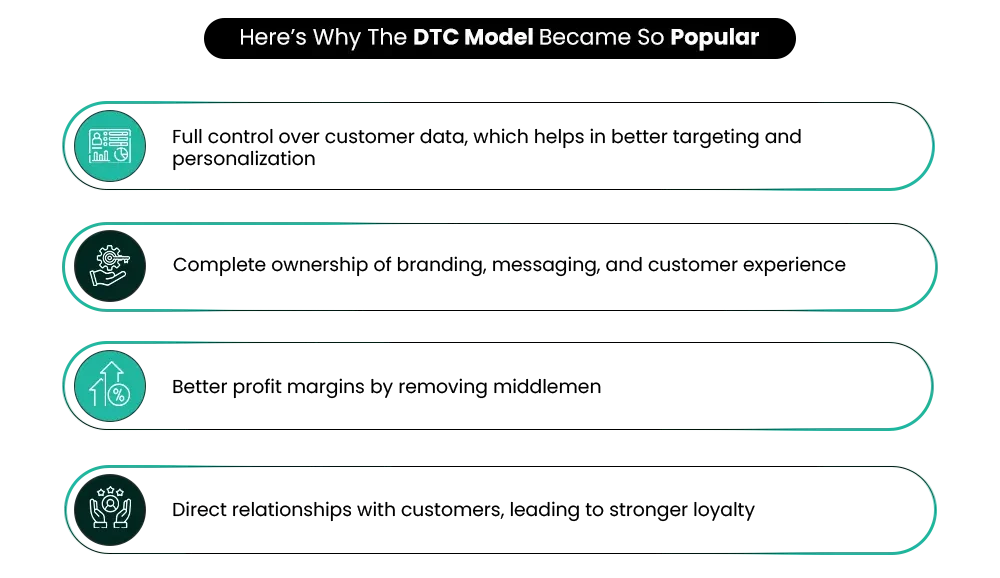
This sounds ideal, and in many ways, it is. But there’s a side that most brands underestimate. Running a DTC brand means you are responsible for everything:
- Marketing and customer acquisition
- Website experience and conversion
- Retention through email, SMS, and loyalty programs
- Fulfillment, shipping, and post-purchase experience
Nothing is shared. Nothing is outsourced by default. This is where things get challenging. As your brand grows, managing all these moving parts becomes complex. What worked in the early stages stops working at scale.
Growth is no longer just about launching ads or building a store. It requires coordination across multiple areas like strategy, technology, and customer experience.
That is why many growing DTC brands start looking beyond basic solutions and consider working with a Shopify Growth Agency or a specialized Shopify agency that understands how to manage and scale the entire ecosystem.
Why Most Shopify Merchants Stop Scaling (The Real Bottlenecks)?
Many Shopify merchants don’t struggle to start. They struggle to scale. Growth slows down not because of a lack of effort, but because of a few key bottlenecks that hold everything back. This is where a Shopify Growth Agency helps by identifying and fixing what’s actually limiting revenue.
1. Acquisition Is Getting More Expensive
Getting new customers is no longer cheap or easy.
- Customer acquisition costs keep increasing
- Paid ads are less efficient due to privacy changes and limited tracking
Brands end up spending more just to maintain the same level of growth. Relying only on ads is no longer a sustainable strategy.
2. Poor Conversion Systems
More traffic does not automatically mean more sales. Many stores are designed like catalogs. They showcase products but don’t guide customers to purchase.
- Visitors browse but don’t convert
- Product pages don’t answer buying questions
- The checkout experience creates friction
Without a strong conversion system, traffic becomes wasted spend.
3. Weak Retention Strategy
Most brands focus heavily on getting new customers and ignore the ones they already have.
- Acquiring a new customer costs 5 to 7 times more than retaining one
- The average returning customer rate is only around 27%
That means a large portion of potential revenue is being left on the table. Brands that don’t invest in retention keep starting from zero every month.
4. Lack of Data Utilization
Shopify gives access to a lot of customer data, but most brands don’t use it effectively.
- Customer behavior is tracked but not analyzed
- No personalization across email, website, or offers
- The same experience is shown to every visitor
Without using data, brands miss out on higher conversions, better retention, and stronger customer relationships.
These bottlenecks are common, but they are also fixable. The challenge is that solving them requires more than isolated efforts. It requires a connected strategy across marketing, conversion, and retention.
What is a Shopify Growth Agency?
A Shopify Growth Agency is a specialized partner that helps Shopify merchants grow revenue by combining strategy, data, technology, and marketing execution into one system.
Unlike a typical Shopify marketing agency that focuses only on ads or SEO, a Shopify Growth Agency looks at the entire business. The goal is not just to drive traffic, but to turn that traffic into consistent and scalable revenue.
This usually includes:
- Growth strategy and planning
- Data tracking and performance analysis
- Shopify development and optimization
- Marketing execution across channels
- Conversion and retention systems
Many brands also work with a Shopify SEO agency, Shopify development agency, or Shopify web design agency, but these services often operate in silos. A Shopify Growth Agency connects all of them into one unified approach.
Difference Between a Traditional Shopify Agency and a Shopify Growth Agency
| Traditional Shopify Agency | Shopify Growth Agency |
| Focus on channels like ads or SEO | Focus on overall revenue growth |
| Works on one service at a time | Builds a full funnel growth system |
| Delivers short-term results | Focuses on long-term scalability |
| Limited strategy involvement | Deep involvement in business growth |
The biggest shift here is mindset. A traditional Shopify agency helps you execute tasks. A Shopify Growth Agency helps you build a system that scales.
This is why many growing brands, especially those on Shopify Plus, prefer working with a Shopify-certified Plus agency or a full-service agency Shopify agency that can handle everything from acquisition to retention.
In 2026, growth is no longer about doing one thing well. It is about making everything work together, and that’s exactly what a Shopify Growth Agency is built for.
What a Shopify Growth Agency Actually Does?
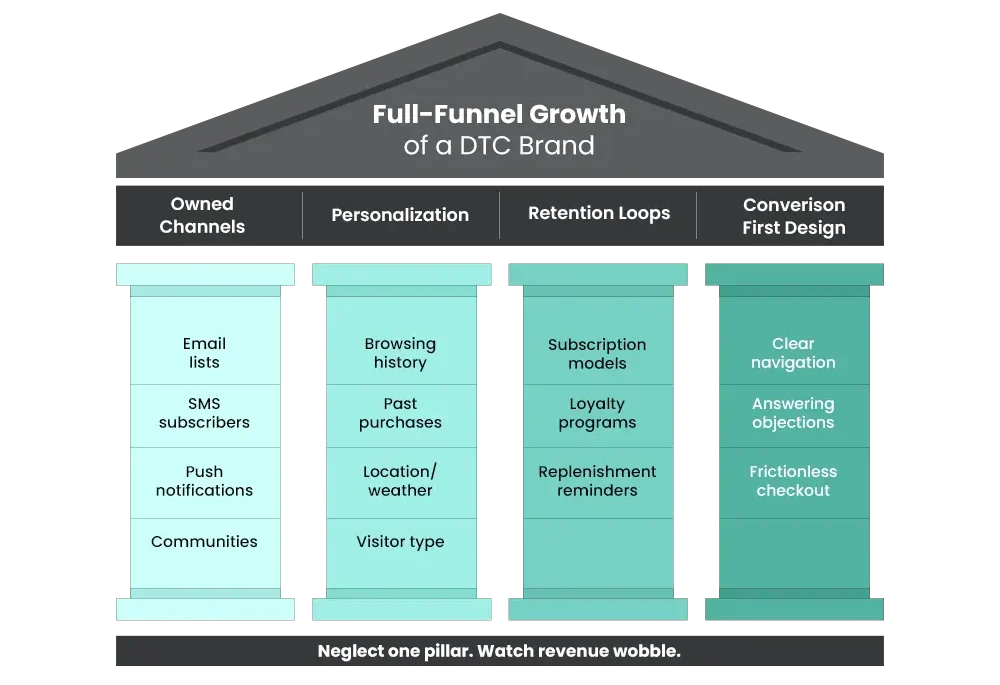
A Shopify Growth Agency works across your entire customer journey, not just one channel. The goal is to make sure every step, from first click to repeat purchase, contributes to revenue.
Here’s how each part of the funnel is improved:
1. Conversion Rate Optimization (CRO)
Getting traffic is important, but converting that traffic is what drives real growth.
Many Shopify stores lose potential customers because of small friction points. Product pages may look good, but fail to answer key questions. Checkout may have too many steps. The overall experience may not guide users clearly toward buying.
A Shopify Growth Agency focuses on:
- Improving product pages with better structure, content, and trust signals
- Simplifying checkout to reduce drop-offs
- Enhancing user experience so customers can buy easily and quickly
Even small improvements here can lead to a significant increase in revenue because more visitors are turning into customers. This is why conversion optimization is often the fastest way to unlock growth. Traffic without conversion is simply wasted spend.
2. Retention and LTV Growth Systems
Growth becomes sustainable when customers come back.
- Email and SMS flows to re-engage customers
- Loyalty programs to increase repeat purchases
- Subscription models for recurring revenue
Key insights:
- A 5% increase in retention can boost profits by 25% to 95%
- Repeat customers generate around 44% of total revenue
Retention is not optional anymore. It is a major driver of profitability.
3. Shopify SEO and Content Strategy
Paid ads stop the moment you stop spending. SEO keeps working.
- Target mid-funnel keywords where buyers are researching
- Create content that answers real customer questions
- Build long-term organic traffic
A Shopify SEO agency approach within a growth strategy helps reduce dependency on ads and brings in consistent, high-intent traffic.
4. Paid Media and Performance Marketing
Paid ads still matter, but the focus has shifted.
- Platforms like Meta, Google, and TikTok drive acquisition
- Campaigns are optimized for profitability, not just clicks
A Shopify digital marketing agency mindset ensures that ad spend translates into real returns, not just traffic numbers.
5. Shopify Development and UX Optimization
Your website is your main conversion engine.
- Improve site speed to reduce bounce rates
- Build mobile-first experiences since most users shop on phones
- Optimize checkout for faster purchases
Around 70% of Shopify traffic comes from mobile devices, so performance here directly impacts revenue. This is where a strong Shopify development agency and a Shopify web design agency capability become critical.
6. First-Party Data and Personalization
Data is one of the biggest advantages DTC brands have.
- Track customer behavior across the journey
- Use data to personalize offers, emails, and product recommendations
- Build stronger customer relationships
Brands that use data well create better experiences and higher conversions. Brands that ignore it lose revenue.
A Shopify Growth Agency connects all these pieces into one system. Instead of isolated efforts, everything works together to drive consistent and scalable growth.
Understand what truly works for scaling DTC brands by watching this quick breakdown of annual contracts vs project-based engagement.
>
📌 Key Video
>
Why In-House Teams Alone Can’t Scale Shopify Brands Anymore?
Many Shopify merchants rely on in-house teams to grow, but scaling becomes harder as the business expands. The challenge is the number of moving parts. Marketing, website performance, retention, and data all need constant attention. Managing everything with a limited team slows things down.
There is also a gap in cross-functional expertise. A team might be strong in ads but weak in conversion or data. Growth today requires all areas to work together, not separately.
Execution becomes slower, too. Launching campaigns, testing ideas, or making technical changes takes time, and that delay impacts growth.
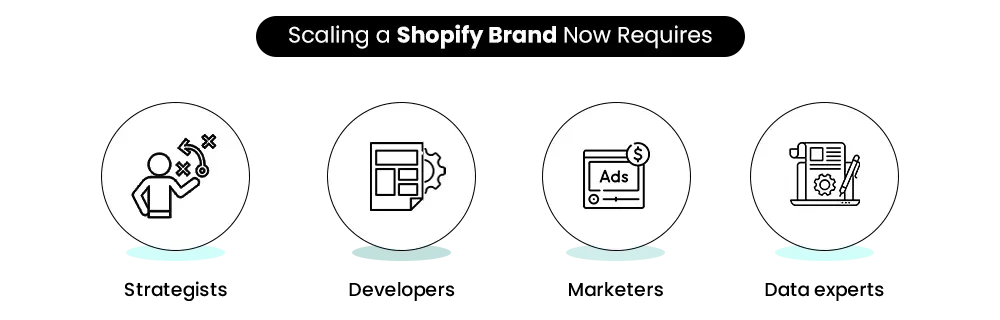
This is where a Shopify Growth Agency adds value. Instead of managing multiple teams, you get a complete system in one place.
A strong Shopify agency combines the strengths of a Shopify marketing agency, Shopify development agency, and Shopify SEO agency into one aligned approach, helping Shopify merchants scale faster and more efficiently.
Signs You Need a Shopify Growth Agency
Many Shopify merchants don’t realize they’ve hit a growth ceiling until the results stop improving. If you’re facing any of these signs, it’s a strong indication that you need a Shopify Growth Agency to scale further.
1. Revenue Plateaus Despite Increasing Ad Spend
You keep increasing your budget, but revenue is not growing at the same rate. This usually means your growth system is broken. More spending is not fixing the core issues.
2. High Traffic but Low Conversion Rate
Visitors are coming in, but they are not buying. These points address problems with your store experience, product pages, or checkout. Traffic without conversion leads to wasted marketing spend.
3. Poor Repeat Purchase Rate
Customers buy once and never return. Without retention systems like email, SMS, or loyalty programs, you are constantly chasing new customers instead of building long-term revenue.
4. No Clear Growth Roadmap
You are trying different tactics, but nothing feels connected. Running ads, updating the website, or launching campaigns without a clear plan leads to inconsistent results.
5. Scaling Feels Chaotic
Growth feels unpredictable and difficult to manage. You may be working with multiple vendors or internal teams, but nothing is aligned. This creates confusion, delays, and missed opportunities.
If even two or three of these signs feel familiar, it usually means your business needs a structured approach to growth. That is exactly where a Shopify Growth Agency helps. It brings clarity, connects all moving parts, and turns scattered efforts into a system that actually scales.
Build Your Shopify Store From Scratch With Mastroke
Launch faster with Mastroke, an official Shopify Partner. We build structured stores with conversion-first design, clean setup, and features built to scale!!
Why Shopify Plus Brands Prefer Certified Growth Agencies?
As brands move to Shopify Plus, the expectations change. Growth is no longer about small improvements. It is about scaling fast, efficiently, and without breaking systems.
Shopify Plus brands are known to grow at an average of 126% year-over-year. That level of growth brings complexity that basic setups and small teams cannot handle.
To support this scale, brands need more advanced capabilities:
- Automation to manage operations, marketing, and workflows
- Custom development to build unique experiences and features
- Scalable systems that can handle high traffic and large order volumes
This is why many high-growth brands choose to work with a Shopify Certified Plus agency.
These agencies understand the technical and strategic demands of scaling on Shopify Plus. They go beyond basic execution and focus on building systems that support long-term growth.
A strong Shopify development agency helps create custom solutions that improve performance and flexibility. At the same time, a Shopify web design agency ensures the user experience is optimized for higher conversions at scale.
Instead of working with multiple vendors, Shopify Plus brands prefer certified growth partners who can handle everything in one place. That is why a Shopify Growth Agency with Shopify Plus expertise becomes a key part of scaling successfully in 2026.
The ROI of Hiring a Shopify Growth Agency
Many Shopify merchants try to scale with in-house teams or a DIY approach. It can work in the beginning, but growth often slows down due to trial and error, limited expertise, and slow execution.
A Shopify Growth Agency changes that by bringing proven systems, faster execution, and a full-funnel approach.
DIY / In-house vs Shopify Growth Agency
| DIY / In-house | Shopify Growth Agency |
| Relies on trial and error | Uses proven frameworks and strategies |
| Slower execution due to limited resources | Faster execution with dedicated experts |
| Focus on individual channels | Focus on full funnel growth |
| Disconnected efforts across teams | Aligned strategy across all areas |
What Does This Mean for Your Business?
When your entire growth system is aligned, the results compound.
- Higher ROAS because campaigns are optimized for profitability, not just traffic
- Better LTV through strong retention and personalization strategies
- More efficient scaling with fewer wasted resources
Over time, this leads to one key outcome: sustainable growth. Instead of constantly chasing new customers or fixing issues, your business starts running on a system that consistently drives revenue.
That is the real return on investment of working with a Shopify Growth Agency.
See when DIY stops working and what Shopify brands need to grow faster.
📌 Key Video
>
>
Why Mastroke is the Shopify Growth Agency Built for DTC Brands?
Not all agencies are built to scale DTC brands. Most focus on one part of the funnel. Mastroke is different because it brings everything together under one growth system.
At its core, Mastroke is a Shopify Growth Agency that combines strategy, creativity, and data to drive real results.
What We Bring Together
Scaling a Shopify brand requires more than just ads or design. It requires multiple functions working in sync.
At Mastroke, we combine:
- Performance marketing to drive high-quality traffic
- Conversion optimization to turn visitors into customers
- Retention systems to increase repeat purchases and LTV
- Shopify development to improve speed, UX, and scalability
This full-funnel approach ensures that every part of your business contributes to growth.
Our Core Promise
We help Shopify merchants grow, thrive, and reach new heights. This is not just about increasing traffic or running campaigns. It is about building a system that consistently drives revenue and supports long-term scaling.
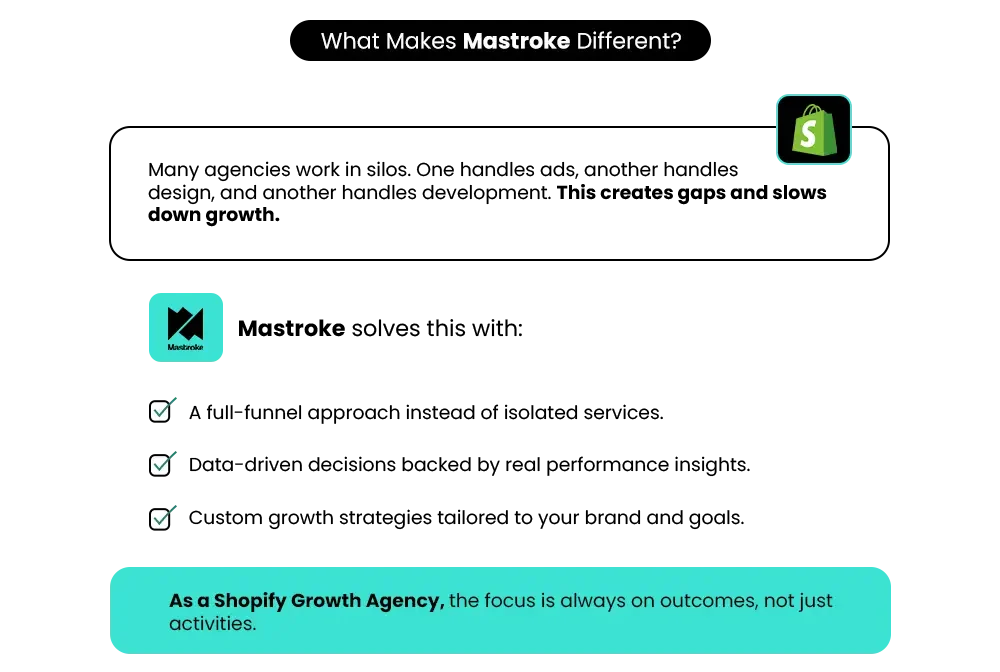
For DTC brands looking to move beyond inconsistent growth and build a scalable system, Mastroke acts as a true growth partner, not just a service provider.
Future of Shopify Growth in 2026 & Beyond
Shopify is evolving fast, and so is the way DTC brands grow. What worked a few years ago is no longer enough. Growth in 2026 and beyond will depend on how well brands adapt to a few key shifts.
1. AI-Driven Personalization
AI is making it easier to deliver personalized experiences at scale. Brands can now show the right products, offers, and content based on customer behavior. This leads to higher conversions and better retention without increasing manual effort.
2. Privacy-First Marketing
Tracking is becoming more limited due to privacy changes. Brands can no longer rely heavily on third-party data. Instead, they need strategies that respect privacy while still delivering relevant experiences.
3. First-Party Data Dominance
Owning your customer data is becoming a major advantage. Brands that collect and use first-party data can build stronger relationships, improve targeting, and reduce dependency on paid platforms.
4. Community-Led Growth
Strong brands are building communities, not just customer lists. Communities create trust, drive word-of-mouth, and generate repeat purchases. They also act as a long-term growth channel that does not depend on ad spend.
The direction is clear. Brands that adapt to these changes will continue to grow. Brands that don’t will struggle to keep up.
Build your dream Shopify store today
Bring your vision to life with Mastroke, an official Shopify Partner. We design and develop high-converting, scalable Shopify stores with clean structure and future-ready features—built to grow with your business.
Conclusion: Growth Is No Longer Optional, It’s Engineered
DTC is more competitive than before as more brands are entering the market, and customers have more choices.
Shopify gives you the tools to build and run your business, but it does not guarantee growth on its own. Success depends on how well you use those tools.
The biggest shift in 2026 is this: growth is no longer driven by random tactics. It is driven by systems. Brands that win are the ones that connect marketing, conversion, retention, and data into one structured approach.
That is exactly what a Shopify Growth Agency helps you build.
If you want to move beyond inconsistent results and scale with clarity, it is time to partner with a Shopify Growth Agency like Mastroke and turn your store into a growth engine.
Ready to Scale Your Shopify Store?
Book a free Shopify growth audit with Mastroke and start scaling your business!
Frequently Asked Questions
1. How do I know if my Shopify store is ready to scale?
If you have consistent traffic and sales but growth has slowed or become unpredictable, your store is ready for scaling with a proper system.
2. What does a Shopify Growth Audit include?
A growth audit reviews your store’s conversion rate, ad performance, retention strategy, UX, and data setup to identify where you’re losing revenue.
3. How long does it take to see results with a Shopify Growth Agency?
Some improvements, like conversion fixes, can show results quickly, while full growth systems typically take 2–3 months to deliver consistent outcomes.
4. Can a Shopify Growth Agency reduce my ad spend?
Yes, by improving conversion and retention, you can generate more revenue from the same traffic, reducing dependency on high ad spend.
5. Do I need a large team before hiring a Shopify Growth Agency?
No, many brands hire a Shopify Growth Agency to avoid building a large in-house team and get access to experts across strategy, marketing, and development.