For modern ecommerce brands, traffic spikes are a good problem to have—but only if your platform can handle them. A successful product launch, a viral campaign, or a major sale event can send thousands of shoppers to your store within seconds. When that happens, performance becomes everything.
Slow-loading pages, checkout failures, or unexpected site crashes during peak traffic do more than frustrate customers—they directly impact revenue and brand trust. Even a few seconds of delay can lead to abandoned carts, missed conversions, and lost business opportunities at the most important moments.
This is exactly why many high-growth brands move toward Shopify Plus enterprise solutions. Built specifically for high-volume merchants, Shopify Plus is designed to handle intense traffic surges while maintaining speed, stability, and a seamless checkout experience.
Instead of worrying about server limits or scaling infrastructure manually, businesses can focus on growth while the platform manages performance behind the scenes.
In this practical breakdown, we’ll explore how Shopify Plus infrastructure manages large traffic volumes and keeps stores running smoothly during the moments that matter most.
Why High Traffic Is a Major Challenge for E-commerce Stores
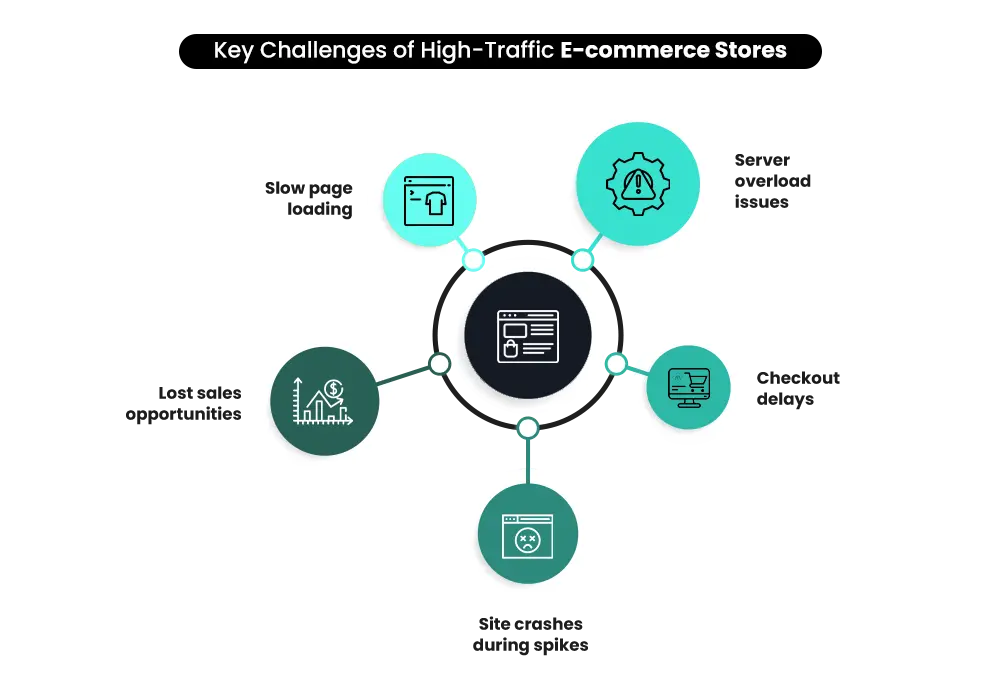
Traffic spikes are a great sign for any ecommerce brand—but they also push a store’s infrastructure to its limits. Whether it’s a flash sale, a product launch, or a major seasonal campaign, a sudden surge of visitors can quickly expose performance gaps if the platform isn’t built to scale.
When infrastructure fails during peak traffic, the financial impact can be immediate. Every minute of downtime during major events like Black Friday or flash sales can translate into thousands of dollars in lost revenue. If you’re planning seasonal campaigns and want to attract more shoppers, you can also explore our blog “5 Thanksgiving Marketing Ideas to Drive Holiday Traffic to Your Shopify Store” for practical strategies to increase store traffic during peak shopping periods.
Below are some of the key challenges many e-commerce businesses face during high-traffic events.
Slow Page Load Times
As more visitors access a store simultaneously, servers may struggle to process requests efficiently. This often leads to:
- Delayed page loading
- Slower product and collection pages
- Higher bounce rates from impatient users
Even small delays can impact conversions during peak traffic moments.
Checkout Bottlenecks
The checkout stage is where high traffic creates the most pressure. When too many customers attempt to complete purchases at once, some platforms experience:
- Payment processing delays
- Cart errors or checkout timeouts
- Failed transactions during peak demand
These issues can directly affect sales during important campaigns.
Infrastructure Limitations
Many traditional e-commerce platforms require businesses to manually prepare for traffic spikes by upgrading servers, optimizing caching, or managing hosting resources. Without scalable infrastructure in place, high traffic can quickly lead to performance issues—making reliability a critical factor for growing brands.
Build Your Shopify Store From Scratch With Mastroke
Launch faster with Mastroke, an official Shopify Partner. We build structured stores with conversion-first design, clean setup, and features built to scale!!
What Is Shopify Plus Enterprise and Why It’s Built for High-Volume Commerce
As ecommerce brands grow, the demands placed on their technology stack increase significantly. Managing high traffic, large product catalogs, global customers, and complex operations requires more than the capabilities offered by a standard ecommerce platform. This is where Shopify Plus enterprise comes in.
Global brands such as Gymshark, Allbirds, and Kylie Cosmetics rely on Shopify Plus to manage massive traffic spikes during product launches and seasonal campaigns.
Shopify Plus is the enterprise-level version of Shopify designed specifically for high-growth and high-volume merchants. While the core Shopify platform works well for small to mid-sized businesses, Shopify Plus introduces advanced infrastructure, automation tools, and customization capabilities that help large brands scale efficiently.
One of the biggest differences between Shopify and Shopify Plus lies in scalability and operational flexibility. The Shopify Plus platform provides dedicated support, higher API limits, deeper checkout customization, and tools that allow brands to manage multiple storefronts and large traffic volumes with confidence.
Below is a quick comparison to understand how Shopify Plus enterprise differs from standard Shopify.
Feature |
Shopify |
Shopify Plus Enterprise |
| Target Businesses | Small to medium stores | High-growth and enterprise brands |
| Traffic Handling | Suitable for moderate traffic | Built for large-scale traffic spikes |
| Checkout Customization | Limited | Advanced customization with Shopify Functions |
| Automation Tools | Basic automation | Advanced automation with Shopify Flow & Launchpad |
| Store Management | Single store focus | Multiple storefronts and global expansion |
| Support | Standard support | Dedicated Merchant Success Manager |
Because of these capabilities, many global brands choose the Shopify Plus enterprise platform to support large-scale ecommerce operations while maintaining speed, stability, and flexibility as they grow.
Shopify Plus Infrastructure: The Technology Behind High Traffic Handling
Managing high traffic requires a strong and reliable infrastructure. The Shopify Plus platform is designed with a cloud-based architecture that allows stores to remain stable, fast, and responsive even when thousands of customers visit simultaneously. Instead of relying on manual server management, Shopify provides a fully optimized environment that automatically supports large-scale ecommerce operations.
Below are the key infrastructure elements that help Shopify Plus handle heavy traffic efficiently.
1. Cloud-Based SaaS Infrastructure
The Shopify Plus enterprise platform operates on a cloud-based SaaS model. This means merchants don’t need to manage servers or hosting environments.
- No manual infrastructure management
- Automatic platform updates
- Built-in scalability for growing brands
2. Fully Managed Hosting
Shopify handles the technical side of hosting so businesses can focus on operations.
- Automatic security updates
- Continuous performance optimization
- Reliable hosting during traffic spikes
3. Global Server Network
The Shopify Plus enterprise infrastructure uses distributed servers across different regions.
- Faster loading for global customers
- Reduced latency during peak traffic
- Better performance for international stores
4. Load Balancing and Redundancy
To maintain stability during high traffic, Shopify Plus enterprise systems distribute traffic across multiple servers.
- Balanced server workload
- Reduced risk of crashes
- Reliable performance with 99.99% uptime
Auto-Scaling: How Shopify Plus Handles Traffic Spikes
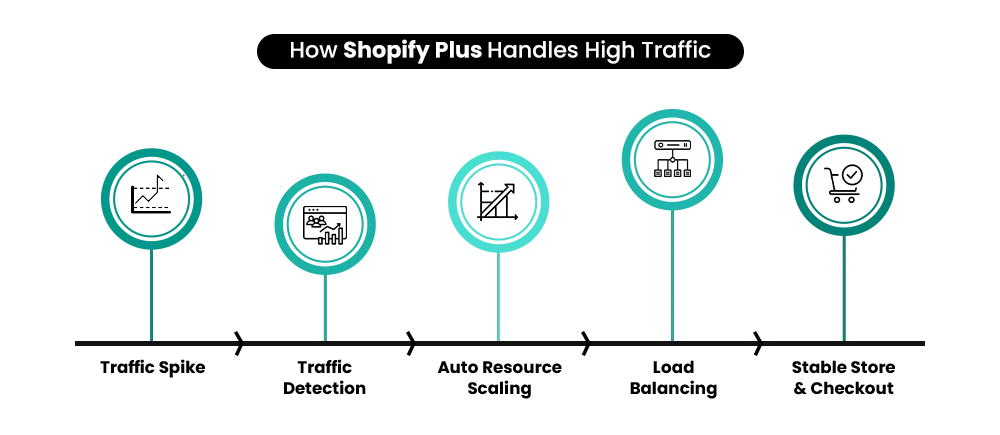
One of the biggest advantages of the Shopify Plus platform is its ability to scale automatically when traffic increases. During major sales events, product launches, or viral marketing campaigns, visitor numbers can rise within seconds. Instead of requiring manual server upgrades, Shopify Plus enterprise infrastructure automatically adjusts resources to maintain performance and stability.
Here’s how the process works.
Step 1: Automatic Resource Allocation
When traffic starts increasing, the Shopify Plus system immediately detects the higher demand. Additional computing resources are automatically allocated so the store can continue handling requests without slowing down.
Step 2: Real-Time Infrastructure Scaling
As traffic continues to grow, the platform scales its infrastructure in real time. This ensures that product pages, collections, and other store elements load quickly even when large numbers of users are browsing at the same time.
Step 3: Handling Flash Sales and Viral Traffic
High-traffic moments like flash sales or limited product drops can bring sudden surges of visitors. The Shopify Plus platform is designed to handle these spikes efficiently, preventing performance issues during peak demand.
Step 4: Supporting Millions of Concurrent Visitors Simultaneously
Because of its scalable architecture, Shopify Plus infrastructure can support millions of simultaneous users without compromising checkout performance or browsing speed.
Step 5: No Manual Server Management
With Shopify Plus enterprise, businesses do not need to monitor or upgrade servers during traffic spikes. The platform manages scaling automatically, allowing teams to focus on operations and customer experience.
Shopify’s Global CDN and Its Impact on Store Speed
Speed is one of the most important factors during high-traffic events. When thousands of shoppers visit a store at the same time, slow loading pages can quickly lead to higher bounce rates and lost sales. This is why the Shopify Plus enterprise platform relies on a powerful Content Delivery Network (CDN) to maintain fast performance worldwide.
A Content Delivery Network (CDN) is a system of distributed servers that store and deliver website content from locations closer to the user. Instead of sending every request to a single central server, the CDN allows content to be delivered from multiple global locations. This helps reduce latency and ensures that pages load quickly, regardless of where the customer is browsing from.
For Shopify Plus enterprise merchants, this global CDN architecture plays a major role in maintaining consistent performance during traffic spikes.
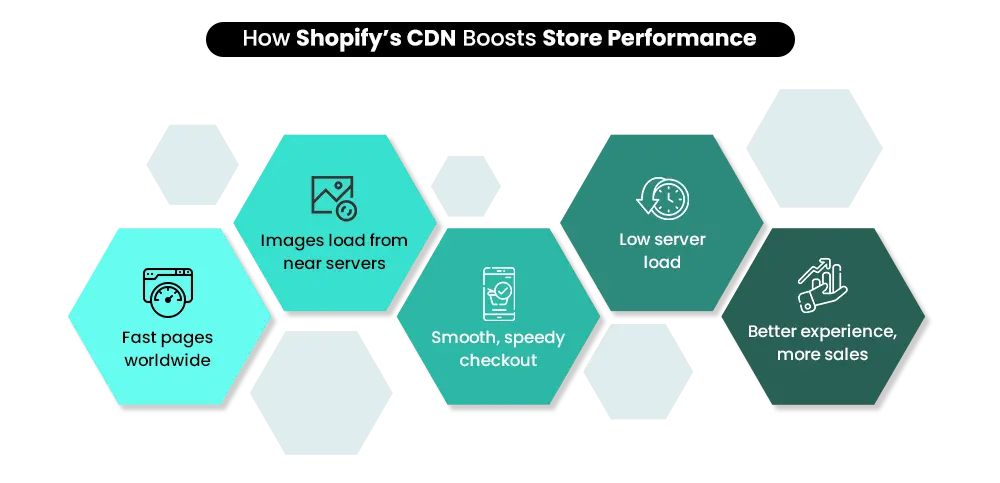
Key benefits of Shopify’s CDN include:
- Faster delivery of store assets such as images, scripts, and style files
- Reduced strain on primary servers, especially during peak traffic events
- Improved page load speeds for customers browsing from different regions
Because of this distributed delivery system, the Shopify Plus enterprise infrastructure ensures that shoppers experience smooth browsing and fast page performance even during large global campaigns.
Shopify Plus Checkout Infrastructure for High-Volume Sales
For high-traffic ecommerce stores, the checkout process is where performance matters most. A slow or unstable checkout can easily lead to abandoned carts and lost revenue—especially during large sales events. The Shopify Plus enterprise platform addresses this challenge with a checkout infrastructure built specifically for speed, reliability, and high transaction volume.
The checkout system on Shopify Plus enterprise is optimized to process large numbers of orders without compromising performance, even when traffic surges dramatically.
1. Optimized Checkout Architecture
The Shopify Plus checkout is built with a highly optimized architecture designed to manage heavy transaction loads efficiently. This allows stores to maintain consistent checkout performance during peak demand periods.
2. High Transaction Processing Capacity
During major sales events, thousands of customers may attempt to place orders simultaneously. The Shopify Plus enterprise infrastructure is capable of processing thousands of transactions per minute while maintaining a smooth purchasing experience.
3. One-Click Checkout Options
To reduce friction and speed up purchases, Shopify Plus stores can offer multiple one-click payment options, including:
- Shop Pay
- Apple Pay
- Google Pay
These payment methods allow returning customers to complete purchases quickly, which can significantly improve conversions.
4. Check Out Stability During Traffic Spikes
Because the checkout system is deeply integrated with the platform’s scalable infrastructure, Shopify Plus maintains stability even during flash sales, product launches, and seasonal campaigns.
5. Conversion Optimization During Peak Events
By combining fast checkout performance with streamlined payment options, the Shopify Plus enterprise platform helps brands capture more sales during their highest-traffic moments.
Headless Commerce on Shopify Plus for Maximum Performance
Enterprise e-commerce brands often require more flexibility than traditional storefront architectures can provide. This is where headless commerce becomes a powerful approach within the Shopify Plus enterprise ecosystem. Instead of tightly coupling the frontend storefront with backend commerce operations, headless architecture separates the two, allowing brands to deliver faster and more customizable digital shopping experiences.
Headless vs Traditional Storefronts
| Feature | Traditional Shopify Storefront | Headless Shopify Plus |
| Architecture | Monolithic | API-driven |
| Customization | Limited | Highly flexible |
| Performance Control | Moderate | Fully optimized |
| Integrations | App-based | API-based |
API-first architecture
At the core of headless commerce is an API-driven structure. Shopify provides robust APIs that allow developers to connect backend ecommerce functionality with custom-built frontends.
This approach enables:
- Faster integration with external systems
- Custom user experiences without platform limitations
- Improved performance and scalability
- Custom front-end frameworks
With headless implementation, developers can build storefronts using modern frameworks such as React, Next.js, or Vue. These technologies allow brands to design unique customer journeys that go beyond traditional theme-based stores.
Progressive Web Apps
Headless storefronts can also be deployed as Progressive Web Apps (PWAs). PWAs combine the speed of mobile apps with the accessibility of websites, delivering faster browsing and smoother interactions for customers.
Faster storefront experiences
Performance improvements are one of the biggest reasons enterprise brands adopt headless architecture. By optimizing frontend delivery separately, stores can achieve faster page loading times and smoother navigation.
Integration with enterprise systems
Large ecommerce operations often depend on multiple enterprise tools. The Shopify Plus enterprise platform integrates easily with:
- ERP systems
- CRM platforms
- Marketing automation tools
- Analytics systems
Many enterprise brands partner with Shopify experts like Mastroke to implement headless storefronts that balance performance, scalability, and custom functionality.
Advanced Inventory and Order Management at Scale
As ecommerce operations expand, managing inventory across multiple channels and fulfillment locations becomes significantly more complex. The Shopify Plus enterprise platform includes advanced inventory and order management tools that help large brands maintain accuracy and operational efficiency even during high traffic periods.
Modern ecommerce operations require real-time visibility into stock levels and order processing. Without this, businesses risk overselling products, delaying shipments, or creating poor customer experiences.
Key capabilities include
- Real-time inventory synchronization: Stock updates instantly across all sales channels, ensuring customers always see accurate availability.
- Multi-warehouse inventory management: Businesses can track inventory across multiple fulfillment centers and distribution locations.
- Automated order routing: Orders can be automatically assigned to the nearest or most efficient warehouse for faster delivery.
- ERP integrations: Shopify integrates seamlessly with enterprise systems like NetSuite, SAP, or Microsoft Dynamics.
- Preventing overselling during peak demand: Real-time stock updates ensure that products are not sold once inventory runs out.
These features allow the Shopify Plus ecosystem to support large product catalogs and high order volumes without operational disruptions.
Security and Fraud Protection During High Traffic Events
Security becomes even more important when ecommerce stores experience high traffic volumes. During large promotional events or viral product launches, businesses must protect both customer data and transaction integrity.
The Shopify Plus platform is built with enterprise-grade security measures designed to maintain stability and prevent fraud.
1. PCI DSS Level 1 compliance
Shopify maintains PCI DSS Level 1 certification, the highest payment security standard in the ecommerce industry. This ensures that all payment data is processed securely and complies with global security requirements.
2. Fraud detection tools
Built-in fraud analysis tools evaluate every transaction and assign risk indicators to potentially suspicious orders. This helps merchants detect and prevent fraudulent purchases before fulfillment.
3. Bot protection systems
During flash sales, automated bots often attempt to overwhelm stores or purchase large quantities of inventory. Shopify’s infrastructure includes systems designed to detect and block malicious bot activity.
4. Secure payment infrastructure
The platform supports encrypted payment processing and integrates with secure payment gateways, ensuring that customer payment information remains protected.
5. Continuous monitoring
Shopify continuously monitors platform performance and security threats, allowing quick detection and response to unusual activity. This level of monitoring helps maintain reliability for Shopify Plus enterprise stores even during massive traffic spikes.
Enterprise Automation Tools in Shopify Plus
Automation is essential for enterprise e-commerce operations. When stores process thousands of orders during major campaigns, manual processes can slow down operations and increase the risk of errors.
The Shopify Plus enterprise platform includes several automation tools that streamline workflows and reduce operational overhead.
Shopify Flow automation
Shopify Flow allows merchants to create automated workflows using trigger-based logic.
Common use cases include:
- Tagging VIP customers
- Detecting potential fraud
- Sending restock notifications
- Triggering marketing campaigns
Launchpad for scheduling large sales events
Launchpad helps brands prepare and automate large promotional campaigns.
It allows businesses to:
- Schedule product launches
- Automate discount activation
- Start and end campaigns automatically
- Revert pricing after events
Shopify Functions for advanced customization
Shopify Functions allow developers to create custom backend logic for discounts, checkout experiences, and pricing rules. This enables brands to implement complex promotional strategies without relying heavily on third-party apps. It also ensures better performance and scalability by running custom logic directly within the Shopify environment.
Automated workflows for operations
Automation simplifies operations like order tagging, inventory monitoring, and customer segmentation. With tools like Shopify Flow, businesses can automate repetitive tasks and trigger actions based on specific events. This improves operational efficiency and helps teams manage large volumes of orders more effectively.
Reduced manual workload during peak sales
By automating repetitive processes, ecommerce teams can focus on customer experience and business growth rather than operational tasks. Automation also reduces the risk of human errors during high-traffic sales events. As a result, businesses can maintain smoother operations even during large promotional campaigns.
Multi-Channel and Global Selling at Enterprise Scale
Modern ecommerce customers interact with brands across multiple platforms. Successful enterprise brands rarely depend on a single storefront. Instead, they operate across marketplaces, social platforms, and international stores.
The Shopify Plus enterprise ecosystem allows brands to manage all of these channels from a single platform.
Selling across marketplaces and social channels
Brands can sell products through multiple channels, such as:
- Social commerce platforms
- Marketplaces
- Mobile storefronts
Managing multiple storefronts
Large brands often operate region-specific stores. Shopify Plus allows merchants to manage multiple storefronts while maintaining centralized control over products and operations.
Localized currencies and languages
International customers expect localized shopping experiences. Shopify Plus enables stores to support different currencies, languages, and regional pricing strategies.
Shopify Markets for international expansion
Shopify Markets provides a centralized system for managing international ecommerce operations, including tax handling, pricing adjustments, and shipping rules.
Global ecommerce scalability
The platform’s infrastructure ensures that enterprise brands can expand into new markets without worrying about technical limitations.
Best Practices to Prepare Your Shopify Plus Store for High Traffic
Preparing a store for high traffic requires both technical optimization and operational planning. Even though Shopify enterprise infrastructure can handle large traffic spikes, proper preparation ensures the best possible customer experience.
1. Load testing before major campaigns
Simulating heavy traffic conditions helps businesses identify performance bottlenecks before campaigns launch.
2. Optimizing checkout performance
Checkout is the most critical stage of the ecommerce journey. Ensuring a smooth and fast checkout experience improves conversions during high-traffic events.
3. Caching and theme optimization
Optimizing theme performance, reducing unnecessary code, and minimizing third-party scripts can significantly improve page load speed during peak traffic periods.
4. Monitoring store analytics in real time
Real-time analytics allow teams to track store performance during campaigns and quickly respond to technical issues.
5. Preparing inventory and fulfillment
High-demand events require careful inventory planning and fulfillment readiness to prevent stockouts or shipping delays.
6. Leveraging automation tools
Automation tools can help manage order workflows, inventory updates, and promotional campaigns without manual intervention. Many brands work with Shopify specialists like Mastroke to optimize their stores before major sales events.
When Should Brands Upgrade to Shopify Plus
Not every ecommerce business requires enterprise infrastructure immediately. However, as businesses grow, standard ecommerce solutions may struggle to support increasing traffic, operational complexity, and global expansion.
Brands typically consider upgrading to Shopify Plus when they experience:
- Rapid traffic growth that pushes existing infrastructure limits
- High-volume sales events such as flash sales or product drops
- Multiple international storefronts requiring localized experiences
- Advanced customization needs, including checkout logic and integrations
- Enterprise operational requirements like automation and ERP connectivity
For growing ecommerce brands, upgrading to Shopify Plus often becomes a strategic step toward scalable growth. Want to understand when it’s the right time to upgrade? Read our blog: Why Brands Upgrade to Shopify Plus: Benefits, Costs & When to Switch.
Final Thoughts: Shopify Plus as a High-Traffic E-commerce Infrastructure
Handling large traffic volumes requires more than a visually appealing storefront—it demands a platform built for performance, reliability, and scalability when demand peaks. The Shopify Plus enterprise platform delivers exactly that. With auto-scaling infrastructure, global CDN support, headless commerce capabilities, and advanced automation tools, it empowers high-growth ecommerce brands to operate seamlessly even during massive traffic surges.
From managing global storefronts to processing thousands of transactions per minute, Shopify Plus provides the technological foundation required for modern enterprise ecommerce.
However, realizing the full potential of Shopify Plus requires the right technical strategy and implementation expertise.
At Mastroke, we partner with ambitious brands to architect, optimize, and scale Shopify Plus enterprise stores engineered for high traffic, global expansion, and long-term ecommerce growth.
Talk to the Mastroke Shopify experts today and build a Shopify Plus store engineered for enterprise traffic, global growth, and long-term scalability.
Build your dream Shopify store today
Bring your vision to life with Mastroke, an official Shopify Partner. We design and develop high-converting, scalable Shopify stores with clean structure and future-ready features—built to grow with your business.
FAQs
Can Shopify Plus handle very high traffic during flash sales?
Yes. The Shopify Plus infrastructure is designed to automatically scale and support large traffic surges during flash sales, product launches, and promotional campaigns.
How many transactions can Shopify Plus process per minute?
Shopify Plus can process thousands of transactions per minute, making it suitable for large-scale ecommerce operations.
Does Shopify Plus automatically scale during traffic spikes?
Yes. The platform uses an auto-scaling infrastructure that allocates additional resources dynamically when traffic increases.
How does Shopify Plus maintain fast load speeds during high traffic?
Technologies such as global CDNs, load balancing, and distributed cloud infrastructure ensure that pages load quickly even during peak traffic.
Is Shopify Plus suitable for global ecommerce brands?
Yes. The Shopify Plus platform supports international storefronts, localized currencies, languages, and global shipping strategies.
What tools help manage large sales events on Shopify Plus?
Enterprise merchants rely on tools such as Shopify Flow, Launchpad, and Shopify Functions to automate workflows and manage large sales events efficiently.