Running a Shopify store is exciting, but it can be frustrating when customers leave at checkout. They browse your store, add products to their cart, and still do not complete the purchase.
This is where Shopify abandoned cart recovery becomes important.
Most Shopify stores lose 60–70% of checkout attempts due to cart abandonment. While this may seem like lost revenue, it is actually an opportunity. These are high-intent shoppers who were close to buying but did not complete the process.
The good part is they can be brought back.
With the right approach using email marketing, Shopify retargeting, and checkout optimization, you can start recovering lost sales quickly. Sending timely abandoned cart emails and running retargeting ads can help improve your conversion rates without increasing traffic.
In this guide, we will explain how Shopify abandoned cart recovery works and how you can turn abandoned carts into completed purchases.
What is a Shopify Abandoned Cart?
1. Understanding Abandoned Checkouts in Shopify
A Shopify abandoned cart refers to a situation where a customer adds products to their cart but does not complete the purchase. In Shopify, recovery is based on abandoned checkouts, not just carts.
Here is the key difference:
- Cart created, but checkout has not started
- Checkout started, but the payment was not completed
Shopify only tracks abandonment once a customer enters the checkout and provides their details, such as an email address.
You can view these abandoned checkouts in your Shopify admin by going to: Orders → Abandoned Checkouts
This section gives you visibility into potential lost sales and helps you take action to recover them.
2. How Shopify Tracks Abandoned Checkouts
Shopify automatically records important data when a checkout is abandoned. This helps store owners understand customer behavior and run recovery campaigns.
Shopify tracks:
- Customer email
- Products added to cart
- Cart total value
- Date and time of checkout
- Recovery status
This data is useful for sending abandoned cart emails, running retargeting campaigns, and improving the overall checkout process.
3. Why Customers Abandon Their Carts
Cart abandonment is common across all Shopify stores, and it usually happens due to a few key reasons.
Some of the most common causes include:
- Unexpected shipping costs are shown at checkout
- A complicated or lengthy checkout process
- Concerns about payment security
- Limited or missing payment options
- Slow-loading pages or technical issues
- Customers comparing options or not ready to buy
In many cases, customers are still interested in the product. They just need reassurance, clarity, or a reminder to return and complete the purchase. Understanding these reasons is the first step toward improving your Shopify abandoned cart recovery strategy.
What is the Average Cart Abandonment Rate?
Cart abandonment is a common challenge in ecommerce. On average, around 67.75% of online shopping carts are abandoned before the purchase is completed. This means a large portion of potential revenue is left on the table.
For Shopify stores, this highlights a major opportunity. These customers have already shown interest in your products, so even a small improvement in recovery can make a noticeable impact on your sales.
Tracking cart abandonment rates helps you understand how users behave during checkout.
It also helps identify issues such as high shipping costs, a complicated checkout process, or a lack of trust. By monitoring this metric regularly, you can make better decisions to improve your conversion rates and overall store performance.
How to Calculate Cart Abandonment Rate?
To measure how many customers leave without completing a purchase, you can use a simple formula:
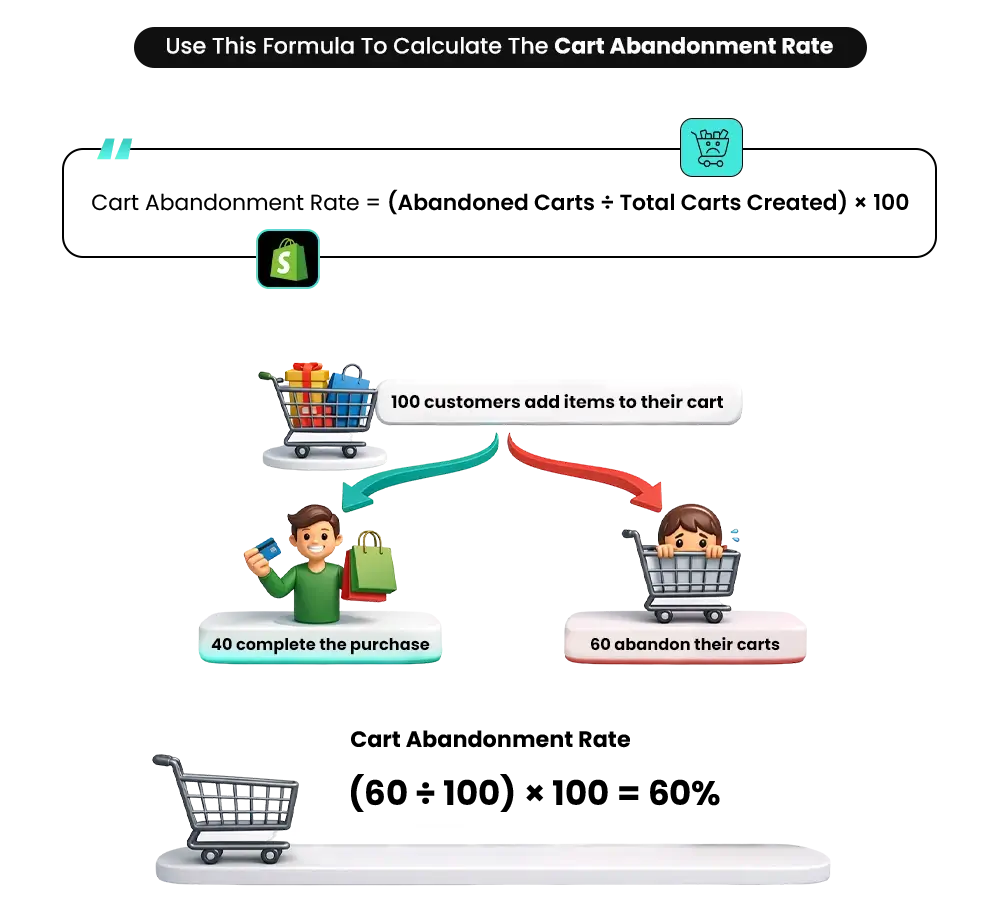
This calculation gives you a clear view of how many potential sales are being lost.
By improving your recovery strategies, such as using email reminders and retargeting campaigns, you can reduce abandonment and start recovering lost sales.
Even a small increase in recovery can lead to higher conversion rates without needing more traffic.
Watch the video below to discover the Shopify retargeting trick you can set up in 60 seconds.
Step-by-Step Shopify Abandoned Cart Recovery System
An effective Shopify abandoned cart recovery system goes beyond a single reminder. The best results come from a structured sequence of messages combined with email marketing and retargeting strategies.
Each step is designed to re-engage customers and move them closer to completing their purchase.
Step 1: Send Abandoned Cart Emails Quickly
Timing is critical when you send abandoned cart emails.
The first message should go out within 30 to 60 minutes after abandonment. At this point, the customer may have simply been distracted.
Your email should:
- Include the product image
- Provide a direct checkout link
- Keep the message short and helpful
These early cart recovery emails act as a reminder rather than a pushy promotion. They help bring customers back while their interest is still high and increase the chances they will complete the purchase.
Step 2: Reinforce Trust With Follow-Up Emails
If the first email does not convert, send a follow-up within 6 to 12 hours. At this stage, hesitation is often the main barrier. Your goal is to build trust and remove doubts.
Include:
- Delivery details and timelines
- A clear return policy
- Social proof, such as customer reviews
- Answers to common questions
This step strengthens confidence and encourages customers to return and complete their order through well-structured email marketing.
Step 3: Offer Incentives Carefully
If the purchase is still incomplete, send another message after 24 hours.
You can introduce incentives such as:
- Free shipping
- A limited-time discount
- A bundle offer
These incentives help create urgency and motivate action. However, they should be used carefully to avoid over-dependence on discounts.
When applied strategically, they play a key role in recovering lost sales.
Step 4: Send a Final Reminder
The final message should be sent around 48 hours after abandonment. Keep the tone simple and supportive.
Examples include:
- “Your cart is waiting.”
- “Still thinking it over?”
You can also highlight limited stock or time-sensitive offers to encourage action.
These final cart recovery emails reinforce urgency and help complete the abandoned cart recovery process by bringing customers back to finish their purchase.
Shopify Retargeting: The Most Powerful Recovery Strategy
While email plays an important role, Shopify retargeting is one of the most effective ways to bring customers back. Most visitors do not make a purchase on their first visit. They need multiple interactions before they feel confident enough to buy.
This is where retargeting campaigns make a difference. They help you stay visible and remind customers about the products they were already interested in.
1. What are Retargeting Ads?
Before using them effectively, it is important to understand what retargeting ads are.
Retargeting ads are ads shown to users who have already visited your Shopify store. These users may have viewed a product, added items to their cart, or even started checkout, but did not complete the purchase.
These ads work by tracking user behavior and then displaying relevant ads across platforms such as search engines and social media.
Retargeting ads can:
- Show the exact products a customer viewed
- Remind users about items left in their cart
- Re-engage visitors who did not complete checkout
The biggest advantage of retargeting campaigns is that they focus on high-intent users. This leads to:
- Higher conversion rates
- More efficient ad spend
- Better return on marketing efforts
Instead of targeting cold audiences, you are reaching people who have already shown interest in your products.
2. Using Google Ads Retargeting for Shopify
Google Ads retargeting allows you to reconnect with visitors across Google’s network, including websites, apps, and search results.
There are different types of retargeting ads on Google:
- Display ads that appear on websites within the Google Display Network
- Dynamic product ads that show the exact products users viewed
- Search remarketing that targets users when they search again on Google
One of the biggest advantages of Google Ads retargeting is personalization. These ads can automatically display the same products a customer interacted with on your store, making them highly relevant.
Another key factor is Google Ads audience targeting. You can segment audiences based on behavior, such as:
- Viewed product pages
- Added items to cart
- Reached checkout but did not complete the purchase
This allows you to target high-intent users with more precise messaging using Google Ads, improving your chances of conversion.
3. Facebook Retargeting Ads
Facebook retargeting ads are another powerful way to bring customers back, especially since users spend a significant amount of time on social media platforms.
These ads work by tracking user activity on your Shopify store and then showing relevant ads on Facebook and Instagram.
With Facebook retargeting ads, you can:
- Show products that were left in the cart
- Display personalized product recommendations
- Re-engage users with visually appealing ads
The strength of Facebook lies in its ability to deliver highly personalized and visually engaging ads. This makes it ideal for ecommerce brands that rely on product visuals and storytelling.
When combined with Shopify retargeting, Facebook ads help keep your brand visible and remind customers to return and complete their purchase.
Build Your Shopify Store From Scratch With Mastroke
Launch faster with Mastroke, an official Shopify Partner. We build structured stores with conversion-first design, clean setup, and features built to scale!!
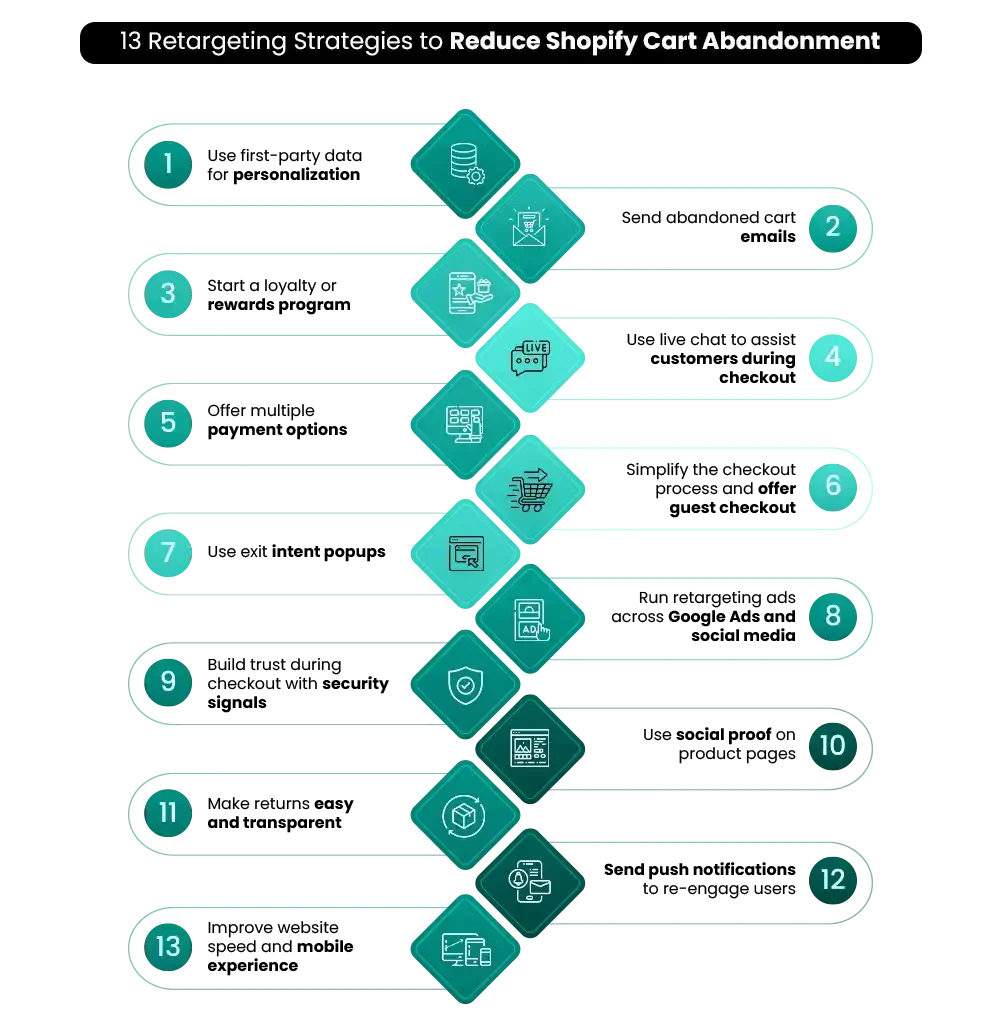
13 Proven Techniques to Reduce Shopify Cart Abandonment
While Shopify abandoned cart recovery emails are essential, they are only one part of the solution. To consistently recover lost sales, you also need to improve the overall shopping experience across your store.
Many drop-offs happen due to friction, lack of trust, or poor user experience. By optimizing these areas, you can significantly improve your conversion rates and reduce cart abandonment.
1. Use First-Party Data for Personalization
Personalization plays a major role in modern ecommerce. Using customer behavior data allows you to create tailored experiences that guide users toward purchase.
You can use data to:
- Show relevant product recommendations
- Offer personalized discounts
- Enable faster checkout for returning customers
Personalized experiences make your Shopify abandoned cart recovery efforts more effective by keeping users engaged and increasing purchase intent.
2. Send Abandoned Cart Emails
Sending timely cart recovery emails remains one of the most effective strategies.
Abandoned cart emails often deliver:
- Open rates above 40%
- Strong conversion potential compared to standard campaigns
These emails remind users about their cart and encourage them to return. When combined with a proper sequence, they become a core part of Shopify’s abandoned cart recovery.
3. Start a Loyalty or Rewards Program
Loyalty programs help turn one-time buyers into repeat customers.
You can encourage purchases through:
- Referral programs
- Loyalty points
- VIP rewards and exclusive offers
Customers who feel rewarded are more likely to return and complete purchases, helping reduce abandonment over time.
4. Use Live Chat to Help Customers During Checkout
Live chat can reduce hesitation during the buying process.
It helps you:
- Answer product-related questions instantly
- Assist users with checkout issues
- Recommend relevant products
Data shows that a large percentage of live chat interactions happen when customers are close to purchasing, making it a valuable tool for recovering lost sales.
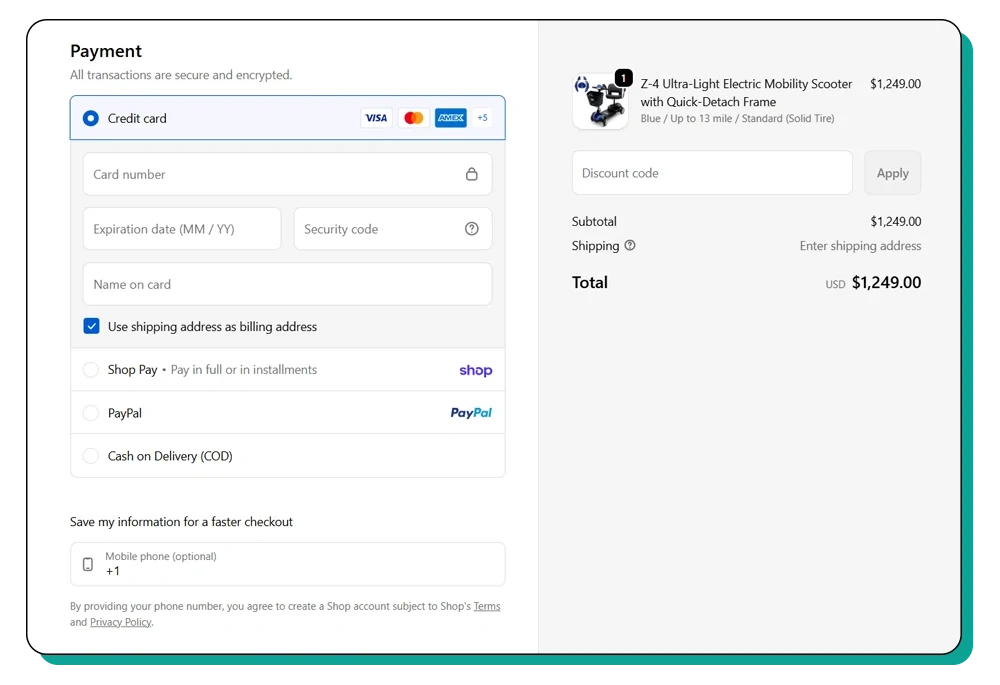
5. Offer Multiple Payment Options
Limited payment methods are a major reason for cart abandonment.
To improve your checkout process, offer:
- Shop Pay
- PayPal
- Google Pay
- Buy Now Pay Later options
Providing flexible payment options increases trust and makes it easier for customers to complete their purchase.
6. Simplify the Checkout Process
A complicated checkout process can quickly drive customers away.
You can reduce friction by:
- Reducing unnecessary form fields
- Minimizing checkout steps
- Enabling autofill options
- Offering guest checkout
Nearly 22% of users abandon carts due to long or complex checkout flows, making optimization critical for Shopify abandoned cart recovery.
If your checkout experience doesn’t match what customers saw earlier, it can quietly hurt your conversions. Watch this quick video to see how mismatched messaging impacts sales and what you can fix right away.
7. Use Exit Intent Popups
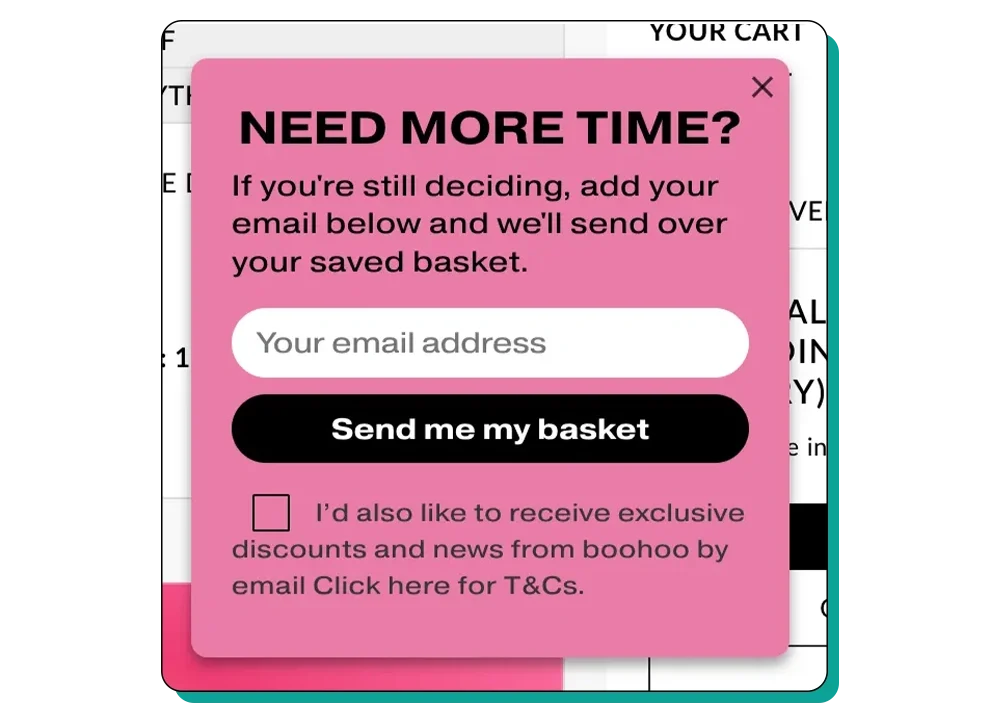
Exit intent popups help capture users before they leave your store.
These popups can:
- Offer discounts
- Provide free shipping
- Encourage email signups
Well-timed exit intent popups can convert a portion of abandoning visitors and support your overall recovery strategy.
8. Run Retargeting Ads
Retargeting campaigns are essential for bringing users back after they leave.
You can run retargeting ads across:
- Google Ads
- Facebook ads
- Instagram ads
Since these users already showed interest, retargeting ads typically deliver higher conversion rates and help strengthen your Shopify abandoned cart recovery efforts.
9. Build Trust During Checkout
Trust is a key factor in purchase decisions.
You can improve trust by adding:
- Security badges
- Payment logos
- SSL certificates
- Clear delivery information
Many users abandon carts due to security concerns, so building trust directly impacts your ability to recover lost sales.
10. Use Social Proof on Product Pages
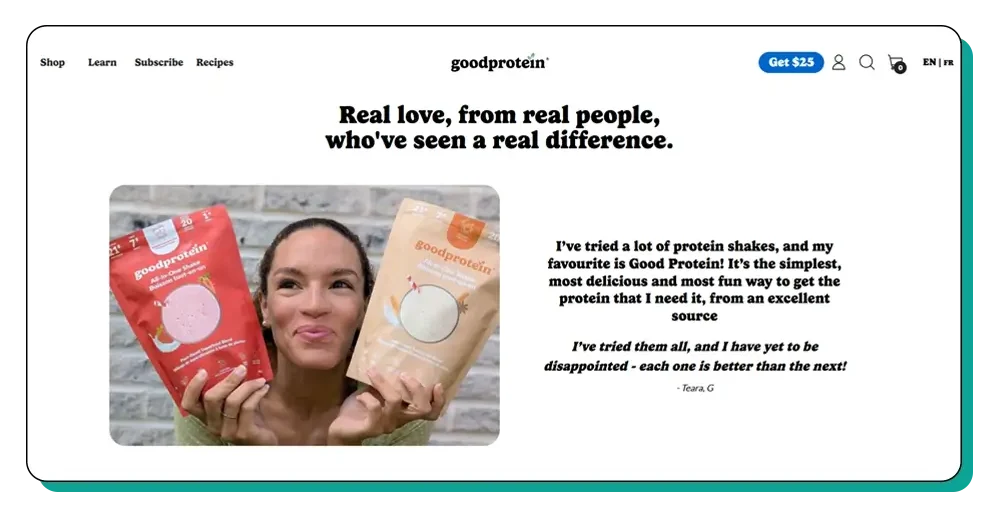
Strong social proof helps customers feel confident about their purchase.
Improve your product page by adding:
- Customer reviews
- Testimonials
- Product ratings
- User-generated content
Customers are more likely to buy when they see others have had positive experiences. This reduces hesitation and improves conversion rates.
11. Make Returns Easy
A clear and simple return policy increases buyer confidence.
Benefits include:
- Reduced purchase risk
- Increased trust
- Higher conversion rates
When customers know they can return a product easily, they are more likely to complete the purchase.
12. Send Push Notifications
Push notifications are a powerful way to re-engage users.
They can:
- Remind shoppers about abandoned carts
- Promote limited-time offers
- Encourage returning visits
These real-time reminders support your Shopify abandoned cart recovery strategy and help bring users back to your store.
13. Improve Website Speed and Mobile Experience
Website performance has a direct impact on cart abandonment.
A slow or poorly optimized site can cause users to abandon their checkout. Research shows that even a 1-second delay in load time can significantly reduce conversions.
To improve performance:
- Optimize page load speed
- Ensure mobile responsiveness
- Reduce unnecessary scripts
A fast and smooth experience keeps users engaged and increases your chances of recovering lost sales.
By combining these 13 techniques with a structured recovery system, you can build a strong Shopify abandoned cart recovery strategy that not only brings customers back but also improves your overall shopping experience.
Also Read: Win Back Lost Sales with These Shopify Abandoned Cart Recovery Tips
Tools That Help Shopify Abandoned Cart Recovery
To build an effective Shopify abandoned cart recovery system, you need the right set of tools. These tools help automate processes, track customer behavior, and improve how you re-engage potential buyers.
Here are the key tools commonly used by Shopify stores:
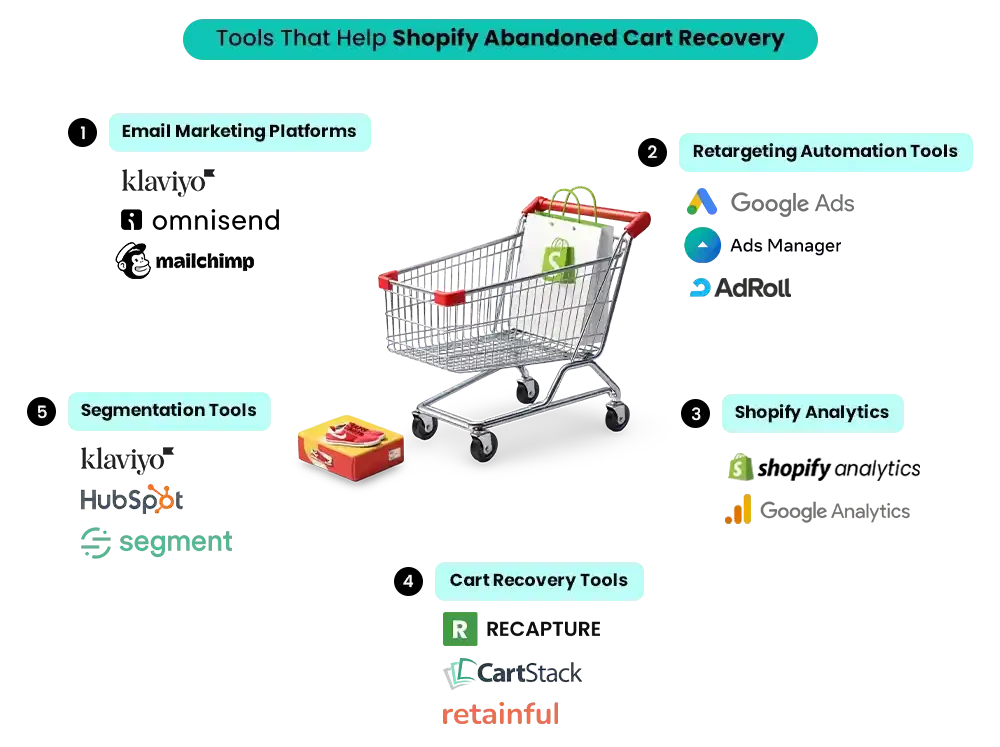
1. Email Marketing Platforms
Email marketing tools allow you to automate cart recovery emails and create multi-step sequences.
You can send timely reminders, personalize messages, and track performance such as open rates and conversions. This makes email a core part of any Shopify abandoned cart recovery strategy.
Popular tools include Klaviyo, Omnisend, and Mailchimp.
2. Retargeting Automation Tools
Retargeting platforms help you run retargeting campaigns across channels like Google Ads and social media.
These tools automatically show relevant ads to users who visited your store or abandoned their cart, helping bring them back and improve conversion rates.
Common tools include Google Ads, Meta Ads Manager, and AdRoll.
3. Shopify Analytics
Shopify provides built-in analytics that help you track abandoned checkouts, customer behavior, and sales performance. This data helps identify where customers drop off and what changes are needed to improve your recovery efforts.
You can also integrate tools like Google Analytics and Shopify Analytics Dashboard for deeper insights.
4. Cart Recovery Tools
Dedicated cart recovery tools offer advanced features such as automated workflows, cart value segmentation, and recovery tracking. These tools help optimize your Shopify abandoned cart recovery process and increase the chances of converting lost visitors.
Popular options include Recapture, CartStack, and Retainful.
5. Segmentation Tools
Segmentation tools allow you to group customers based on behavior, purchase intent, or cart value. This helps you send more targeted emails and run personalized retargeting campaigns, making your recovery strategy more effective.
Tools like Klaviyo, HubSpot, and Segment are commonly used for advanced customer segmentation.
By using these tools together, Shopify stores can automate their recovery process, improve targeting, and make better decisions based on data. This leads to stronger Shopify abandoned cart recovery performance, higher engagement, and improved conversion rates.
Conclusion: Turn Abandoned Carts Into Revenue
Cart abandonment is a normal part of ecommerce, but it does not have to mean lost revenue. With the right strategies, you can turn abandoned carts into completed purchases.
Using email marketing, Shopify retargeting, and checkout optimization can significantly improve your conversion rates and strengthen your Shopify abandoned cart recovery system.
As your store grows, managing these strategies becomes more complex. That is where a professional Shopify store agency can help.
Mastroke is a Shopify store agency specializing in Shopify development and marketing. They help brands with:
- Shopify store development
- Conversion optimization
- Shopify abandoned cart recovery strategies
- Shopify retargeting and Google Ads retargeting
- Ecommerce growth marketing
If you want to recover lost sales and improve performance, working with an experienced Shopify store agency like Mastroke can help you scale more effectively.
Book a free Shopify audit with Mastroke to uncover lost revenue opportunities and improve your abandoned cart recovery.
Build your dream Shopify store today
Bring your vision to life with Mastroke, an official Shopify Partner. We design and develop high-converting, scalable Shopify stores with clean structure and future-ready features—built to grow with your business.
Frequently Asked Questions
1. What is Shopify abandoned cart recovery?
Shopify abandoned cart recovery is the process of bringing back customers who started checkout but did not complete their purchase. It involves using email marketing, retargeting ads, and automation to recover lost sales.
2. What is the best time to send abandoned cart emails?
The first abandoned cart email should be sent within 30 to 60 minutes. Follow-up emails can be sent after 6–12 hours, 24 hours, and 48 hours for better recovery results.
3. How effective are retargeting ads for abandoned carts?
Retargeting ads are highly effective because they target users who have already shown interest. Platforms like Google Ads and Facebook retargeting ads help improve conversion rates by reminding customers to complete their purchase.
4. What is a good cart abandonment recovery rate for Shopify?
A typical recovery rate ranges between 10% to 15% for optimized stores. Advanced strategies using email and retargeting can increase recovery rates up to 20% or more.
5. Why do customers abandon their carts on Shopify?
Common reasons include high shipping costs, a complicated checkout process, limited payment options, security concerns, and slow website performance. Addressing these issues can improve conversions and reduce abandonment.