Shopify pricing is one of the first questions founders ask when they want to build a Shopify website and understand the cost to build a Shopify store in 2026. With the New Year ahead, smart budgeting decisions will determine whether your launch is tight or costly.
The real question isn’t just the monthly plan — it’s whether Shopify is still worth it in 2026. Launching a store is easy, but building a high-performance brand that actually makes profit takes more than subscriptions.
According to Shopify’s own ecosystem reports, over 4.8 million merchants globally choose Shopify because it combines scale, reliability, and predictable costs (Shopify ecosystem data). That figure shows the platform’s continued value, but it doesn’t tell the whole pricing story.
To plan your budget fully, you need to account for plans, transaction fees, themes, plugins, and expert help. This guide gives you a clear look at all those costs — from basic launch budgets to pro builds with custom design and ongoing support.
By the end, you’ll know what it really takes to launch and grow your Shopify store in 2026.
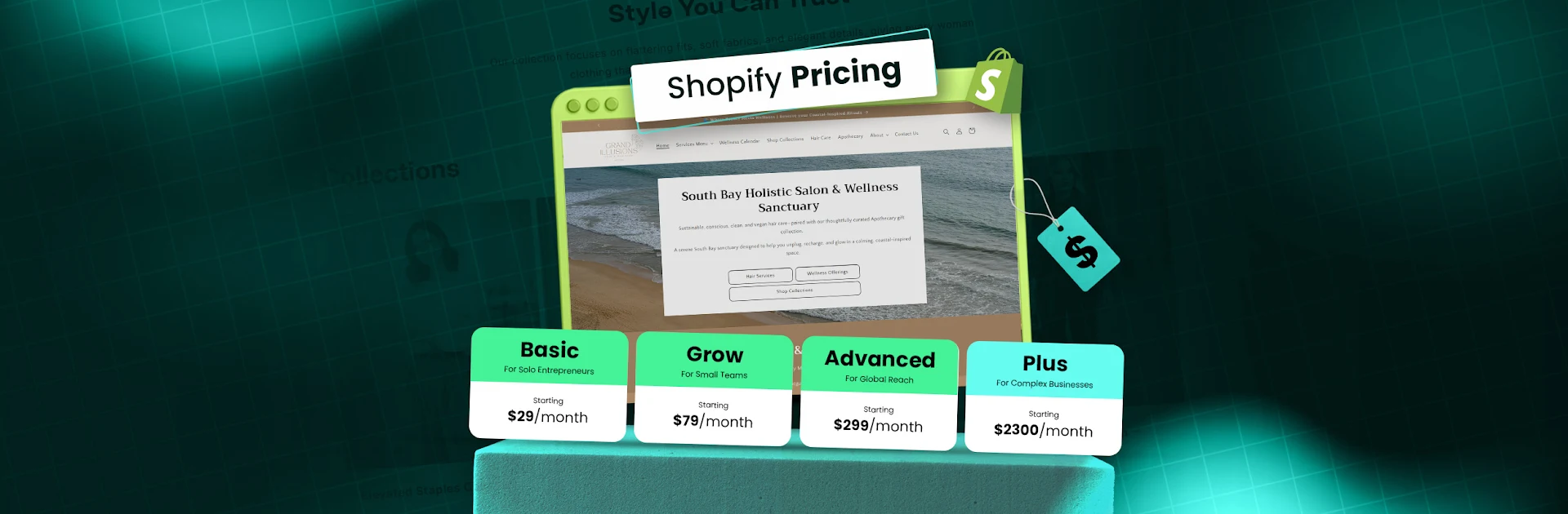
Shopify Subscription Plans (2026 Updated Pricing)
When you decide to build a Shopify website, choosing the right subscription is your first big move. In 2026, Shopify pricing has shifted to better support different stages of business growth.
Whether you are a solo creator or an enterprise brand, there is a tier designed for your specific needs. Understanding how much is Shopify costs per month helps you budget for the long term and avoid unexpected costs.
Shopify Starter
The Starter plan is the most affordable way to begin selling. It is built for creators and people who mostly use social media to reach fans. You do not get a full ecommerce website with a blog or custom themes.
Instead, you get simple product links to share on platforms like Instagram or WhatsApp. It is a great way to test a product idea without the huge cost of building a Shopify store.
Shopify Basic
The Basic Shopify plan is the go-to choice for solo founders. This tier allows you to build a full online store with a professional theme and a blog. You can manage unlimited products and access essential Shopify store development tools.
If you pay annually, you can often save around 25% on your Shopify monthly cost. It is the most popular entry point for serious business owners.
Shopify Grow
As your brand finds success, the Grow plan helps you scale. It offers professional reports to track your sales trends deeply. You also get five staff accounts and better shipping discounts.
A major benefit here is the lower payment processing fees. For stores with rising sales, the savings on transactions often cover the higher monthly price.
Shopify Advanced
The Advanced tier is made for high-volume businesses. It features an advanced report builder and custom analytics. You also get fifteen staff accounts and third-party calculated shipping rates at checkout.
This plan offers the lowest credit card rates among standard tiers, making it highly cost-effective for established online stores.
Shopify Plus
For enterprise-level brands, Shopify Plus offers total control. It includes dedicated support and advanced automation tools. You can manage multiple stores from one dashboard and customize the checkout process fully.
Shopify growth experts typically recommend this plan for businesses doing millions in annual revenue. The Shopify website cost at this level is a custom quote based on your specific volume.
What’s Included in Every Plan?
Regardless of the price, Shopify ensures your store is fast and safe. Every plan includes:
- Fast Hosting: No need to buy a separate hosting service.
- SSL Certificate: Keeps your customer data encrypted and safe.
- CDN Speed Optimization: Loads your site quickly for shoppers globally.
- Security: Shopify handles all PCI compliance and server protection.
- Core Analytics: Basic data to see who is visiting and buying.
The final Shopify website cost will vary depending on the complexity of your design and the apps you choose. Starting with the right plan ensures you don’t overpay for features you aren’t ready to use yet.
The Hidden Costs of Shopify Pricing
When you look at Shopify pricing, the monthly subscription is just the starting point. To truly understand the cost to build a Shopify store, you must dig into the smaller, recurring expenses.
Many new owners ignore these “hidden” costs. However, they can quickly change your total Shopify monthly charges.
Transaction Fees and Payment Gateways
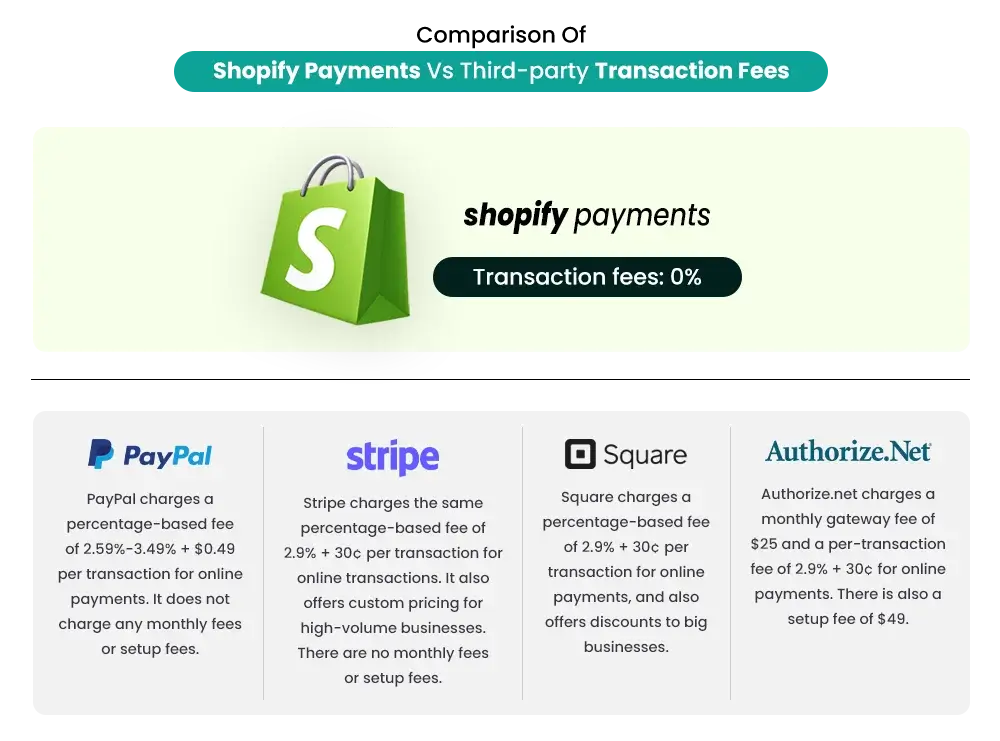
One major cost is the fee on every sale. If you use Shopify Payments, you only pay standard credit card rates. But if you use third-party gateways like PayPal, Shopify adds an extra fee.
You can expect to pay an additional 0.5% to 2% per order. As your sales grow, these fees add up fast. At a certain point, upgrading your plan becomes cheaper than paying these extra percentages.
Domain and Technical Basics
You will need a custom URL to build a professional brand. While Shopify hosts your site, you must buy a domain name separately. This usually costs between $14 and $25 per year. It is a small but necessary part of Shopify website development costs.
The App Stack
Most online stores need extra features that the basic theme doesn’t have. You might add apps for:
- Email marketing to send newsletters and promos.
- Upsell tools to increase your average order value.
- Customer reviews to build social proof and trust.
- Subscription modules for recurring monthly revenue.
The Shopify app monthly cost ranges from $20 to over $300. It all depends on how many “extras” you install.
Marketing and Growth
Building the store is only half the battle. You also need a budget to attract visitors. This includes paid ads on Google or Meta. You might also spend on influencer partnerships or premium SEO tools. These are the most variable Shopify website building costs.
A high Shopify store price often reflects these marketing needs. Smart owners plan for these gaps before they build a Shopify store. Knowing what you will expect to pay helps you stay profitable from day one.
– Also Read: Looking for a Shopify Marketing Agency? Here’s Your Checklist for 2026
Design & Branding Costs
Design plays a major role in Shopify pricing. When you build a Shopify website, design directly impacts trust and conversions. The cost to build a Shopify store changes depending on how customized you want it.
Free Themes ($0)
Shopify offers free themes like Dawn and other Online Store 2.0 options. These are great for lean launches and small businesses. If you are learning how to build a Shopify store, start here.
Free themes include:
- Mobile-friendly layouts
- Basic customization settings
- Fast loading performance
- Compatibility with Shopify payments
They work well for founders testing products. They also reduce upfront Shopify pricing pressure. However, free themes have limited layout flexibility. As your brand grows, you may want more control.
Premium Themes ($180–$400 One-Time)
Premium themes are a one-time investment. They usually offer better UX and stronger design structure. Many include built-in features that reduce app dependency.
Benefits include:
- Advanced filtering
- Better product page layouts
- Built-in upsell sections
- Stronger visual storytelling
For small businesses planning steady growth, this is often the best balance. Premium themes lower long-term Shopify pricing by reducing extra apps.
Custom Design ($1,500–$10,000+)
Custom design is for brands that want full control. If you are serious about how to create a website on Shopify, this is the premium path. A custom theme focuses on branding, conversion rate optimization, and speed.
Custom builds often include:
- CRO-focused layouts
- Advanced Shopify integrations
- Performance-first coding
- Unique brand identity
Costs vary depending on complexity and features. Advanced Shopify stores with heavy customization may exceed $10,000. Custom design increases the initial cost to build a Shopify store. But it can improve conversions and long-term revenue significantly.
– Also Read: Design, Speed, or Marketing — What Should Come First in Your Shopify Store Growth Plan for 2026?
The Expert Layer — Freelancers vs Agencies
Deciding how to build a Shopify website often comes down to a choice: do you spend your time or your money? In 2026, the cost to build a Shopify store isn’t just about the software.
It is about the level of expertise you bring to the table. Most business owners find themselves choosing between the In house vs agency model or a solo Shopify Freelancer.
DIY Setup (Lowest Cash, Highest Time)
If you are on a tight budget, you can build a Shopify store yourself. You only pay for the Shopify pricing plan and your domain. However, the learning curve is steep.
- You must learn design, SEO, and app integration on your own.
- Small mistakes in your setup can lead to a slow ecommerce store.
- Fixing these errors later often costs more than hiring help initially.
Shopify Freelancer ($500–$5,000)
Hiring a Shopify Freelancer is a middle ground for small businesses. These experts are great for specific tasks like theme tweaks or initial store setup.
-
- They are more affordable than an agency.
- You get direct, one-on-one communication.
- Costs typically range from $30 to $100 per hour, depending on their location. While they are fast, they may lack the broad strategy needed for massive growth.
Shopify Agency ($3,000–$20,000+)
A Shopify agency provides a full team of Shopify growth experts. This is the best choice for brands ready to scale seriously.
- You get a dedicated project manager, designer, and developer.
- A Shopify marketing agency focuses on long-term ROI, not just a pretty site.
- They handle complex needs like custom apps and speed optimization.
- Their deep knowledge of Shopify store development prevents ad waste.
Investing in an expert layer ensures your store is built for conversions from day one. While the upfront Shopify website cost is higher, the professional structure pays off in higher sales.
– Also Read: 5 Clear Signs It’s Time to Hire a Shopify Agency
Shopify Pricing by Business Stage (2026 Scenarios)
Choosing the right plan is the first step to building a Shopify website that scales. In 2026, Shopify pricing is structured to match your specific growth phase. Whether you are a solo founder or an enterprise brand, your Shopify startup costs will vary.
The Solopreneur (DIY)
This stage is for those testing the waters with a lean budget. Most users start with the Basic plan to keep the cost to build a Shopify store low.
- Strategy: Use free themes and handle the setup yourself.
- Focus: Core selling tools and social media integration.
- Key Cost: Monthly subscription plus standard transaction fees.
Professional Startup
Once you have traction, you need better data and a unique look. At this level, the cost to start a Shopify store in 2026 includes professional help.
- Strategy: Invest in a premium theme from the Shopify app store for better conversion.
- Focus: Hiring experts for custom branding and advanced SEO.
- Key Cost: Higher monthly fees but lower rates on every sale.
Scaling Brand & Enterprise
Large businesses move to Advanced or Shopify Plus to unlock automation. This is where you focus on high-volume efficiency and custom checkouts.
- Strategy: Use dedicated apps for global shipping and complex loyalty programs.
- Focus: Custom API integrations and 24/7 priority support.
- Key Cost: Significant upfront investment in custom development.
Shopify Pricing vs Other Platforms
When you build a Shopify website, you aren’t just paying for a store; you are paying for peace of mind. In 2026, the Shopify total cost vs competitors often comes down to how much you value your time.
Shopify vs WooCommerce
The biggest difference lies in hosting and maintenance. Shopify is a fully managed service, meaning hosting and security are included in your monthly bill.
- WooCommerce: The software is free, but you must pay for your own hosting and SSL certificates.
- Maintenance: On WooCommerce, you handle all software updates and security patches yourself.
- Predictable Costs: Shopify offers a flat fee, while WooCommerce costs can spike if a plugin breaks or you need a developer.
– Also Read: Woocommerce to Shopify Migration: The Ultimate Checklist for Merchants
Shopify vs Wix
While Wix is a popular website builder, it often lacks the deep e-commerce power needed for a successful Shopify store.
- Scalability: Shopify is built to handle massive traffic and high volume without crashing.
- App Ecosystem: The Shopify app store is far more robust than Wix’s market.
- Performance: Shopify focuses on checkout speed and conversion, whereas Wix prioritizes drag-and-drop design.
Shopify vs BigCommerce
Both platforms target serious sellers, but their Enterprise pricing models differ. BigCommerce often includes more features out of the box to reduce app dependency.
- Transaction Fees: Shopify waives fees if you use their payment gateway, while BigCommerce has zero transaction fees on all plans.
- Revenue Caps: BigCommerce may force an upgrade if your sales exceed a certain limit.
- Total Ownership: Shopify offers more flexibility through its “Plus” tier for high-volume brands.
|
Platform |
Hosting | Monthly Fees | Ease of Use |
| Shopify | Include | Medium | High |
| WooCommerce | Self Hosted | Low | Medium |
| Wix | Included | Low | High |
| BigCommerce | Included | High |
Medium |
New Year Budget Planning — How to Reduce Shopify Costs in 2026
Smart financial planning is the key to a successful Shopify store. In 2026, many founders struggle with rising expenses. However, you can significantly lower the cost to build a Shopify store with a lean strategy.
- Start with one validated product: Do not launch with a massive catalog. Test a single product first to save on inventory and Shopify store development time.
- Use a free theme first: Modern free themes are fast and professional. Avoid premium designs until your revenue justifies the upgrade.
- Audit for app overload: Every new plugin increases Shopify pricing and slows your site. Use multi-purpose apps to keep your subscription list short.
- Focus on conversion before ads: Optimize your product pages to ensure every visitor counts. Spending on ads before your site is ready is a waste of money.
- Use Shopify automation smartly: Use built-in tools like Shopify Flow to handle tasks. This reduces the need for hiring extra staff or expensive external software.
By prioritizing these steps, the cost to start a Shopify store in 2026 remains manageable. Focus on “must-haves” rather than “nice-to-haves” during your initial launch phase. Upgrade your plan only when your profit margins can easily cover the higher fixed fee.
– Also Read: How to Plan Your Shopify Store Growth in 2026?
When Does Shopify Become Profitable?
Achieving profitability is the ultimate goal when you build a Shopify website. In 2026, most successful stores reach a break-even point between 4 and 8 months. However, the timeline depends on how well you manage your unit economics.
- Break-even formula: Calculate your fixed costs divided by your gross profit per unit. This tells you exactly how many sales you need to cover your Shopify pricing and overhead.
- AOV vs ad spend: Your Average Order Value must significantly exceed your cost to acquire a customer. If your AOV vs ad spend ratio is too thin, you will struggle to stay in the green.
- Conversion rate impact: Small tweaks to your conversion rate can double your profits without increasing your traffic. A store converting at 3% is far more sustainable than one at 1%.
- Lifetime value strategy: Real profit often happens on the second or third purchase. Increasing lifetime value ensures that the initial cost to build a Shopify store pays off long-term.
- Importance of retention: Selling to existing customers is five times cheaper than finding new ones. Use email marketing to keep your brand top-of-mind.
By focusing on these metrics, you can ensure your cost to build a Shopify store turns into a rewarding investment.
– Also Read: How Shopify Plus Works (And Who Actually Needs It)
2026 Shopify Launch Checklist (New Year Ready)
Launching your brand is exciting, but you need a solid plan to succeed. This Shopify launch checklist ensures you don’t miss a single step. Follow these points to build a Shopify website that actually converts.
- Plan selected: Pick a tier that fits your current Shopify pricing budget.
- Domain secured: Buy a clean, memorable .com address to build trust.
- Theme optimized: Focus on mobile speed and a simple checkout flow.
- Essential apps installed: Only add tools that directly increase sales or save time.
- Email flows active: Set up your welcome series and abandoned cart reminders.
- Analytics configured: Connect GA4 to track where your customers come from.
- Marketing budget defined: Know exactly what you can spend on ads each day.
- Emergency buffer planned: Keep extra cash for unexpected costs or inventory spikes.
Checking these boxes lowers the total cost to build a Shopify store by preventing expensive mistakes later.
– Also Read: The Shopify Store Audit Checklist Every Brand Should Do in Q1 2026
Conclusion
Understanding Shopify pricing is about more than just a monthly bill. The platform itself is not expensive. However, poor planning can quickly lead to a high cost to build a Shopify store. To stay profitable, you must focus on your long-term strategy rather than just the initial launch.
When you build a Shopify website with a clear roadmap, you avoid wasting money on unnecessary apps. Your success depends on making smart choices at every growth stage.
If you’re unsure about budgeting correctly, consult a Shopify expert before overspending in 2026.
FAQs
1. How much does Shopify cost per month in 2026?
Shopify plans range from $39 per month for Basic to $2,300+ for Shopify Plus, depending on scale and features.
2. What is the total cost to build a Shopify website?
A Shopify store can cost anywhere from $500 for DIY setups to $25,000+ for fully customized builds.
3. Are there hidden costs in Shopify pricing?
Yes. Apps, premium themes, transaction fees, marketing spend, and expert support are common additional costs.
4. Do I need to pay for hosting separately?
No. Shopify includes hosting, SSL, and CDN performance in every subscription plan.
5. How much budget should I plan for launching in 2026?
Most serious new stores should budget at least $2,000–$5,000 for a stable launch and marketing foundation.