“Most Shopify stores don’t fail from lack of effort. They fail from lack of structure.” This powerful idea holds especially true for online stores in 2026.
If you want real Shopify store growth, you must push beyond the status quo and build a data-driven, customer-focused Shopify growth strategy that is prepared for both global trends and ecommerce realities.
With global ecommerce sales forecast to reach about $6.88 trillion in 2026 and make up over 21% of total retail sales, the opportunity is massive for merchants who plan smartly and act fast.
In this guide, we’ll share the essential steps for planning your Shopify growth strategy in 2026 with simple explanations, real data, and practical action steps.
Why 2026 Is the Year to Think Bigger About Shopify Growth Strategy?
The global ecommerce market is expanding steadily, with high ecommerce sales.
This growth is fueled by increased digital adoption, mobile shopping, and social commerce, which means more customers are browsing, comparing, and buying online than ever before.
Merchants who optimize their funnels can win back a significant share of this lost revenue.
Shopify alone now powers nearly 5 million active stores worldwide with a robust ecosystem of support for merchants and apps.
This includes native POS solutions, integrated payment options, and an expanding marketplace of automation, marketing, and fulfillment tools that are built for scaling fast-growing brands.
Customers now expect Amazon-level speed and trust, even from small Shopify brands. Your Shopify growth strategy 2026 must go beyond setup and focus on optimization, user experience, and conversion.
Build Your Shopify Store From Scratch With Mastroke
Launch faster with Mastroke, an official Shopify Partner. We build structured stores with conversion-first design, clean setup, and features built to scale!!
The 2026 Shopify Growth Roadmap (Quarter-by-Quarter)
Here is a simple Shopify growth strategy roadmap for 2026 that aligns with how successful Shopify stores actually scale.
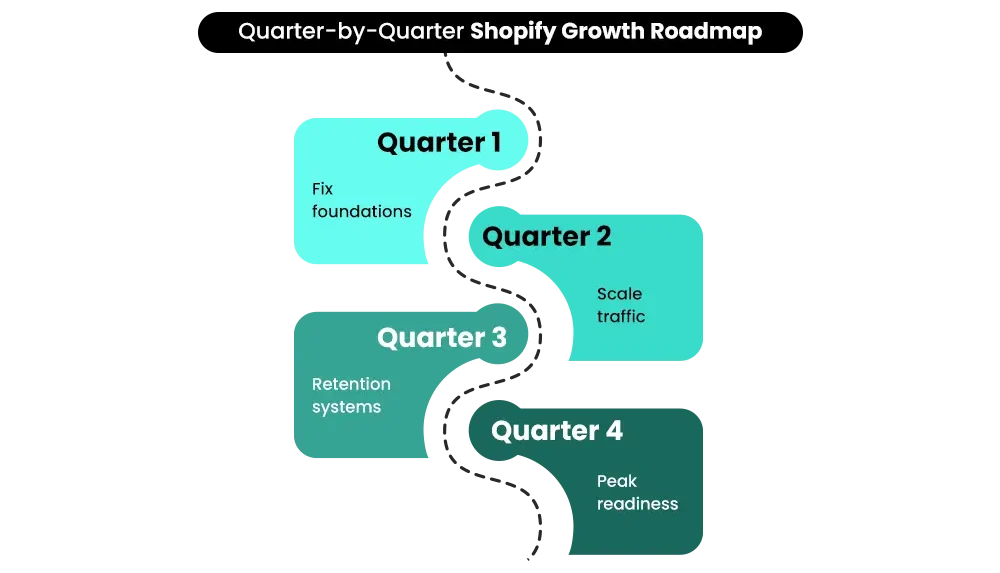
Quarter 1: Fix the Foundations
Start the year by strengthening your core store experience and operations. Growth built on weak foundations usually leads to wasted ad spend and operational stress.
Focus areas:
- Improve user experience across the homepage, product pages, and navigation
- Clean up theme clutter and reduce on-page distractions
- Optimize mobile performance and page speed
- Fix checkout friction and cart flow
- Set up proper analytics and KPI tracking
- Review inventory management and support workflows
- Build or improve FAQ pages and policy pages
The goal for Q1 is simple. Make your store easier to use and easier to buy from.
Quarter 2: Scale Your Traffic
Once your foundation is solid, increase qualified traffic. Scaling traffic before fixing conversion issues usually leads to poor ROI, so this comes after Q1 work.
Focus areas:
- Strengthen SEO across product pages and product categories
- Publish search-focused blog content
- Launch or scale paid ads with tested landing pages
- Expand social media content and creator partnerships
- Grow email list with lead magnets and signup offers
The goal for Q2 is controlled traffic growth with measured customer acquisition cost.
Quarter 3: Retention Systems
After traffic and sales increase, shift focus to retention and customer experience. Retention is what stabilizes Shopify store growth and improves profitability.
Focus areas:
- Build advanced email marketing automation flows
- Launch loyalty or rewards programs
- Improve post-purchase experience and support response time
- Streamline returns workflow and tracking
- Add upsell and cross-sell systems
- Use customer data for segmentation and personalization
The goal for Q3 is to increase repeat purchases and customer lifetime value.
Quarter 4: Peak Readiness
The final quarter is about preparing for peak season demand and maximizing revenue during high-traffic periods.
Focus areas:
- Stress test inventory and fulfillment capacity
- Strengthen forecasting systems for demand spikes
- Finalize promotional calendars and campaign plans
- Optimize site speed and infrastructure for traffic surges
- Prepare support and automation tools for higher ticket volume
Goal for Q4 is peak readiness, operational stability, and maximum conversion during high-demand periods.
This quarter-by-quarter roadmap turns your Shopify growth strategy 2026 into an execution plan instead of just ideas, making it easier to prioritize and scale with confidence.
Click here to read: How to Choose the Right Shopify Store Setup Agency for Your Brand?
Step by Step: Building Your 2026 Shopify Growth Strategy
To build a strong Shopify growth strategy for 2026, you need structure, data, and clear priorities. Here’s how to approach growth the right way, step by step.
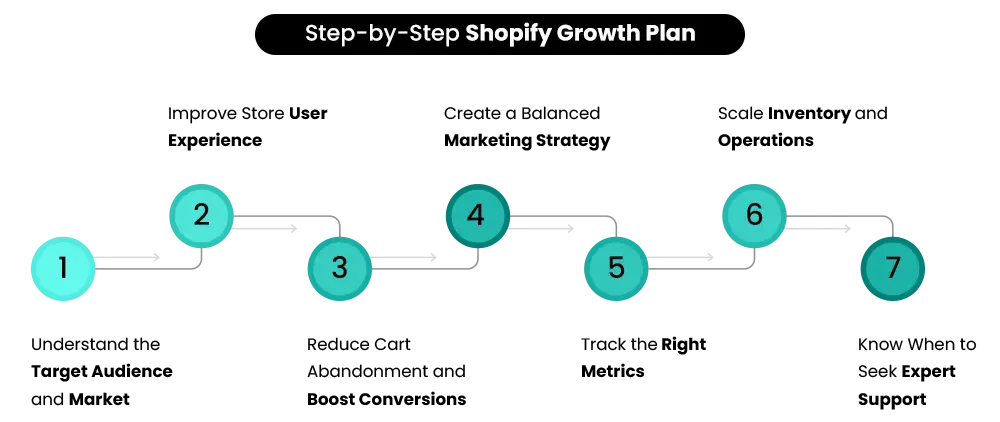
1. Understand Your Target Audience and Market
To grow your Shopify online store effectively, start with deep customer insight.
Who are you selling to? What problems are they trying to solve? What channels do they use most?
- Go beyond basic demographics to examine buying behavior, average order value, motivations, and objections.
- Use surveys, heat maps, customer reviews, and social media comments to learn what shoppers actually care about.
- Consider using analytics tools like Shopify Analytics or Google Trends to uncover what products or categories are trending, and validate demand before launching new products.
- You can also analyze competitor stores to see which product categories, content formats, or offers perform well.
When you understand how your audience shops and what influences decisions, you can shape product pages, pricing, email marketing, and promotions in a way that feels personal and relevant.
This is key to ecommerce growth planning because it lets you tailor messaging, offers, and product placement instead of guessing.
2. Improve Store User Experience
Your Shopify store may still be running, but that does not mean it is optimized.
Customer behavior, traffic sources, and expectations change constantly. When the store experience does not evolve, friction builds quietly.
This leads to lost conversions without obvious technical issues.
Optimization does not mean a redesign or adding more apps. It means making it easier for shoppers to find what they want, understand what they are buying, and feel confident clicking buy.
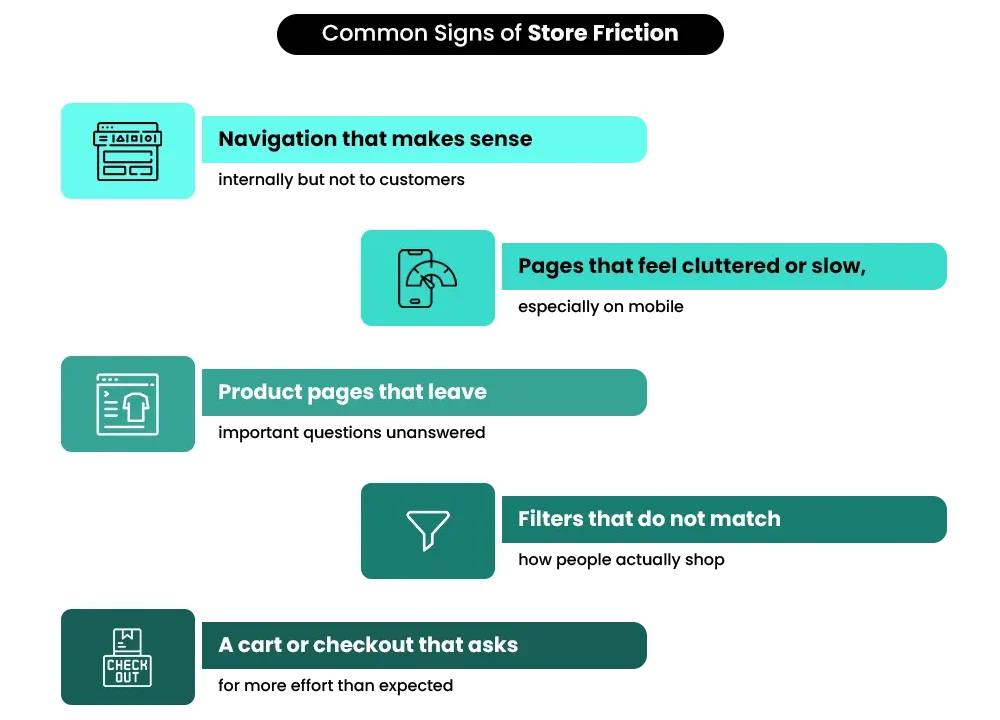
Most of these problems can be fixed without changing your theme.
-
Theme and Layout Quick Wins
Over time, Shopify themes collect clutter.
Review areas like announcement bars competing with CTAs, headers overloaded with links, multiple calls to action on one screen, hard-to-read typography, heavy images, and hidden search bars.
Reducing competition for attention is one of the fastest ways to improve conversions. One clear action per screen consistently outperforms multiple choices.
-
Homepage Clarity Comes First
Your homepage has one main job: help shoppers understand your store quickly.
Within the first screen, visitors should immediately know:
- What you sell
- Who it is for
- Where to click next
If this is unclear, hesitation sets in. Clarity usually comes from editing, not adding. Fewer categories, stronger copy, and visible best sellers help shoppers move forward with confidence.
-
Build Collection Pages Around Real Shopping Behavior
Many collection pages fail because they reflect internal logic instead of customer intent.
Use customer language for collection names. Set intentional default sorting like best sellers or new arrivals. Add filters that match buying decisions such as size, color, price, or use case.
Shopify Search & Discovery data is especially valuable here. Frequent search terms reveal what shoppers expect to find quickly.
-
Product Pages Should Remove Doubt
When a shopper lands on a product page, they are deciding if the product is right for them.
Strong product pages clearly explain what the product is, who it is for, what problem it solves, what is included, shipping timelines, and return policies.
Clear variant labels, visible pricing, reviews, and reassurance around shipping and returns reduce hesitation and increase add-to-cart rates.
-
Mobile-First Optimization
Small problems become big problems on mobile. Buttons should be easy to tap, spacing should allow thumb movement, images should load quickly, and the add-to-cart action should stay visible.
Always test your store on a real phone, not just a preview tool.
3. Reduce Cart Abandonment and Boost Conversions
Cart abandonment is one of the biggest revenue leaks in ecommerce. Recent data shows the global average cart abandonment rate sits at about 70.22%.
This means most shoppers show intent but leave before completing a purchase, often due to friction or lack of trust.
Here’s how to tackle it:
-
Simplify the Checkout Flow
A long or confusing checkout process increases drop-offs. Reduce the number of steps, allow guest checkout, and ensure pages load quickly.
Even small delays can frustrate users, especially on mobile. A clean checkout improves user experience and helps move shoppers from intent to purchase.
-
Offer Multiple Payment Methods
Missing preferred payment options is cited by about 13%–28% of shoppers as a reason they don’t complete a purchase.
Offering credit cards, digital wallets, and buy-now-pay-later options gives customers flexibility and removes hesitation at the final step.
-
Email Marketing and Cart Recovery
Automated cart recovery emails are one of the most effective ways to reclaim lost sales. Timely reminders, clear product visuals, and incentives such as free shipping or limited-time discounts can bring shoppers back.
Email remarketing works because it reconnects with users who already showed interest and intent.
4. Create a Balanced Marketing Strategy
Your Shopify growth strategy must rely on multiple channels rather than a single traffic source.
A balanced marketing strategy protects your store from sudden changes in ad costs, platform algorithms, or channel performance. It also creates more stable and predictable Shopify store growth over time.
Core Channels to Include:
-
SEO and Content Marketing
On-page SEO, structured product categories, optimized product pages, and informative blog posts help your Shopify store rank for relevant searches.
Organic traffic compounds over time and reduces dependency on paid ads, making it a strong long-term growth driver.
SEO also improves product discoverability and brings high-intent visitors to your online store.
-
Social Media and Paid Ads
Platforms like Instagram, TikTok, and Pinterest play a major role in product discovery in 2026.
Short-form videos, creator partnerships, and targeted paid ads help brands reach new audiences and drive qualified traffic to product pages and landing pages.
Paid campaigns are useful for fast testing and rapid scaling once conversions are optimized.
-
Email Marketing Automation
Email marketing remains one of the highest ROI channels in ecommerce.
Automated flows for welcome emails, cart abandonment, post-purchase follow-ups, and win-back campaigns increase repeat purchases and customer lifetime value.
Segmentation based on behavior and purchase history improves engagement and results.
-
Free Shipping and Offers
Shipping costs are a common reason for cart abandonment.
Offering free shipping above a certain order value creates a clear incentive and helps increase average order size without lowering product prices.
What Should You Do First Based on Your Revenue Stage?
Shopify merchants often ask what to prioritize first. The answer depends on your current scale.
If your store is under $500K per year, start with SEO and email marketing. Focus on optimizing product pages, product categories, and content while building automated email flows. These channels are cost-effective and compound over time.
If you are already scaling paid ads, focus first on CRO and landing page optimization. Improve conversion rates, user experience, and checkout flow before increasing ad spend.
Higher conversion rates make your marketing strategy more profitable and efficient.
This stage-based approach keeps your Shopify growth strategy practical, focused, and aligned with real business outcomes.
Click here to read: 5 Clear Signs It’s Time to Hire a Shopify Agency
5. Track the Right Metrics
A growth strategy is only as strong as the data behind it. Tracking the right KPIs allows you to identify what is working and where improvements are needed.
Key metrics to monitor include:
- Conversion rates across pages and products
- Cart abandonment and recovery rates
- Email open and click-through rates
- Repeat purchase rate and customer lifetime value
- Traffic sources and return on ad spend
Shopify’s built-in analytics provides a solid foundation for Shopify’s growth strategy, but connecting tools like Google Analytics and heatmap software gives deeper insight into user behavior and decision points.
6. Scale Inventory and Operations
As your Shopify store grows, operational efficiency becomes critical. More orders create more pressure on inventory, fulfillment, customer support, and returns handling.
If operations do not scale with demand, customer experience suffers and growth slows down.
- Strong inventory management includes using real-time tracking to prevent stockouts and syncing inventory across channels to avoid overselling.
- Forecasting demand based on past performance and seasonality also helps maintain efficiency as your store scales.
- Using forecasting systems and historical sales data helps you plan purchasing, production, and replenishment more accurately.
Support response time is another key factor. As order volume increases, customer queries about shipping, product details, and order status also rise.
Set up helpdesk systems, chat tools, and structured support workflows so response times stay fast and consistent. Quick and clear support improves customer experience and protects conversion rates.
Returns workflow should also be clearly defined and easy to manage. Create a structured returns process with clear policies, return portals, and status tracking.
Smooth returns handling builds trust and encourages repeat purchases, even when hooking first-time buyers.
Automation tools play a major role in scaling operations. Use automation for inventory alerts, order routing, customer notifications, email marketing flows, and support ticket assignment.
Automation reduces manual errors, saves time, and keeps operations stable as your Shopify store’s growth accelerates.
When inventory, support, returns, and automation systems work together, your store can handle higher order volumes without sacrificing customer experience or increasing operational stress.
7. Know When to Seek Expert Support
Not every growth challenge can be solved in-house. As your business scales, you may need help with advanced customization, performance optimization, or international expansion.
This is where a Shopify agency, Shopify Plus agency, or specialized Shopify marketing agency becomes valuable.
Experienced partners understand platform limitations, growth bottlenecks, and best practices for a Shopify growth strategy.
Working with experts saves time, reduces costly mistakes, and helps you implement a growth strategy that aligns with your long-term business goals.
Conclusion
Planning your Shopify store growth in 2026 means blending data, customer understanding, and tactical execution.
You need a Shopify growth strategy that prioritizes user experience, reduces cart abandonment, leverages analytics, and scales your marketing smartly.
Stats show that ecommerce continues to grow globally and that merchant success is not automatic; it requires ongoing optimization and strategic focus.
At Mastroke, we help Shopify and Shopify Plus clients with everything from store development to full-funnel marketing.
Whether you need a custom store build, growth strategy planning, or scalable marketing execution, our team brings deep expertise to fuel your ecommerce growth.
Ready to accelerate your Shopify growth strategy in 2026?
Contact Mastroke today, and let’s take your online store to the next level.
Build your dream Shopify store today
Bring your vision to life with Mastroke, an official Shopify Partner. We design and develop high-converting, scalable Shopify stores with clean structure and future-ready features—built to grow with your business.
Frequently Asked Questions (FAQs)
1. What is a Shopify growth strategy?
A Shopify growth strategy is a plan to increase traffic, conversions, and sales through store optimization, better user experience, and data-driven marketing.
2. How can I grow my Shopify store in 2026?
Focus on SEO, email marketing, social media, conversion optimization, and better product and checkout experiences. Track metrics and improve continuously.
3. When should I hire a Shopify or Shopify Plus agency?
Hire an agency when you need advanced development, CRO, scaling support, or faster growth beyond in-house capabilities.
4. What causes most lost sales in Shopify stores?
Common causes include poor user experience, slow mobile pages, unclear product info, high shipping costs, and complicated checkout.
5. What should Shopify merchants prioritize in 2026?
Shopify merchants should prioritize store optimization, conversion rate improvement, SEO, email marketing, and customer retention. Fix user experience and checkout first, then scale traffic and ads after conversions are strong.